
Tuesday, October 7 Chandernagore
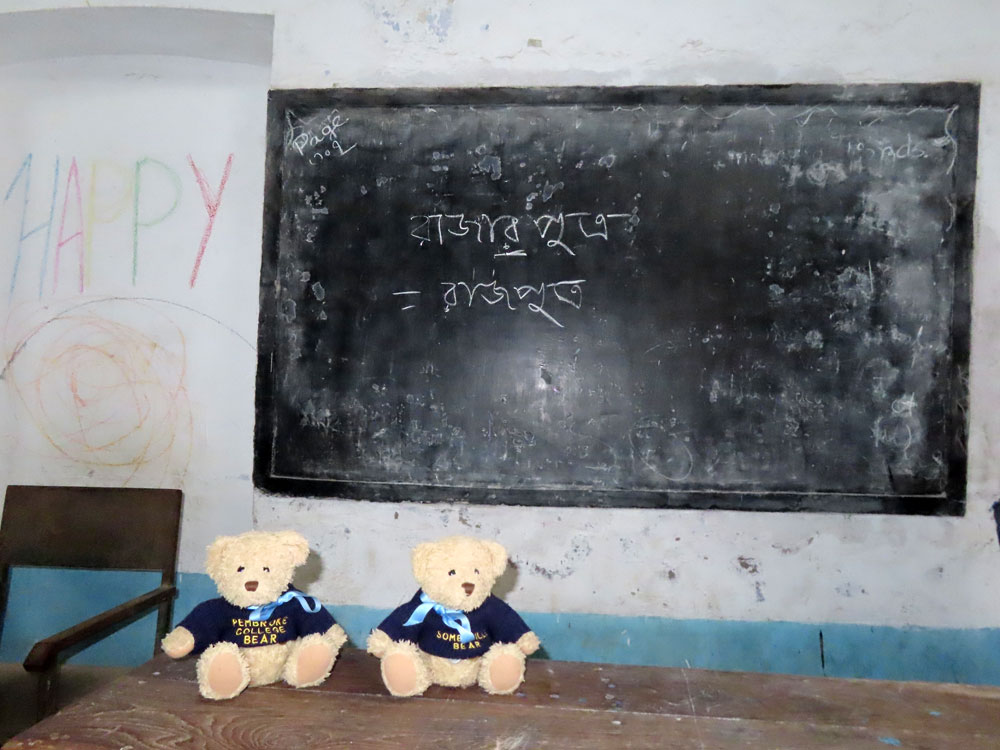
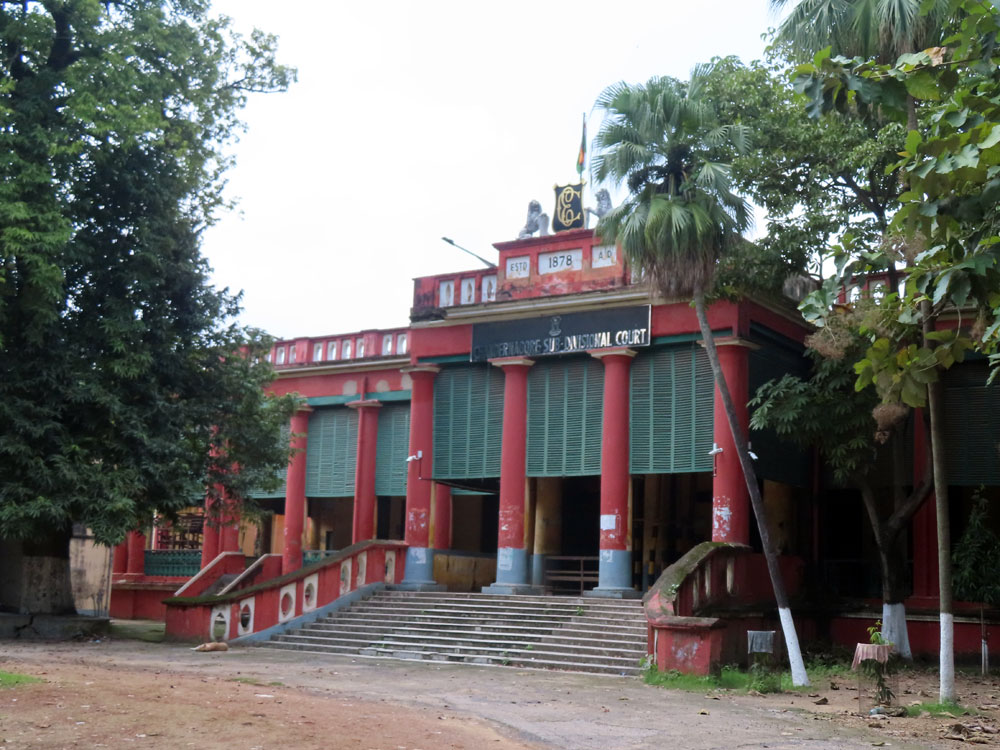
Sailing up the Hoogley river. After a so so breakfast on the ship, we went ashore at 10 am and walked round .Chandernagore, a part of the French colony in Bengal. passed the museum along the road beside the river, but this was shut and we eventually got to the present day courthouse, once the hotel de Paris, the town hall. This was in a really bad condition and we also saw where the lawyers would talk to their clients which was really antiquated: As it was a holiday the court was not sitting but there were people there typing away on old fashioned typewriters. An awful lot of money would be needed to be spent to bring this majestic building into a suitable state for preservation. We visited a French Catholic Church. After this we walked beside the river until we got back to the ghat where Pandaw’s boat was waiting for us, passing cows on the pavement en route.
In 1688 the French East India Company paid the local ruler for the land. The prosperity of Chandernagore as a French colony started soon after. At this time the Company establishment consisted of one director, and five members who formed a council, 15 merchants and shopkeepers, two notaries, two padres, two doctors and one Sutradhar. The army consisted of 130 foot-soldiers, 20 among them were native Indians. The Fort d'Orleans was constructed in the year 1696–97 and was better defended than its French and British counterparts. After the initial success the French trade languished due to the lax policy of its Directors.
In 1756 war broke out between France and Great Britain, and Colonel Robert Clive of the British East India Company and Admiral Charles Watson of the British Navy bombarded and captured Chandernagore in 1757. The town's fortifications and many houses were demolished thereafter, and Chandernagore's importance as a commercial center was eclipsed by that of Calcutta situated down river. Chandernagore was restored to the French in 1763, but retaken by the British in 1794 in the Napoleonic Wars. The city was returned to France in 1816, along with a 3 sq mi enclave of surrounding territory. It was governed as part of French India until 1950, under the political control of the governor-general in Pondicherry. By 1900 the town's former commercial importance was gone, and it was little more than a quiet suburb of Calcutta, with a population of 25,000 (1901). But it was noted for its clean wide thoroughfares, with many elegant residences along the riverbank.
To get a larger photo, click on a thumbnail below
 |
 |
 |
 |
 |
 |
 |
 |
 |
 |
 |
 |
 |
 |
 |
 |
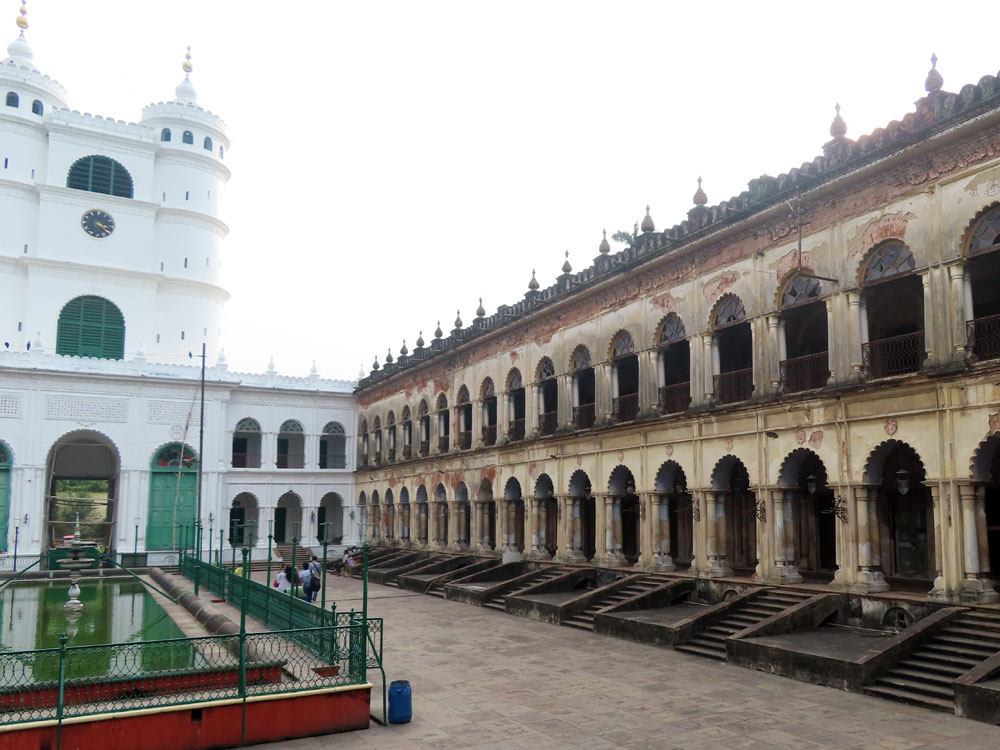
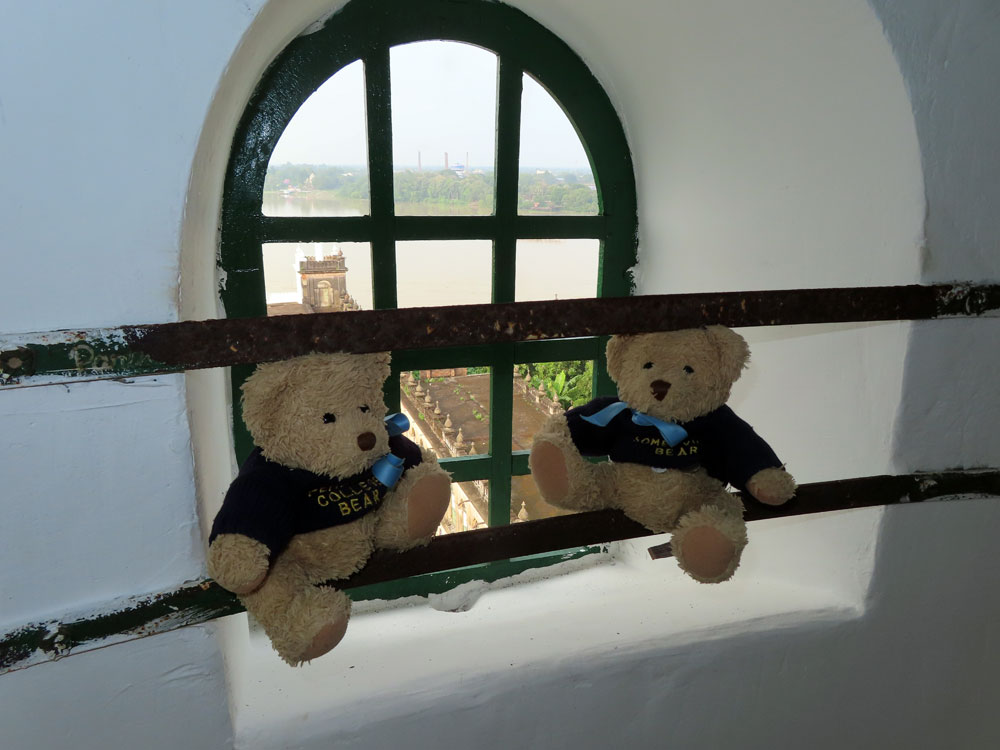
After lunch we set off again at 3 pm, the ship have moved about 10 km downstream during lunch. We visited a mosque, Imambara at Hoogley, and Chris climbed the 152 steps to the top of a tower, well looked after by Joe and Maureen whilst David climb the men’s tower with Titu, the separation of the sexes being mandatory. On our descent we inspected the.hammam Columba, which was for the use of the priest.

The construction of the building was started by Muhammad Mohsin in 1841 and completed in 1861. The building is a two-storied structure, with a tall clock tower over the entrance gate. The mosque has intricate designs and texts from Quran engraved on the wall. The interior of the mosque is decorated with marble, candles and hanging lanterns.
The Hooghly Imambara is famous for its vaunted clock. It is at the middle of the twin towers constructed on the doorway of the main entrance. Each tower, is approximately 150 ft high, with 152 steps to reach to its top. The clock has two dials with three bells . Smaller bells ring at an interval of 15 minutes and larger bell rings to signify one hour. The clock requires two people to wind it for half an hour of each week, with a key that weighs 20 kilograms. The clock was bought from the manufacturer of Big Ben inLondon
To get a larger photo, click on a thumbnail below
 |
 |
 |
 |
 |
 |
 |
 |
 |
 |
 |
 |
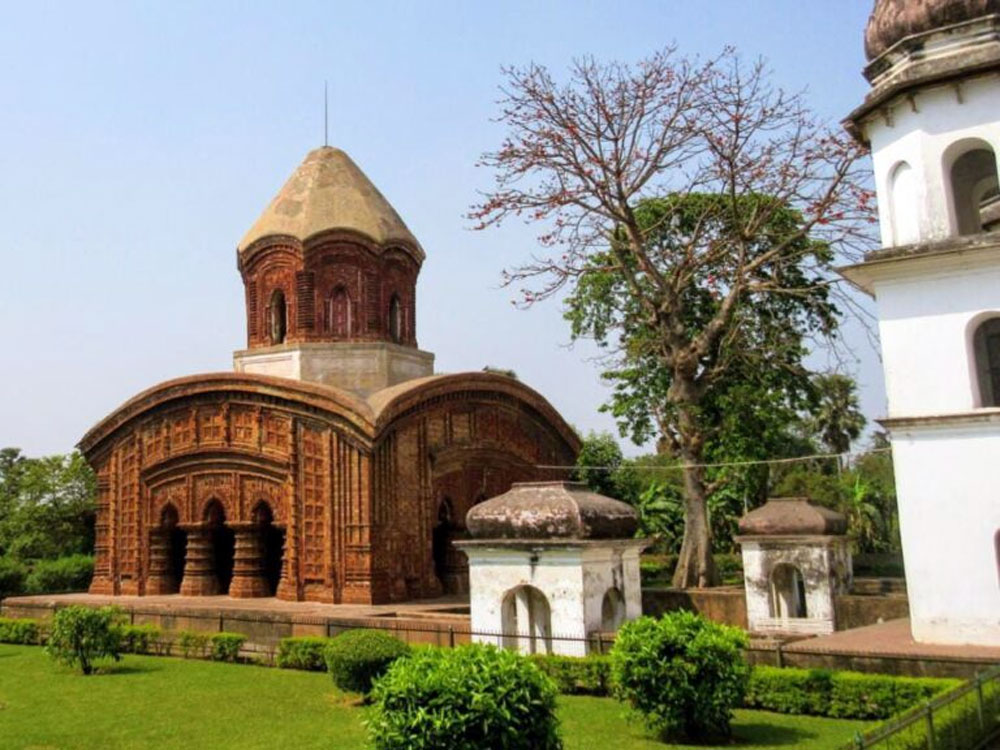
Then we got into a tuk tuk with Sam and had an uncomfortable 30 minute ride to a Disneyland temple - Hangseshwari. Here once again we had to take off our shoes and walk considerable distance to see the temple and then to visit an adjacent older temple which had impressive carvings all around it. After this it was once more into a tuk tuk and we were not allowed to get into one just by ourselves and there was a considerable to do before we landed up again with Sam in, albeit is somewhat more comfortable took and it was only 10 to 15 minutes before reaching the Riverside position where the boat had arrived. Then a ferry of five minutes with the ridiculous donning of life jackets for the passengers only before reaching the ship.
To get a larger photo, click on a thumbnail below
 |
 |
 |
 |
 |
 |
 |
 |
A well needed shower and then I had my leg dressed again: I had gashed it this in the morning on a sun chair on the forward deck and have had it attended to before lunch. Then a delightful cocktail, called a Painkiller, and tapas at the back of the ship before the briefing and supper at 7 pm. We talk to Robin, a former heart specialist, and his Indian companion Titu, over dinner and then back to the diary and to be prepared for another early start in the morning.