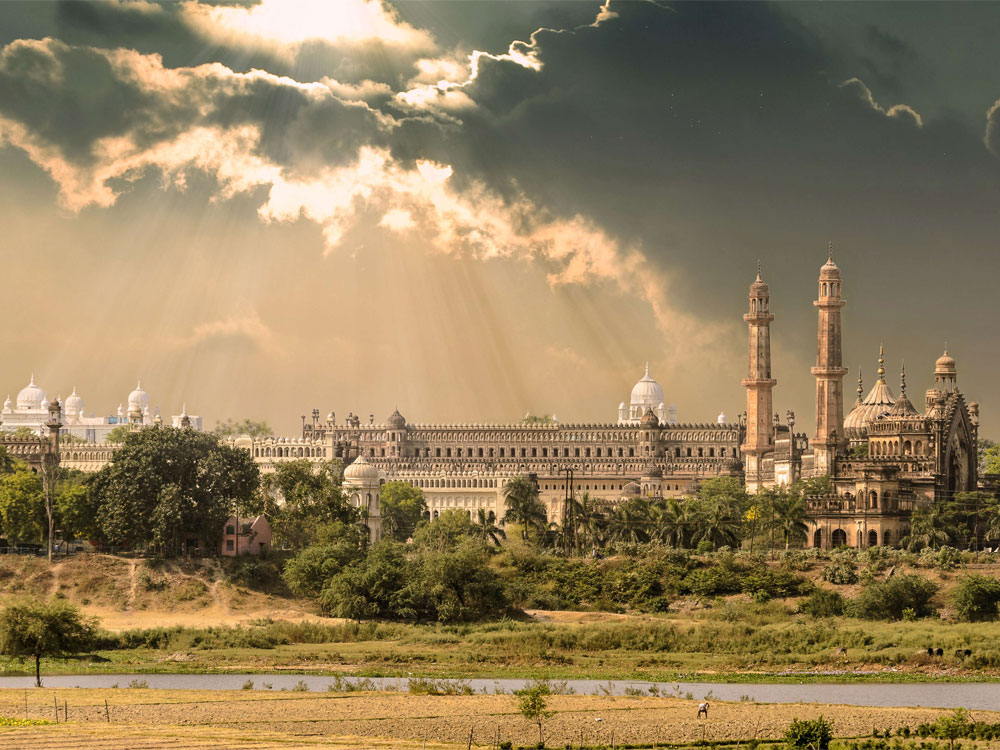
Lucknow, popularly known as the city of Nawabs, is a wonderful, open, airy city, with wide boulevards and a sense of order sometimes missing from the craziness of the bigger cities. There is much from the British Raj era to investigate, the most famous of which is the Residency - built in 1800, which became the setting for the dramatic siege of 1857 that lasted 147 days. Bara Imambara is a famous monument in Lucknow that has historical, cultural and heritage importance. Not far from this is the Hussainabad Imambara constructed in 1832, a fascinating complex with a watchtower and a replica of the Taj Mahal. There is also the old bazaar of Lucknow (Chowk Bazaar).
Lucknow is famous for its Awadhi cuisine, which is a blend of Mughal and Indian culinary styles. The city is particularly renowned for its kebabs, biryanis, and chaats.
Monday, October 20. Allahabad to Lucknow.
A difficult night with seemingly a pulled tendon at the back left-hand side of my neck that taken an ibuprofen seemed to ease it a bit and we set out at 9 am after a fairly basic but perfectly adequate breakfast.
It took us just under four hours to get to Lucknow, much of the way along toll roads with very little traffic on. The Indians were celebrating Diwali so there were no lorries on the road which made the going faster. We arrived at the Taj Mahal Palace Hotel before 1 p.m. and there we were met by the guide whose name I never heard. We had expected to go out with him about 4 pm but he wanted to go out within half an hour. So we settled on after an hour, which gave me a short time to sort out some washing and have a 10 minute lie down and a quick look around the hotel.
To get a larger photo, click on a thumbnail below
 |
 |
 |
 |
 |
 |
 |
 |
The hotel was someway from the old town where we had a "culinary experience", visiting three eating establishments: I cannot bring myself to call them restaurants. All their food was spicy so David did Trojan work eating both our portions but I was able to eat their delicious local bread, two varieties of them. The quantities of food being cooked were enormous, as was the quantity of flies around the pots.
The first eatery was Idrees Biriani, founded by the late Mohammad Idrees, this iconic eatery has become a cornerstone of Lucknow's culinary heritage. Their blurb says no extravagant ingredients, no flashy presentation—just age-old technique, coal-cooked mutton, and perfectly spiced rice that melts in your mouth. However the venue does not live up to the hype. There is nowhere to sit, the place is full of flies, and the food is no more than passable. But I am glad I went there for the experience of authentic street food. Because of its reputation, it attracts tourists (in small numbers) as well as locals.
Then Raheem Qulcha Nahari.for kebabs. I was not bowled over by the kebabs, nor by the ambience of the place, nor by the hygiene. But there again it is "authentic" street food, bought by locals rather than tourists. I certainly would never have gone there without being taken by a guide. But I am glad I did go, for the insight into local eating in India
After this, we walked through the Chowk Bazaar, a long alleyway between Hindu and Muslim areas with many old houses. There were lots of jewellers and people seem to be buying in these for Diwali. We navigated (or they navigated round us) all the motorbikes that went up and down in between the shops.
We entered another restaurant, Prakash Kulfi, where we sampled one of their deserts, Kulfi, which was very pleasant. Kulfi is "a dense, creamy, and traditional frozen dairy dessert from the Indian subcontinent, often called "traditional Indian ice cream". Unlike Western ice cream, it is not whipped with air, resulting in a denser texture. It is made by slowly simmering milk until it is reduced and thickened before being flavoured with ingredients like cardamom, saffron, rose, and pistachios" This place serves you that. It is not a high class restaurant, but a bit over-crowded, and somewhat basic. My guess would be that if you want to try kulfi, then you could try it somewhere more convenient than making the pilgrimage out here. But that having been said, the place is a legend in Lucknow, and that is really why you are going there
Then back to the hotel soon after four and Chris just collapsed on the bed. At one stage she decided to go for a swim but did not even get as far as putting her costume on before she realised that this was absolutely stupid. Hopefully tomorrow will be a much improved Chris. David is really suffering from a cough after his cold.
To get a larger photo, click on a thumbnail below
 |
 |
 |
 |
 |
 |
 |
 |
| Idrees Biriani | |||
 |
 |
 |
 |
 |
 |
 |
 |
| Raheem Qulcha Nahari | |||
 |
 |
 |
 |
| Prakash Kulfi |
To get a larger photo, click on a thumbnail below
 |
 |
 |
 |
 |
 |
 |
 |
| Chowk Bazaar |
Tuesday, October 21. Lucknow.
A nothing special breakfast for a Taj hotel but perfectly adequate, before this I attempted to go for a swim at 8 am when the pool was supposedly opened but had difficulty staying afloat downwards with the problems with my shoulder, but I did manage to float a bit and do some exercises.
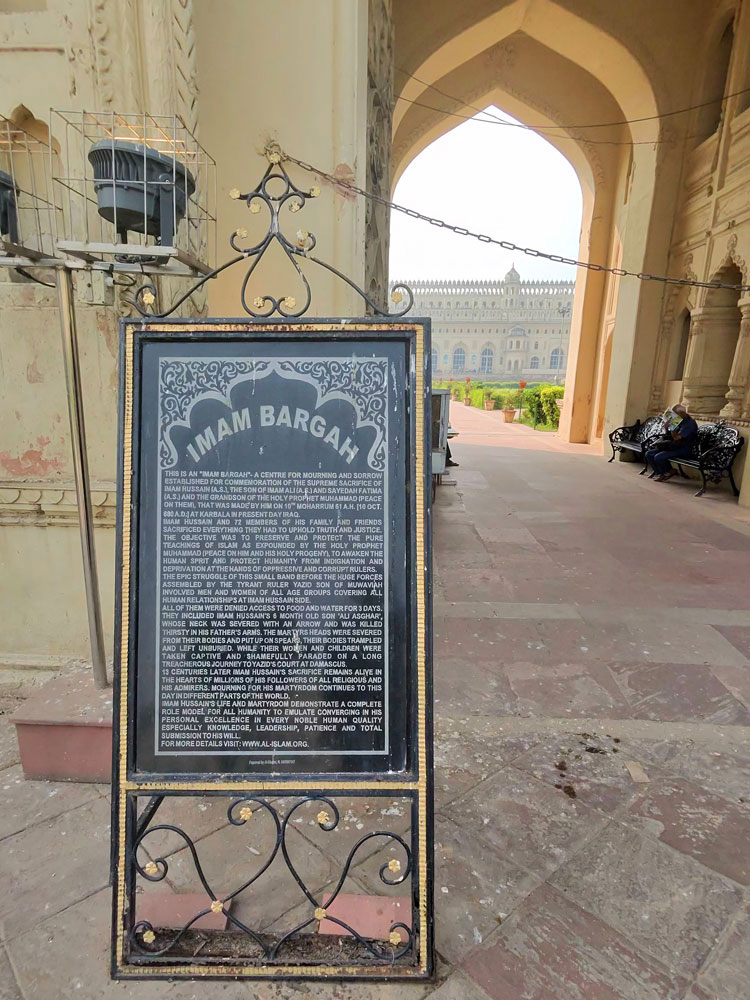
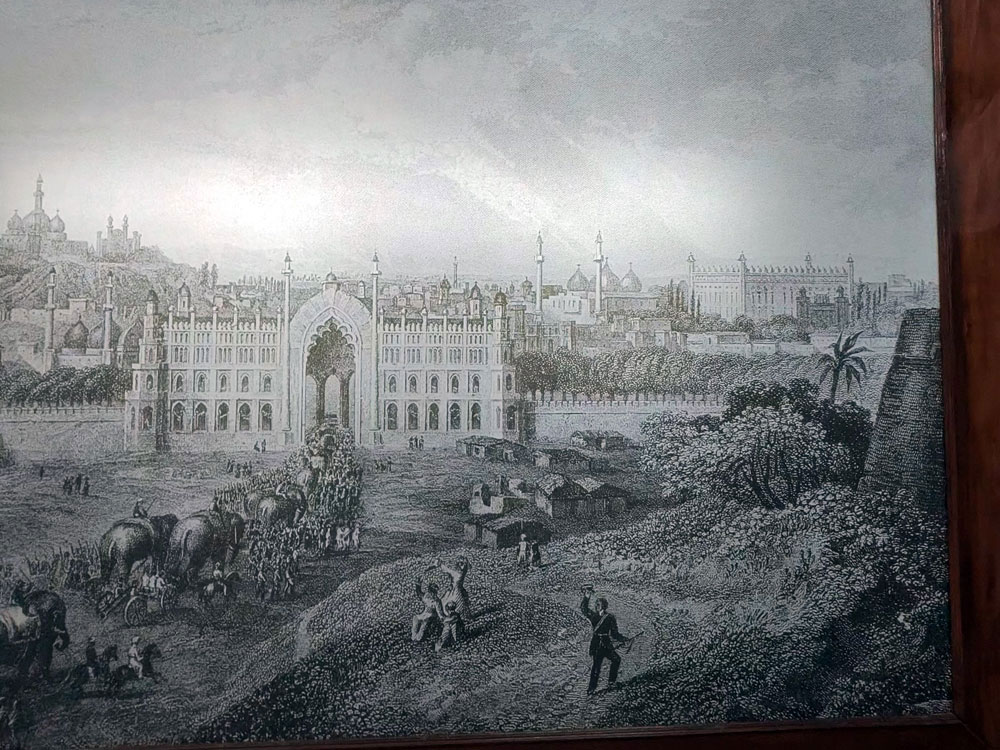
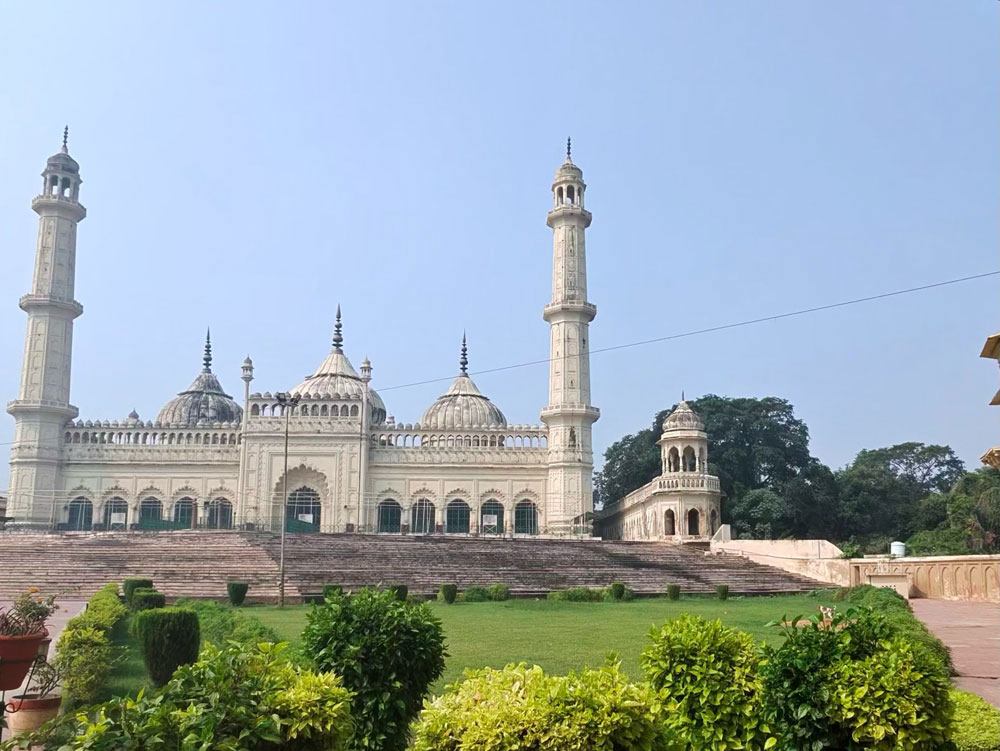
We left the hotel at 10 am and went first to the Bara Imambara followed by a visit to the Hussainabad Imambara. They were certainly impressive and were the sites where the holy book was read out during a festival in the month of May for about 60 days. There was also a very impressive mosque beside one of them. An Imambara is a place or a building with a hall where people assemble,

Bara Imambara
To get a larger photo, click on a thumbnail below
 |
 |
 |
 |
 |
 |
 |
 |
| Bara Imambara | The mosque within the complex | ||
 |
 |
 |
 |
 |
 |
 |
 |
| Hussainabad Imambara |
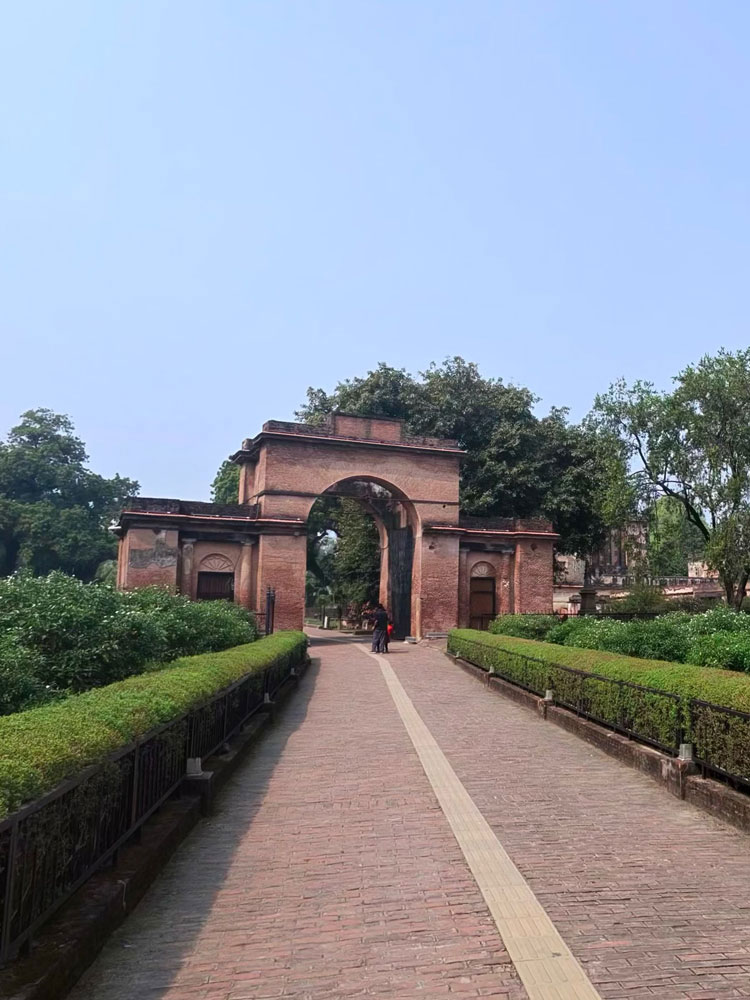
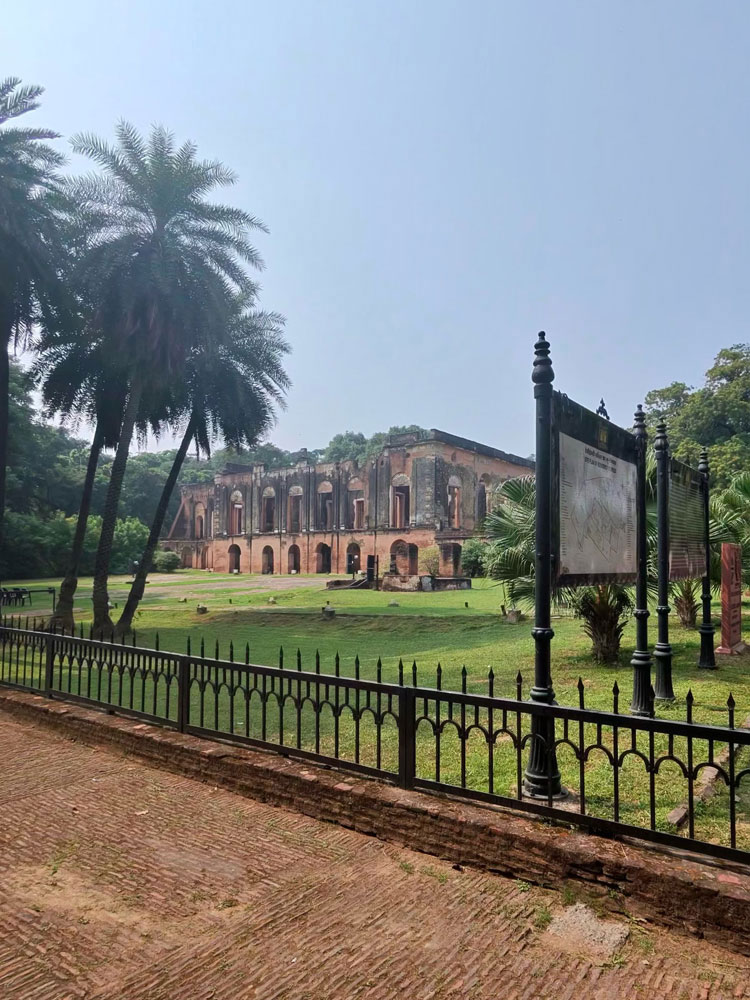
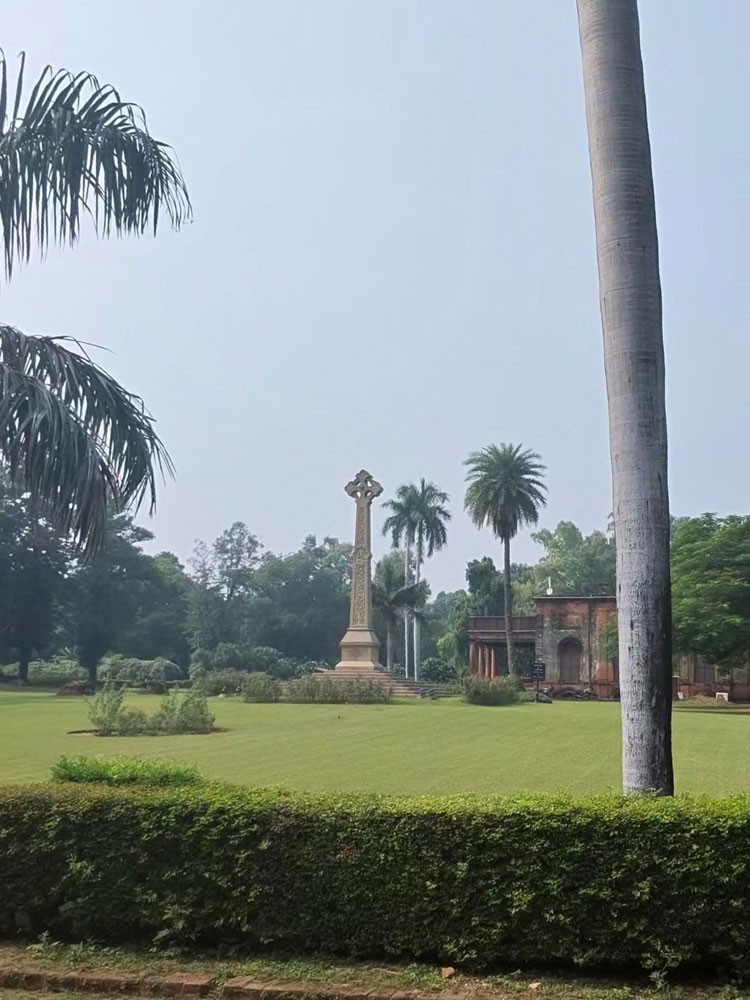
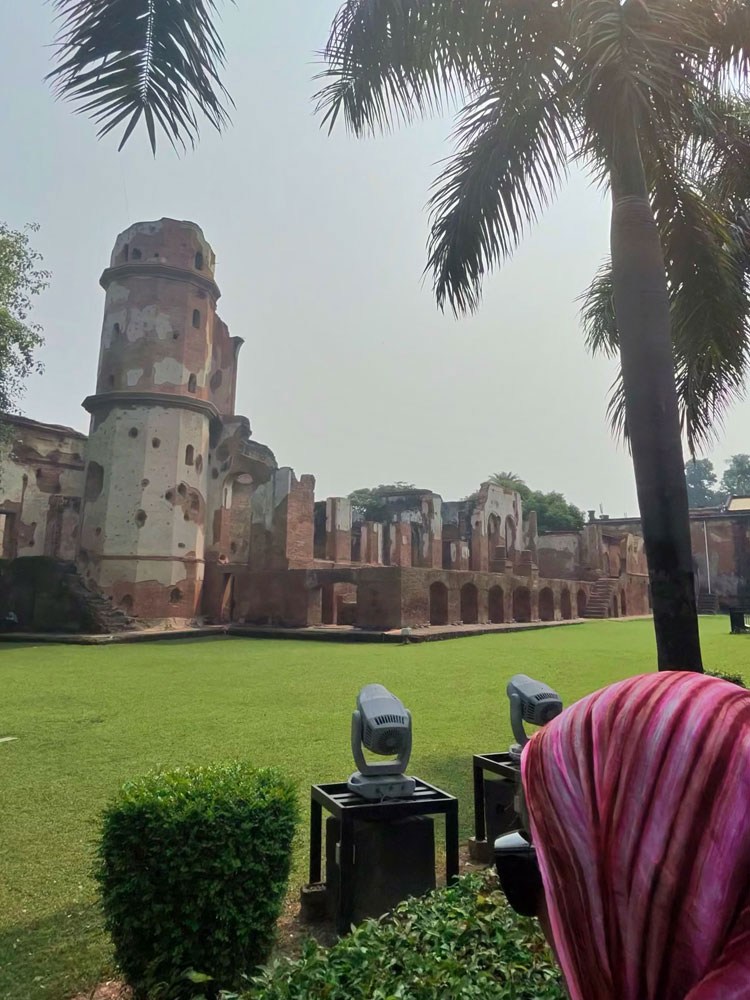
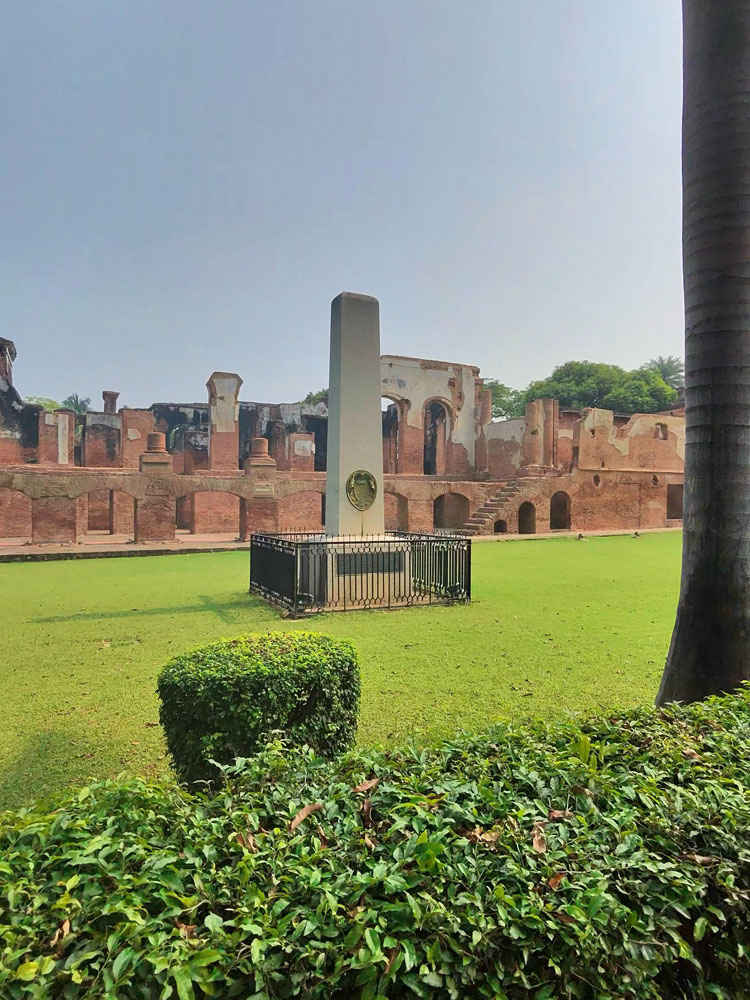
We then went to the Residency which had been built between 1770 and 1800 by the Indians for the British resident. It was a site of some 30 acres but in 1857 it got attacked by mutinying sepoys, there have been approximately 10,000 of the latter compared to a fighting force of 1000 in the residency. The siege lasted 87 days and only a third of the 2900 men, women and children in the residency survived. But they were eventually rescued by General Havelock from camp so were not actually defeated. After two successive relief attempts had reached the city, the defenders and civilians were evacuated from the Residency, which was then abandoned. But they never rebuilt the damaged houses on the 30 acre site and retreated to other palaces nearby.
The Residency has been maintained as it was at the time of the final relief during the Siege of Lucknow, and the shattered walls are still scarred by cannon shot. Ever since Indian Independence, little has changed. The ruined building is now surrounded by lawns and flowerbeds and serves as a tourist attraction. The cemetery at the nearby ruined church has the graves of 2,000 men, women and children, including that of Sir Henry Montgomery Lawrence who died during the siege. There is a weathered epitaph near the grave of Sir Henry that reads "Here lies the son of Empire who tried to do his duty" while another nearby grave reads "Do not weep my children, for I am not dead, but am sleeping here."
To get a larger photo, click on a thumbnail below
 |
 |
 |
 |
 |
 |
 |
 |
 |
 |
 |
 |
 |
 |
 |
 |
We then visited La Martiniere College for young gentleman which had been founded about 1845 and converted successfully from an all European boys school in 1947 to one the young Indian gentleman. Entry was at the age of four when the boy was interviewed along with his parents, only 350 places being available for the 10,000 applicants. This was certainly an impressive looking school and seemed remarkably cheap for a day boy to be educated there.
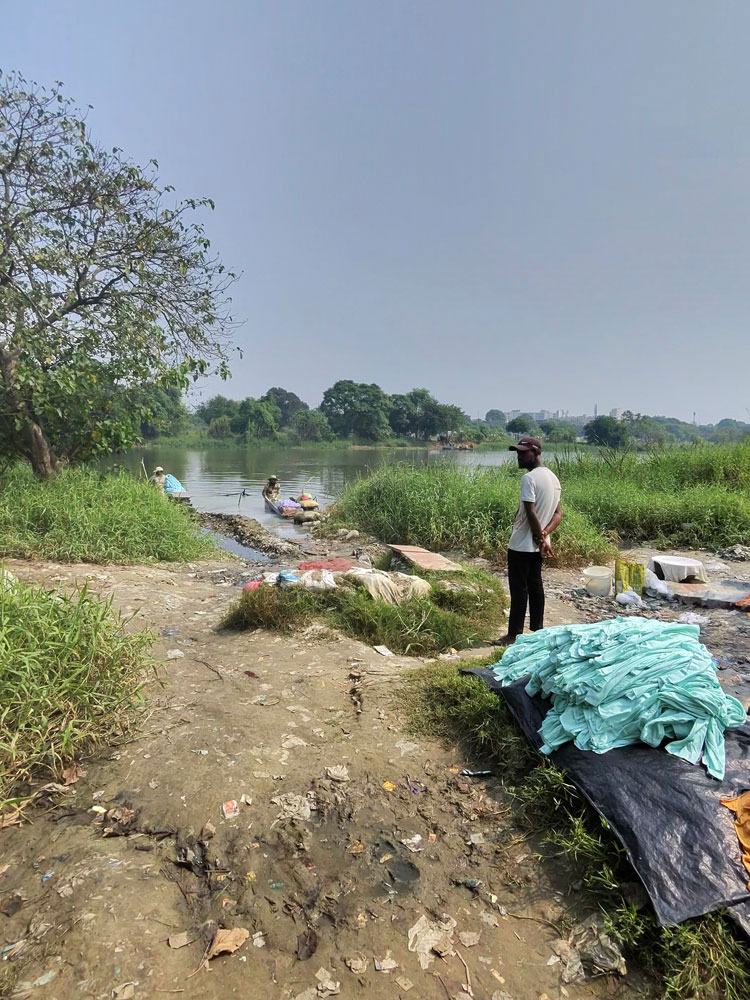
We went to the river bank and saw the Dobhi Wallahs at work with their washing
To get a larger photo, click on a thumbnail below
 |
 |
 |
 |
 |
 |
 |
 |
| Dhobi Ghat | |||
 |
 |
 |
 |
| La Martiniere College |
We were then returned to the hotel for two hours and Chris had a much needed siesta. Resumed our tour at 4 pm with a visit to the Nawab of Awadh’s house for tea. This invitation having been purchased by Wild Frontiers. We were there for just over an hour and it was quite interesting, but we were really surprised that the area in which this house was situated, almost a slum. So we think that he has fallen on hard times: he is also a professor of commerce at Lucknow university, aged about 60 with one son and two daughters.
To get a larger photo, click on a thumbnail below
 |
 |
 |
 |
Back at the hotel I did some ironing, trying to rescue what Pandaw had done to certain shirts and trousers. Then we went to the bar and had two cocktails in a very dark area. The cocktails were pleasant, but once again getting the bill was time consuming. And another early night for a 6 am rise in the morning for an Indigo flight onwards.