A detailed guide to the area, with maps
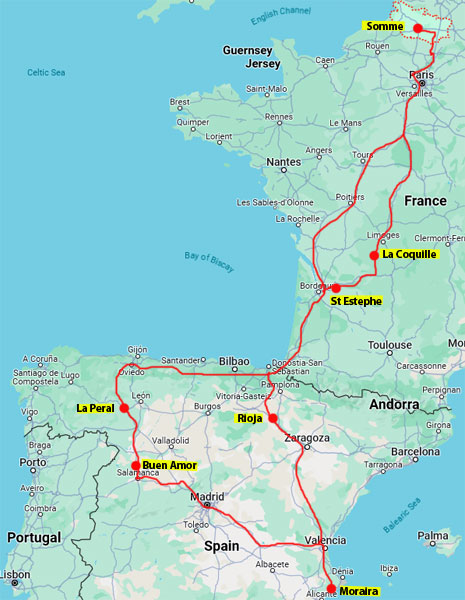
8 July Monday St Estephe to the Somme
We left our Chateau at St Estephe at 9:15 am. . We then drove for almost an hour through bucolic villages which was really agreeable , before heading north on the motorways. Then a fairly uneventful drive, with just stops for petrol and a picnic until we reached the Paris Ring Road, where there were the inevitable traffic jams.
We arrived at our B&B in Boisselle on the Somme at around 18.00 pm and had a wonderful welcome by Julie and David. They were the most hospitable hosts and had a vast knowledge about the battlefields. The room itself was fairly small and somewhat garish but that did not matter
At 7 pm we went down to dinner and this was most acceptable with just us, our hosts and Mark Connolly who was a professor of history at Kent University and a fund of information on the Imperial War Graves commission and all the cemeteries in the Somme region. Later on we were joined by other residents of the B&B and had a talk by Mark on the creation and the architecture of several of the cemeteries in the area. I am not convinced that academics do not read too much into the meaning of the architecture
Click on a thumbnail below to get a larger photo
 |
 |
 |
 |
 |
 |
 |
 |
 |
 |
 |
 |
9 July Tuesday
A really good breakfast: bacon, poached egg and baked beans after cereal yogurt and fruit.
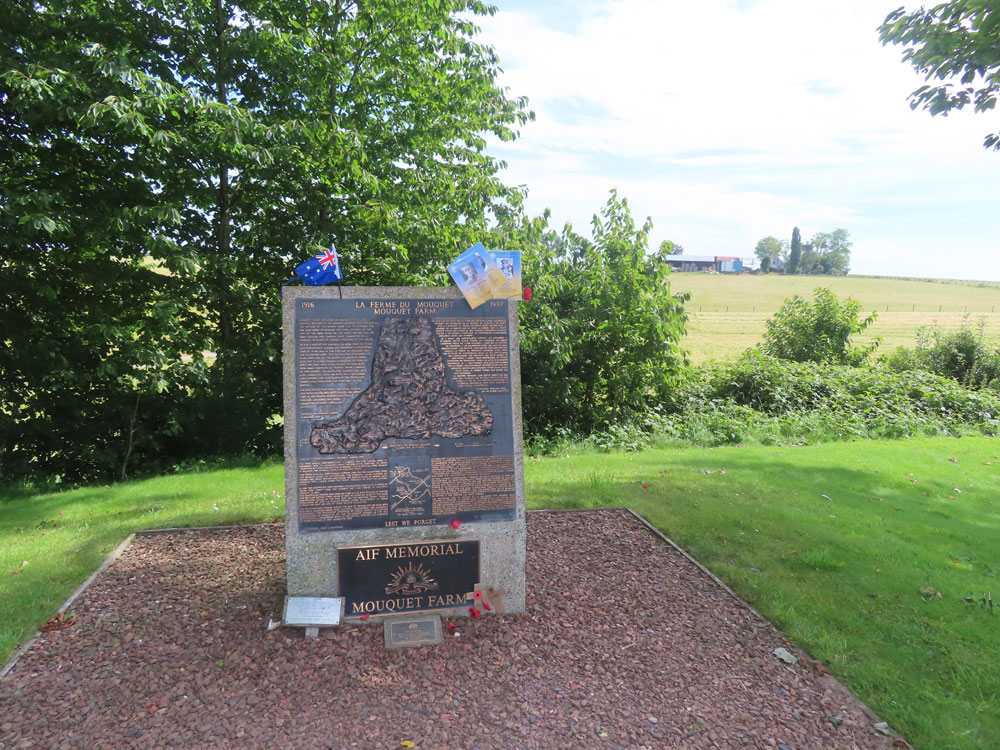
We set out to view some battlefields soon after 10. The first stop was at.Pozi ers, The Australian Memorial for the Somme. then on to The Luytens Thiepval memorial to commemorate all soldiers with no known grave. from here to the Ulster Tower, which we had visited many years previously and where there was also the memorial to the loyal orange lodge LOL 1916
The next one was sunken lane at Beaumont Hamel. We walked from here to the Hawthorn Ridge Crater (the only WW1 mine explosion recorded on film) , and then got soaked returning into the car when the heavens opened.
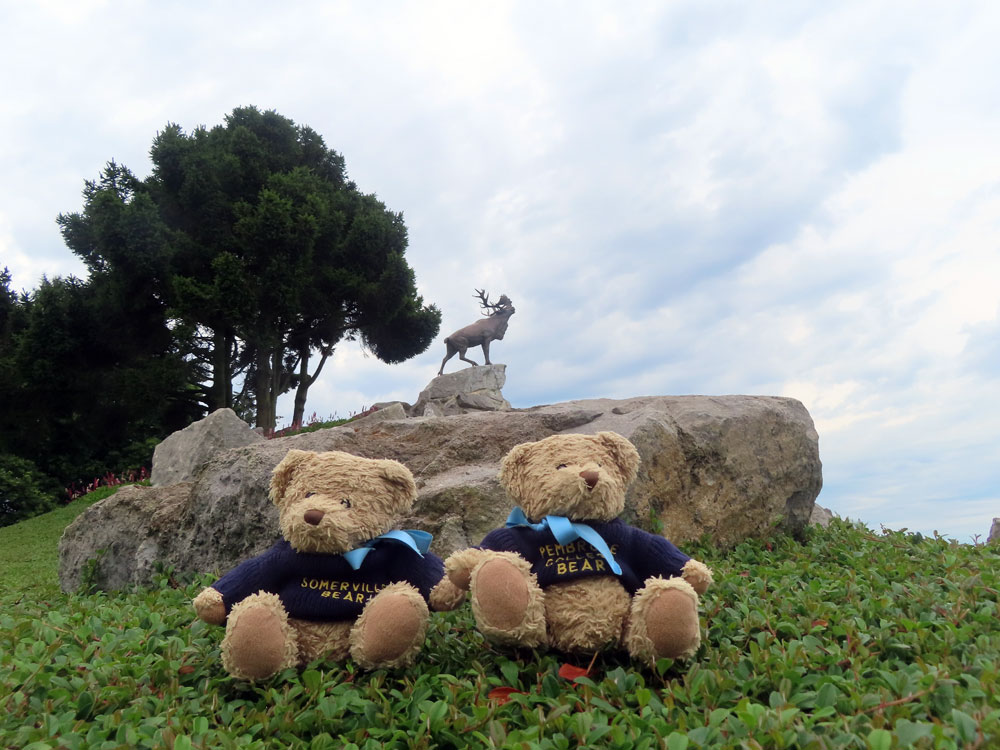
Next was the Newfoundland complex which had been beautifully created and where we had a long walk to see the trenches of both the English and the Germans. At all these sites there were too many coaches of school children for our enjoyment of the sites.
Final destination was the town of Albert where we parked in the municipal car park and got a wonderful view of the church with its angel lit up in the sunlight from above it. When doing this the heavens opened again and we made a dash to 2 canopies where we took shelter. Hailstones in abundance from the skies for about 10 minutes at least and we were enveloped in a river round our feet but stayed dry otherwise. We then had a short tour of the town and stopped in a Poppy cafe for a smoothie and a cake.
Once back at the B&B, I had a siesta and then a shower before dinner at seven. This was again an interesting session of conversation mainly with just Julie and David later with the two other guests from Devon that were staying here.
Poziers Cemetery and the Australian Memorial
Click on a thumbnail below to get a larger photo
 |
 |
 |
 |
 |
 |
 |
 |
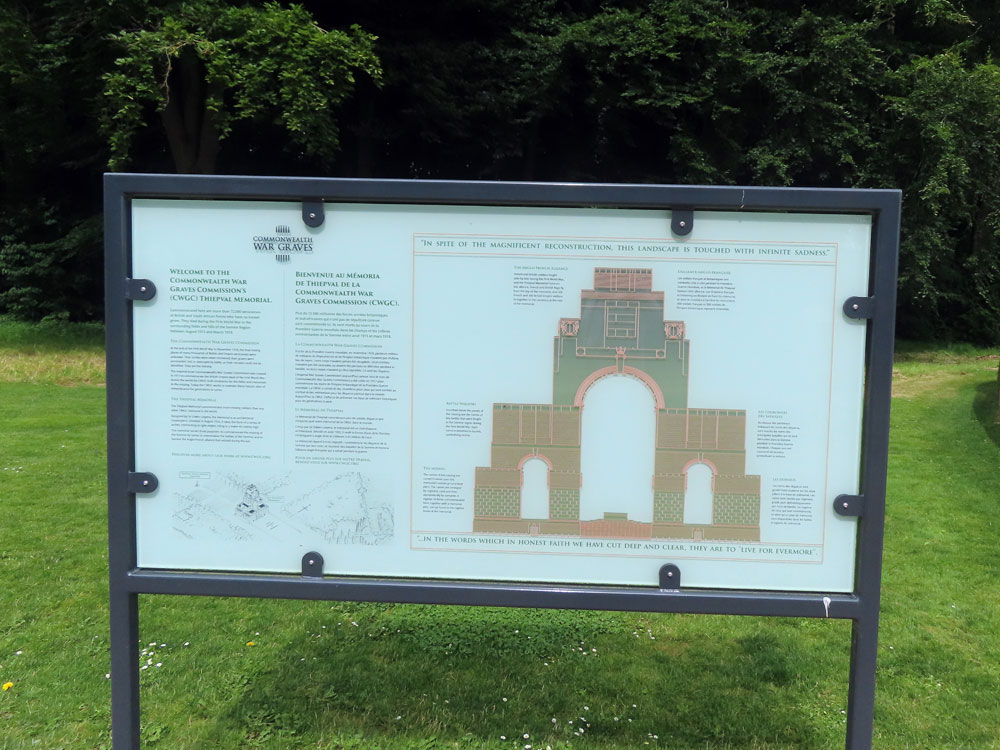
Thiepval Lutyens Memorial
To the fallen with no known grave
On 1 July 1916, supported by a French attack to the south, thirteen divisions of Commonwealth forces launched an offensive. Despite a preliminary bombardment lasting seven days, the German defences were barely touched and the attack met unexpectedly fierce resistance. Losses were catastrophic and with only minimal advances on the southern flank, the initial attack was a failure. In the following weeks, huge resources of manpower and equipment were deployed in an attempt to exploit the modest successes of the first day. However, the German Army resisted tenaciously and repeated attacks and counter attacks meant a major battle for every village, copse and farmhouse gained. At the end of September, Thiepval was finally captured. The village had been an original objective of 1 July. Attacks north and east continued throughout October and into November in increasingly difficult weather conditions. The Battle of the Somme finally ended on 18 November with the onset of winter.
In the spring of 1917, the German forces fell back to their newly prepared defences, the Hindenburg Line, and there were no further significant engagements in the Somme sector until the Germans mounted their major offensive in March 1918.
The Thiepval Memorial, the Memorial to the Missing of the Somme, bears the names of more than 72,000 officers and men of the United Kingdom and South African forces who died in the Somme sector before 20 March 1918 and have no known grave. Over 90% of those commemorated died between July and November 1916.
The memorial, designed by Sir Edwin Lutyens, was built between 1928 and 1932 and unveiled by the Prince of Wales, in the presence of the President of France, on 1 August 1932
The dead of other Commonwealth countries, who died on the Somme and have no known graves, are commemorated on national memorials elsewhere.
Click on a thumbnail below to get a larger photo
 |
 |
 |
 |
 |
 |
 |
 |
Ulster Tower

The Ulster Tower, located in Thiepval, Northern Ireland's National War Memorial. It was one of the first memorials to be erected on the Western Front and commemorates the men of the 36th (Ulster) Division and all those from Ulster who served in the First World War. The memorial was officially opened on 19 November 1921 and is a very close copy of Helen's Tower which stands in the grounds of the Clandeboye Estate, near Bangor, County Down, Northern Ireland. Many of the men of the Ulster Division trained in the estate before moving to England and then France early in 1916.
The Ulster Division attacked the Schwaben Redoubt on 1 July 1916. The Schwaben Redoubt was a little to the north-east of where the tower stands, and was a triangle of trenches with a frontage of 300 yards, a fearsome strong point with commanding views. It is also located close to the Thiepval Memorial to the Missing of the Somme. Troops of the 109th Brigade crossed about 400 yards of no man's land, and kept on going. They entered the Schwaben Redoubt, and advanced on towards Stuff Redoubt, gaining in all around a mile, though not without losses. To their left, the 108th Brigade were successful in advancing near Thiepval, but less so nearer the River Ancre. The 107th Brigade supported them, but although men of the 36th Division held out for the day the Germans mounted counterattacks, and as their stocks of bombs and ammunition dwindled, many fell back with small parties remaining in the German front lines. The casualties suffered by the 36th Division on 1 July totaled over 5,000.
Hidden around the back of the tower is a memorial commemorating the part played by members of the Orange Order during the battle. The inscription on this memorial reads: "This Memorial is Dedicated to the Men and Women of the Orange Institution Worldwide, who at the call of King and country, left all that was dear to them, endured hardness, faced danger, and finally passed out of the sight of man by the path of duty and self sacrifice, giving up their own lives that others might live in Freedom. Let those who come after see to it that their names be not forgotten."
An article in the Irish Times in 2021 ran
It was the first large-scale memorial on the Western Front. Captain James Craig, one of the founders of the Ulster Volunteer Force (UVF) and Northern Ireland's first Prime Minister, advanced the idea of a memorial to the men of the 36th less than a week after the war ended in November 1918. He and Sir Edward Carson, the Dublin-born lawyer turned crusader of Protestant Ulster, were unanimous that the location "should be secured and the monument erected on a suitable plot to the spot where so many gallant men laid down their lives and where the Division began its glorious career."
It had a political imperative too. Northern Ireland was created in 1920 when the British Government brought in the Government of Ireland Act partitioning Ireland into separate political entities. At the end of the war, some £5,000 was raised within a couple of months after Craig announced his plan for a suitable memorial to the men of the 36th...It was a difficult project to undertake in the context of a devastated local economy and landscape. The tower was finally opened on Sunday, November 19th, 1921. A party of some 150 people, half from Ireland, half from Britain, arrived by boat-train from Victoria Station and were taken to Amiens and from there to Thiepval for the memorial service. The Somme region was still ruined three years after the war ended. The countryside would take generations to repair. “To right and left, before, behind, everywhere so far as the eye can see, there is a vast sea of black despair,” wrote the unnamed Irish Times reporter who attended the unveiling.
[After WW2} Increasingly forgotten and neglected, the campaign to rescue it from obscurity began with a rededication ceremony in 1989. The Somme Association, set up the year before, was given the task of managing it. In 1993 an obelisk memorial to members of the Orange Order who had died with the 36th (Ulster) Division was opened in a little garden to the right of the tower. If the memorial to the Orange Order was exclusive, the adjacent museum opened in 1994 is more inclusive in sentiment. It pays tribute to all the Irish regiments, north and south, that fought at the Somme.
Click on a thumbnail below to get a larger photo
 |
 |
 |
 |
 |
 |
 |
 |
Sunken Lane
The sunken road was in No Man’s land on the morning of the 1st July 1916. Its situation made it too dangerous to hold by either side, though the Germans probably held the advantage through their dominance of the higher ground. The Lancashire Fusiliers would have been advancing towards Sunken Lane. By 0300 hours on 1st July At 0720 hours the Hawthorn mine was detonated and of course the British bombardment in the area had to stop because on the far side of the hill the 2nd Royal Fusiliers were rushing the crater.
By now it was broad daylight and the Germans had already spotted the Lancashires waiting down below them. The German artillery put down a bombardment of their own The British bombardment was still going on and this would have helped keep German patrols away.
At 0720 hours the Hawthorn mine was detonated and of course the British bombardment in the area had to stop because on the far side of the hill the 2nd Royal Fusiliers were rushing the crater. By now it was broad daylight and the Germans had already spotted the Lancashires waiting down below them. The German artillery put down a bombardment of their own.
At 0730 hours – ZERO hour – the Lancashires rose up out of the Sunken Road moving leftwards out of the above photo. They were cut down within a matter of metres.
Click on a thumbnail below to get a larger photo
 |
 |
 |
 |
Newfoundland Memorial

The 74-acre preserved battlefield park encompasses the grounds over which the Newfoundland Regiment made their unsuccessful attack on 1 July 1916 during the first day of the Battle of the Somme. The Battle of the Somme was the regiment's first major engagement, and during an assault that lasted approximately 30 minutes the regiment was all but wiped out. So far as can be ascertained, 22 officers and 758 other ranks were directly involved in the advance. Of these, all the officers and about 658 other ranks became casualties. Of the 780 men who went forward only about 110 survived unscathed, of whom only 68 were available for roll call the following day. The unit suffered a casualty rate of approximately 80%.
Purchased in 1921 by the people of Newfoundland, the memorial site is the largest battalion memorial on the Western Front, and the largest area of the Somme battlefield that has been preserved. Along with preserved trench lines, there are a number of memorials and cemeteries contained within the site.
Since September 2023 the site has been a World Heritage Site being one of 139 locations included in the newly inscribed Funerary and memory sites of the First World War (Western Front)
Click on a thumbnail below to get a larger photo
 |
 |
 |
 |
 |
 |
 |
 |
Albert
 |
 |
 |
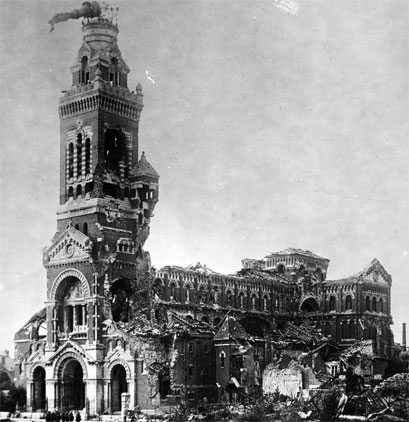
The Golden Virgin sculpture which stood on the dome of the Basilica was damaged during Battle of Albert 1914. In 1914 the French and Germans staged their troops in Albert, France and the German troops suspected that the French may use the bell tower as an observation post to direct military manoeuvres, so beginning in October 1914 they shelled the dome.
By 7 January 1915 the dome was destroyed and by 21 January 1915 the base of The Golden Virgin was hit and the statue was knocked sideways past 90 degrees.
The figure of the Virgin Mary was secured by French engineers. The 'Leaning' or 'Golden' Virgin was a familiar landmark to British and Dominion soldiers serving on the Somme. A popular legend that the war would end when the 'leaning virgin' fell was dispelled when the basilica, by then in German hands, was destroyed by British artillery on 16 April 1918, seven months before the Armistice.
The Madonna and Child statue above the dome was damaged, separated, recast and placed upon the newly reconstructed basilica.
Click on a thumbnail below to get a larger photo
 |
 |
 |
 |
Poppy Coffee Shop, Albert
Click on a thumbnail below to get a larger photo
 |
 |
 |
The Lochnagar Crater

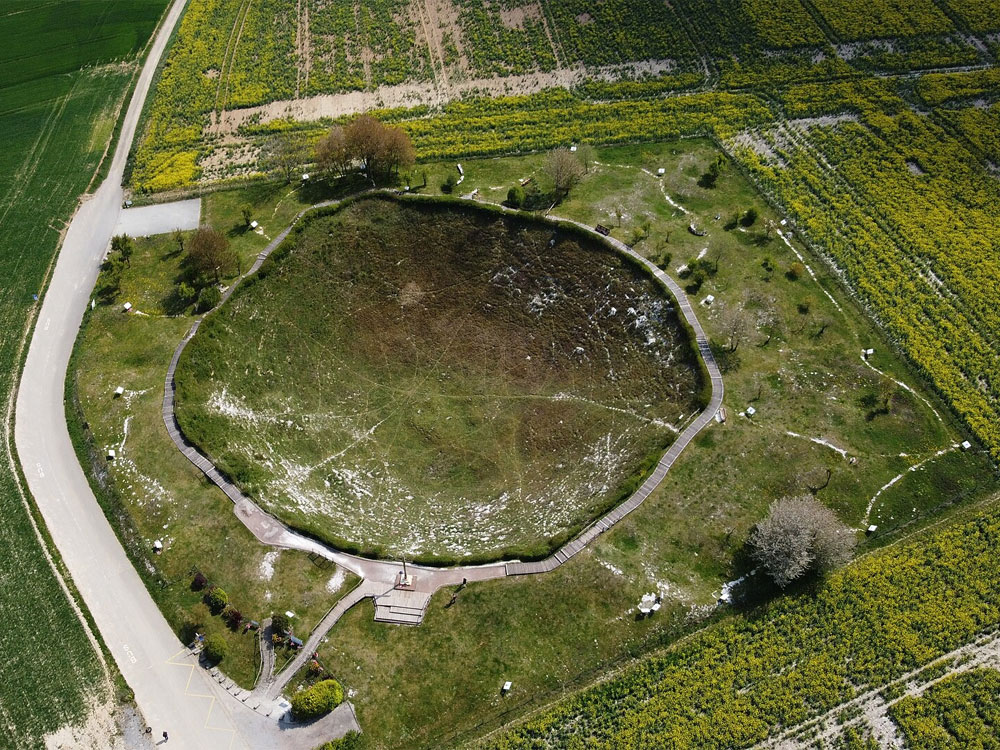
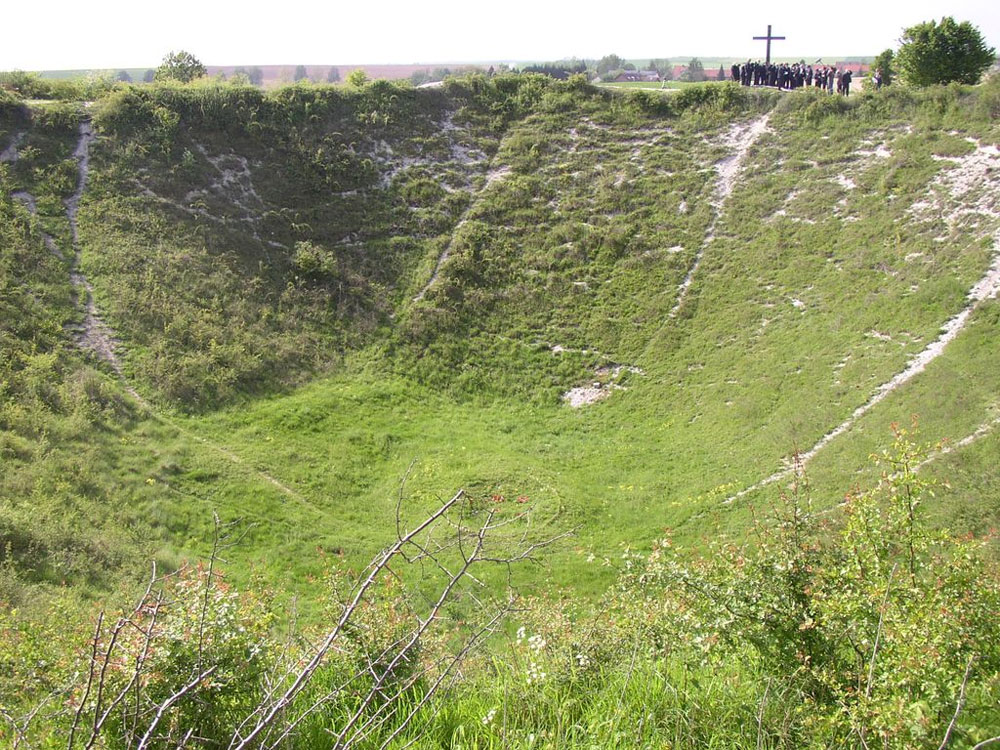
The Lochnagar mine crater is one of several which remain visible on the Western Front today. In the Somme area, others may be seen at Hawthorn Ridge near Beaumont Hamel and on the edge of High Wood. On the 1st of July 1916, a series of large mines beneath the German Front Lines were exploded by the British just before the troops attacked. Lochnagar crater is on the edge of La Boiselle It’s possible to walk all around the edge of the crater, but access to the crater itself is not permitted
The crater was created by the explosion on 1st July 1916 of two charges of ammonal (36,000 lbs and 24,000 lbs, 60 feet apart) under a German position called Schwaben Hohe. The crater originally measured some 300 feet across and 90 feet deep. Despite this, the attack in this sector on the 1st of July was not successful, and the losses sustained, particularly by the Tyneside Scottish and other units of the 34th Division, were heavy.
Lochnagar crater is managed by the Lochnagar Crater Foundation. Farming on the land around had encroached towards the crater over the decades, and in 1978, Richard Dunning purchased the land to ensure the crater could be maintained suitably as a memorial. The bodies of many German soldiers who would have been killed when the mine went off probably still lie here.
Click on a thumbnail below to get a larger photo
 |
 |
 |
 |
.10 July Wednesday
After another good breakfast, we set up just before 10.00 for Kipling‘s son’s grave in St Mary' Advanced Dressing Station Cemetery. It took us a long time to find it !
After this we went to see a site shown in the painting of the Padre blessing the Munster troops before a battle. Today not very prosaic, with a coal tip in the background
Then we went to Noeux Aux Mines where we parked by a French war memorial and looked for a church which turned out to be closed
Then back to Bapaume along the motorway., We went to the South African memorial park at Delville Wood, Having our picnic there before visiting the cemetery and the impressive museum surrounded by the woods.
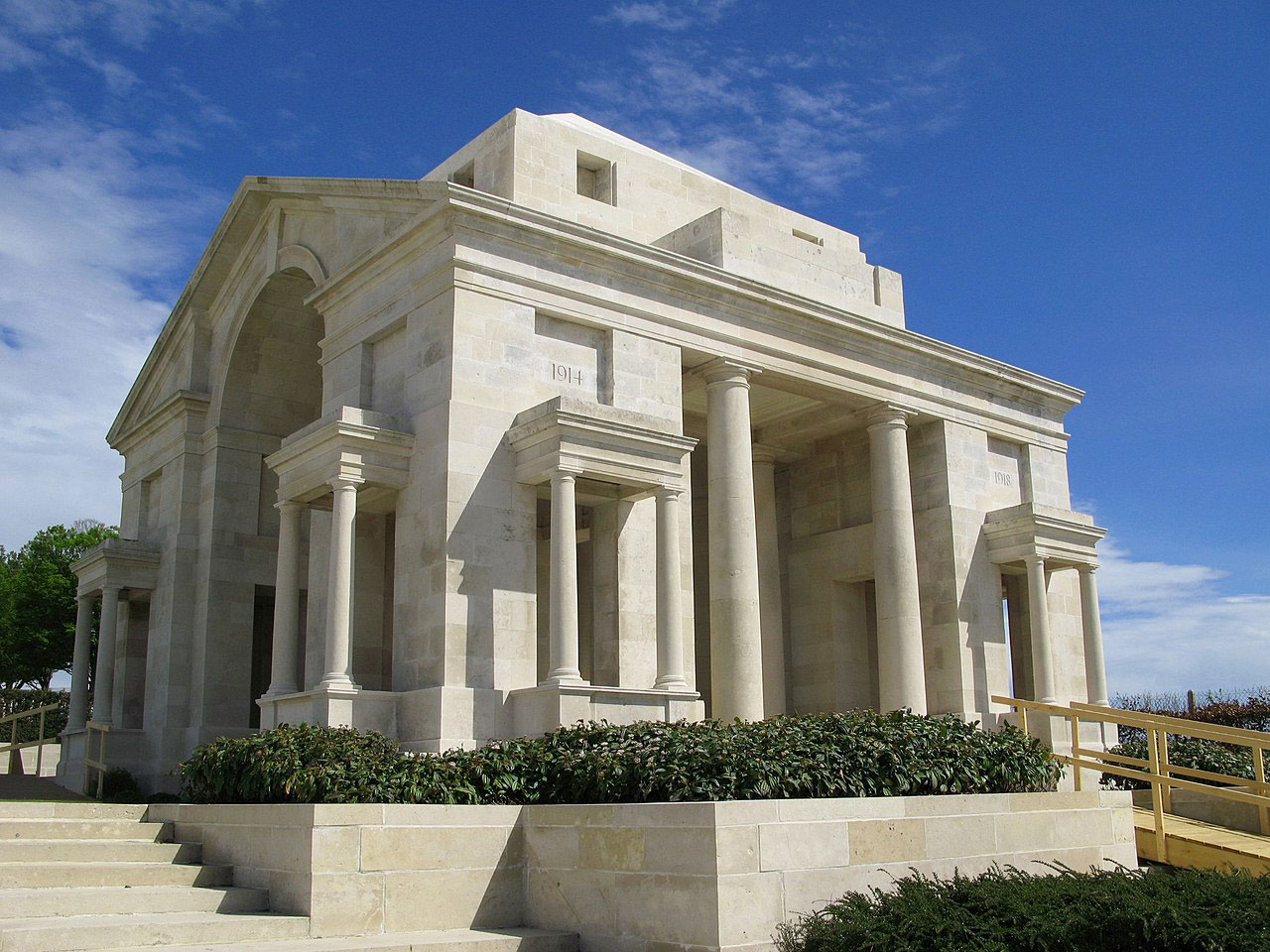
Then on to the New Zealand monument at Caterpillar Valley. Interestingly the memorial was covered in caterpillars crawling around it. Caterpillar Valley cemetery was about five minutes away by car.
Home about 5:30 pm after this day of so many U-turns. There were 11 for dinner that night and I found the conversation quite interesting, especially with David our host. Whilst this was going on England were playing the semi-final match against the Netherlands which somehow they managed to win.. What?
John Kipling's Grave
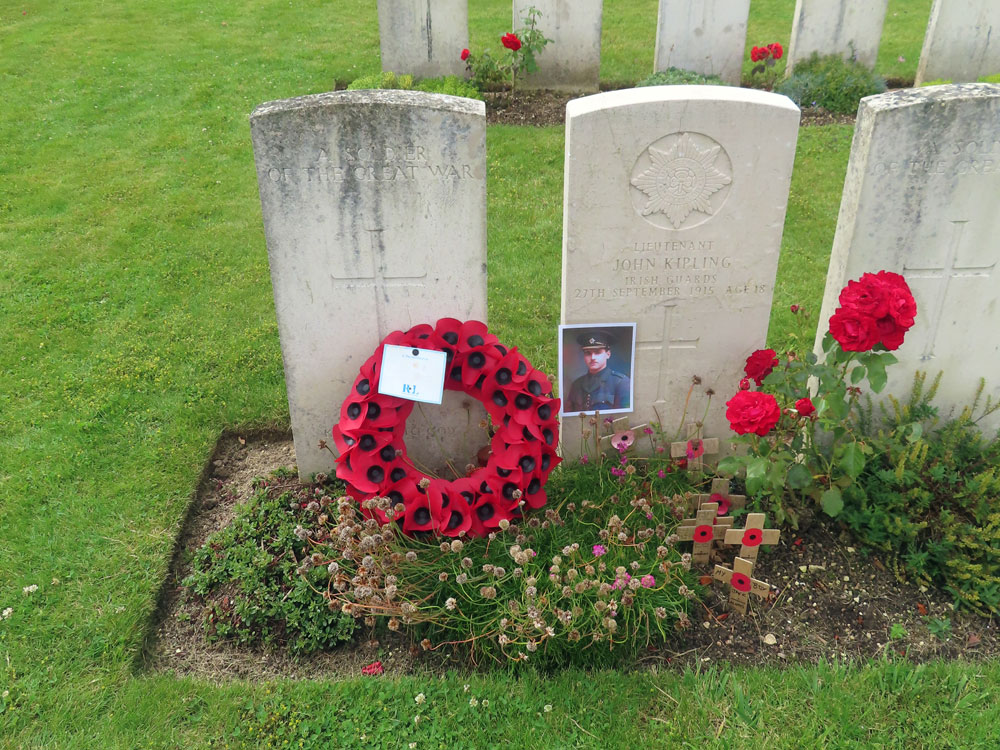
On 23 September 1919 the remains of a casualty were discovered by a British Army burial party searching the old Loos battlefield. The casualty was recorded as an “Unidentified British Soldier, Officer Lieut. Irish Guards”.
The casualty discovered in 1919 was exhumed on the same day as 56 other men from a search recorded by the burial party as grid square G.25 on British military map sheet 44a. These 57 men were all reburied north of Loos-en-Gohelle village at one of the three British military concentration cemeteries for the Loos battlefield. The cemetery they were taken to is now called St. Mary’s ADS Cemetery. The unidentified Irish Guards officer was buried in Plot 7, Row D, Grave 2.
In 1992 the Commonwealth War Graves Commission replaced the headstone at the grave of the unidentified Irish Guards lieutenant with a stone bearing the name of Lieutenant John Kipling. The identity of the man in this grave has, since then, been the subject of debate:
Basically you read the (conflicting) research, and reach your own conclusion. My own view is that it is not Kipling. However the debate has only arisen because of who his father was. Had his father not been famous like Rudyard Kipling, then the questions would never have been debated
Click on a thumbnail below to get a larger photo
 |
 |
 |
 |
 |
 |
 |
 |
Last Absolution of the Munsters

‘The Last Absolution of the Munsters at Rue du Bois, 8th May 1915’ was painted in 1915 by the Italian artist, Fortunino Matania, and is one of the most famous and evocative Irish related paintings of the War.
It depicts the Catholic Chaplain of the 2nd Battalion of the Royal Munster Fusiliers giving a General Absolution to the men of the Battalion at dusk on the eve of the Battle of Aubers Ridge which took place on the 9th of May, 1915. In front of a wayside shrine on the Rue du Bois, the priest, Father Francis A. Gleeson, is on horseback, to his left, also on horseback, is the Commanding Officer of the 2nd Munsters, Colonel Victor G. H. Rickard. On foot directly behind Father Gleeson, the Adjutant, Captain Thomas W. Filgate, stands next to the shrine with his rifle slung over his shoulder. To the Chaplain’s right and a few feet away from Filgate, with his rifle in front of him on the ground, stands the Regimental Sergeant-Major, John Ring. All four figures stand to face some of the men of A Company of the 2nd Munsters.
The absolution was just before the battalion took up its trench position on 8 May 1915, relieving the 1st Coldstream Guards. Lt-Col Rickard (b. c. 1873) died along with one sixth of his men the following morning in the Battle of Aubers Ridge, a disastrous military failure. The painting was probably inspired by Col. Rickard’s wife
She became occupied with memorialising his sacrifice. The first of what were to be four articles by her on the war experience of the Munster Fusiliers appeared on 10 July 1915 in New Ireland—a weekly review. The first article was devoted specifically to the Aubers Ridge action. It is probable that Matania based his illustration on the original New Ireland article. A very well-known war artist, noted for his photographic realism, Matania visited the Western Front regularly throughout the war. He visited Neuve Chapelle, close by the Rue du Bois, just after it was taken by the British in a major action in March 1915. This would have given him a familiarity with the terrain there..
After the war, Francis Gleeson Gleeson returned to Ireland and his position at the Church of Our Lady of Lourdes. He encountered hostility from Irish republicans due to his association with the British Army; it is said that the Bishop of Cork, Daniel Cohalan, a fervent nationalist, deliberately placed Gleeson in pro-republican parishes. Gleeson was appointed curate in St Michael's Parish, Dún Laoghaire in 1920. Thanks to his previous military experience Gleeson received an appointment as command chaplain to Dublin Army Command of the Irish Free State Army in February 1923, and was with them through the Irish Civil War.
Gleeson was appointed curate of Bray, Aughrim in 1924 and became the priest of the parish in 1941. He was appointed parish priest of St Catherine's in Meath Street, Dublin in 1944. Gleeson was elected a canon of the Metropolitan Chapter of the Archdiocese of Dublin in 1956 and died in June 1959. He was buried at the Glasnevin Cemetery in Dublin.
Gleeson's war diaries were discovered in a room at his clergy house many years after his death and are held by the Archdiocese of Dublin and the National Museum of Ireland at Collins Barracks, Dublin.
The stole Gleeson wore during his famous absolution before Aubers Ridge was rediscovered in August 2014 in the collection of the National Army Museum, having been acquired by them in 1959
Click on a thumbnail below to get a larger photo
 |
 |
 |
 |
Noeux Aux Mines
The French memorial (Monument aux Morts) commemorates the residents of Noeux-les-Mines who gave their lives in the First World War and the Second World War and the wars in Indochina (1946-1954) and Algeria (1954-1962).
There were many casualties around here in 8th Royal Dublin Fusiliers, and 8th Royal Inniskilling Fusiliers
Click on a thumbnail below to get a larger photo
 |
South African Memorial Park at Delville Wood
This is a National Memorial to all South Africans of all theatres of war.
The Memorial is a flint and stone screen, with a shelter at each end and in the middle an arch, surmounted by figures of a horse and two men (representing the two races of the Union) in bronze.
It was unveiled by the widow of General Louis Botha in 1926.
The Memorial recalls: the conquest of German South-West Africa in six months by South African troops; the conquest of German East Africa by a South African Commander at the head of an Army mainly South African; and the great record of the South African Brigade in France and Flanders.
In Delville Wood the three Battalions employed in the capture and defence of the Wood were all but completely destroyed. At Arras and at Passchendaele, in April and September, 1917, they successfully overran the enemy defences. From Gauche Wood and Marrieres Wood, in March, 1918, some 400 transport men and details came back, and the German tribute to the rearguard fighting of the 9th Division is well known. On Messines Ridge, in the following month, they stopped the enemy advance by counter-attacking and held the position until the reserves had come up. At Beaurevoir and Le Cateau, in October, 1918, they successfully dislodged the enemy from positions in which he was strongly posted; and on the 11th November, 1918 they were furthest East of all the British troops in France
During the Great War, the Union sent out on service 229,000 Officers and men. Of these, some 10,000 were killed in action or died of wounds or sickness; and their names are written in a book kept at the Delville Wood Memorial, on the site where their first great sacrifice was made.
Click on a thumbnail below to get a larger photo
 |
 |
 |
 |
 |
 |
 |
 |
 |
 |
 |
 |
Caterpillar Valley Cemetery & Longueval NZ Memorial
Caterpillar Valley was the name given by the army to the long valley which rises eastwards, past "Caterpillar Wood", to the high ground at Guillemont. Longueval village is on the Northern edge of this valley and 500 metres West of the village, on the South side of the road to Bazentin, is Caterpillar Valley Cemetery.

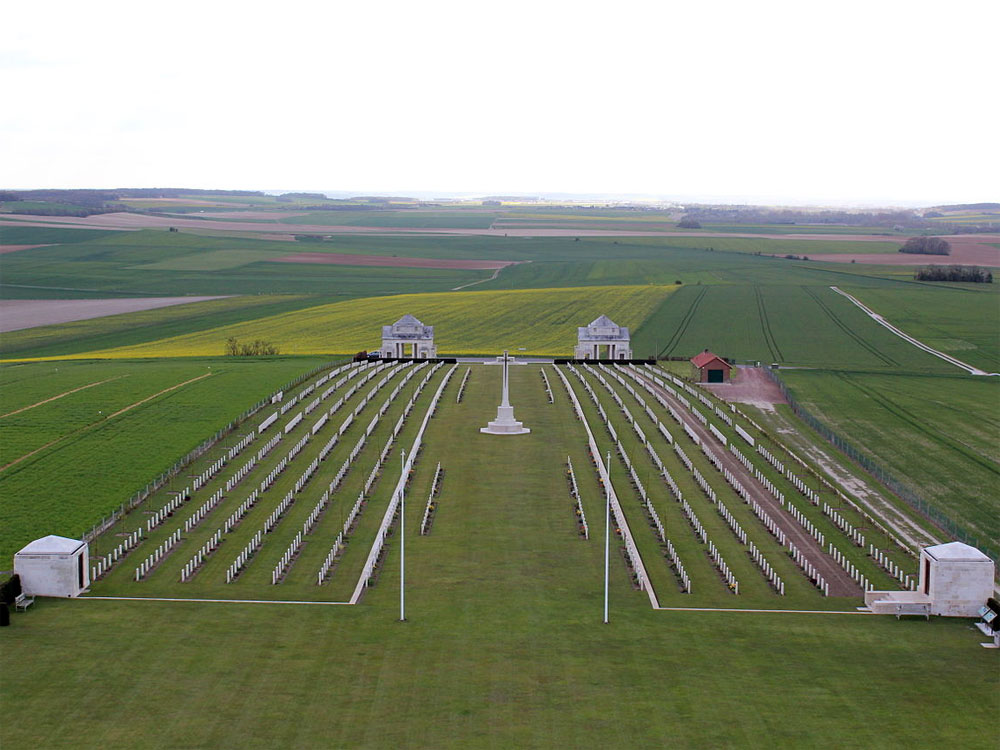
Caterpillar Valley was captured during a successful night assault by the 3rd, 7th and 9th Divisions on Bazentin Ridge on 14 July 1916. It was lost in the German advance of March 1918 and recovered by the 38th (Welsh) Division on 28 August 1918, when a little cemetery was made (now Plot 1 of this cemetery) containing 25 graves of the 38th Division and the 6th Dragoon Guards. After the Armistice, this cemetery was hugely increased when the graves of more than 5,500 officers and men were brought in from other small cemeteries, and the battlefields of the Somme.
The great majority of these soldiers died in the autumn of 1916 and almost all the rest in August or September 1918. CATERPILLAR VALLEY CEMETERY now contains 5,569 Commonwealth burials and commemorations of the First World War. 3,796 of the burials are unidentified but there are special memorials to 32 casualties known or believed to be buried among them, and to three buried in McCormick's Post Cemetery whose graves were destroyed by shell fire.
Click on a thumbnail below to get a larger photo
 |
 |
 |
 |
11 Jul Thurs
We set off before 10 for the Commonwealth War Grave headquarters where an exhibition centre was opened in 2019, showing all the work involved in making and maintaining the graves throughout the world . This was really interesting and their audio guides worked very well .
After finishing at CWGC we went to the Australian National Monash memorial which was the most impressive of the cemeteries and museums that we had visited , being on a superb inclined site with magnificent views and its museum contained really interesting narratives which we followed using the app which David had downloaded on my phone. At the end of this we enjoyed a salmon quiche and salad and carrot cake in the restaurant,
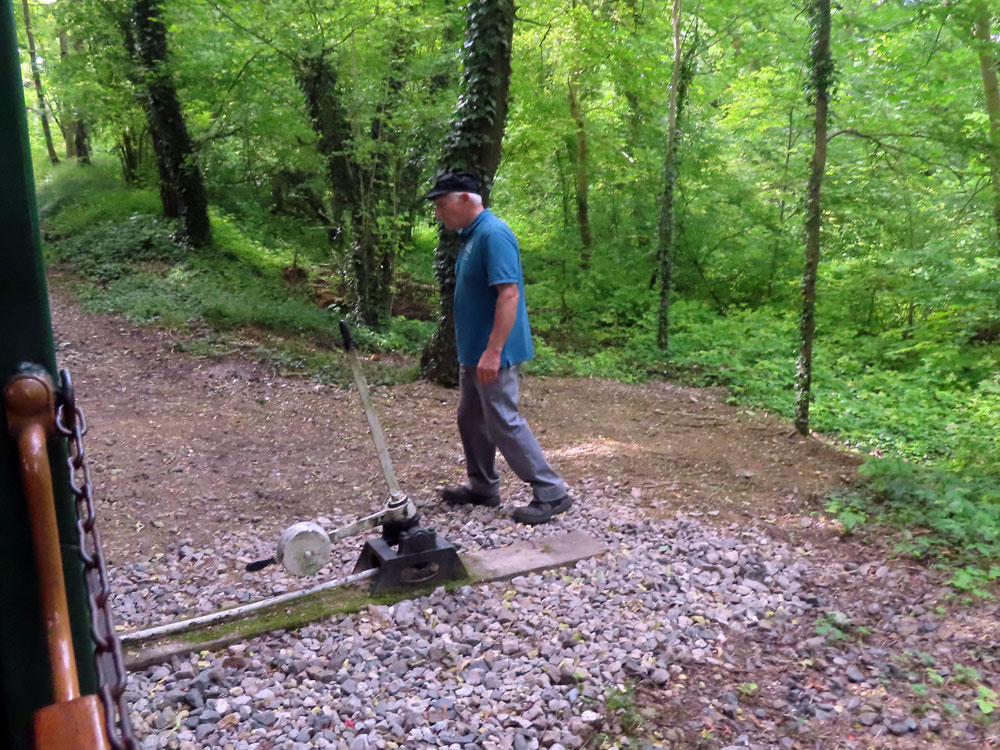
Final stop of the day at Frosier, where we had an hour's ride on the type of narrow gauge railway used in WW1 to supply the front line troops. There were a few hiccups as we seemed to have an apprentice driver!.
Back home I washed my hair and we had dinner at 7:30 just with Julie David and Mark, once again an enjoyable evening of food and conversation.
CWGC Headqurters at Arras
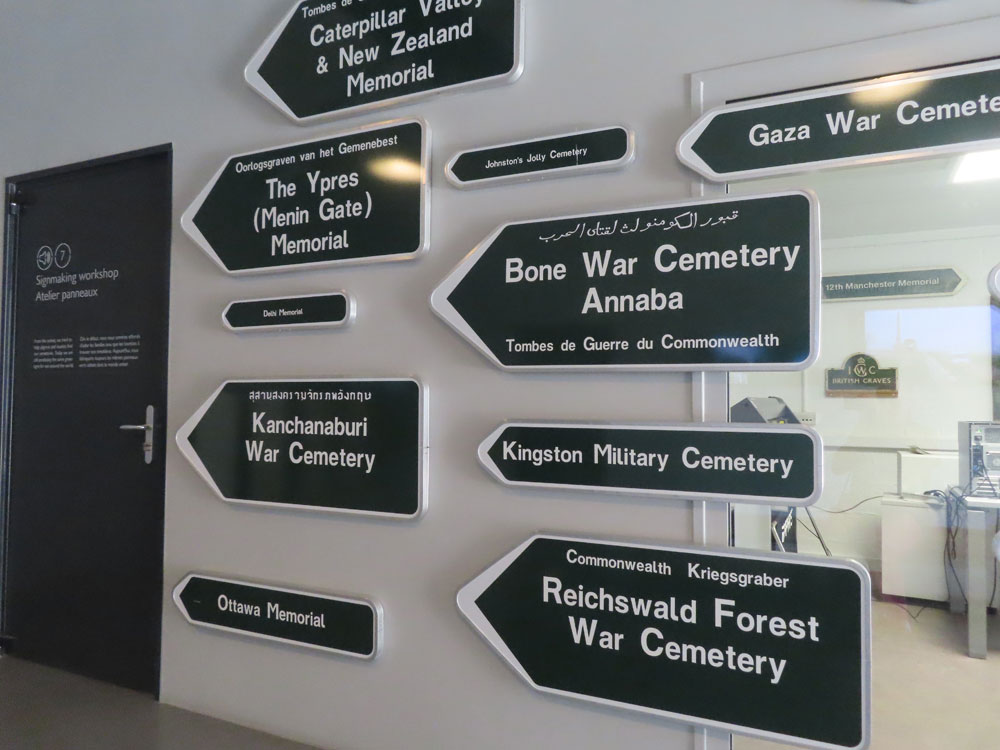
CWGC set up this visitor centre to let you go behind the scenes of the remarkable work they undertake to maintain British and Commonwealth cemeteries and memorials around the world.

We got an audio guide at the reception, and walked round an interior courtyard, pressing a numbered button at strategic points. The work of the centre continued behind large glass windows, so that the work continued unabated
The actual production of tombstones is fairly well mechanised and the computer is used to mastermind the cutting of regimental crests and men's names
Click on a thumbnail below to get a larger photo
 |
 |
 |
 |
Australian National Monash Memorial
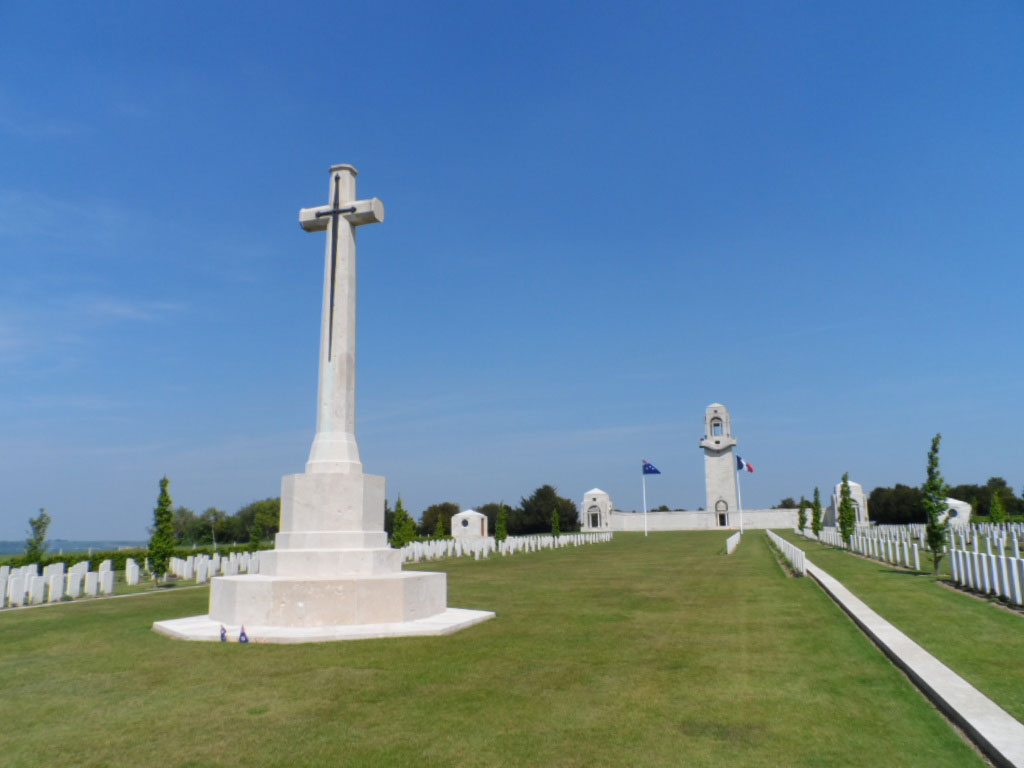
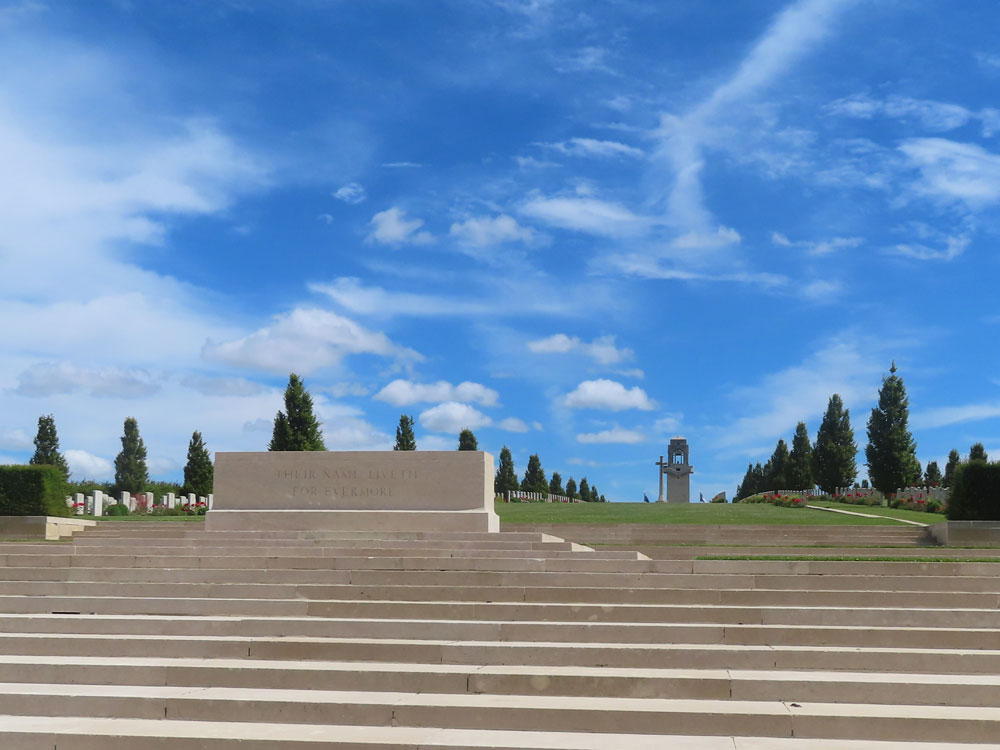
The Australian National Memorial, Villers-Bretonneux is the main memorial to Australian military personnel killed on the Western Front during World War I. It is located on the Route Villiers-Bretonneux (D 23), between the towns of Fouilloy and Villers-Bretonneux.
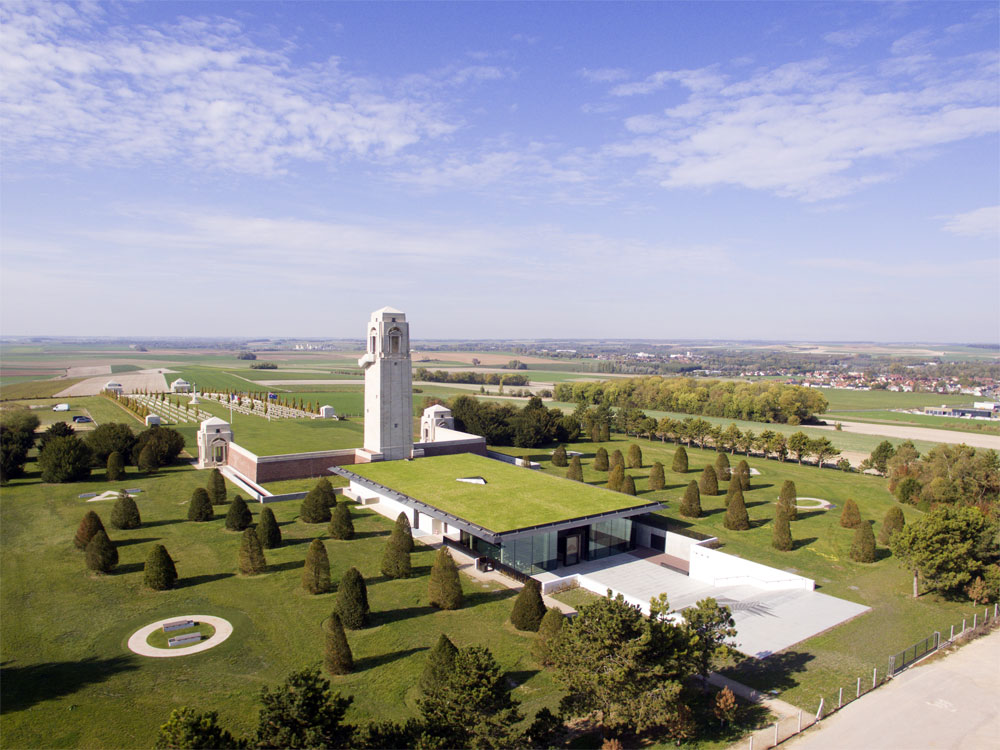
The memorial lists 10,773 names of soldiers of the Australian Imperial Force with no known grave who were killed between 1916, when Australian forces arrived in France and Belgium, and the end of the war.
The location was chosen to commemorate the role played by Australian soldiers in the Second Battle of Villers-Bretonneux (24–27 April 1918). Designed by Sir Edwin Lutyens, the memorial consists of a tower within the Villers-Bretonneux Military Cemetery, which also includes a Cross of Sacrifice. The tower is surrounded by walls and panels on which the names of the missing dead are listed. The main inscription is in both French and English, on either side of the entrance to the tower. The memorial and cemetery are maintained by the Commonwealth War Graves Commission.
The Sir John Monash Centre, an interpretive centre behind the Villers–Bretonneux Australian National Memorial, opened in April 2018. Located behind the Villers-Bretonneux memorial, and built partially underground and with a turf roof, the one thousand square metre centre is designed to be "subservient" to the war memorial and has been described by one of the architects, Joe Agius, as "almost an anti-building, connected to the monument from an abstract and geometric point of view".
Australian war artists Lyndell Brown and Charles Green designed a major tapestry, Morning Star which was created by the Australian Tapestry Workshop and hangs in the museum's foyer. The centre tells the Australian story of the Western Front in the First World War. Through a series of interactive media installations visitors are able to use their own mobile device, loaded with the SJMC App as a 'virtual tour guide', throughout the Villers-Bretonneux Military Cemetery, the Australian National Memorial and the Sir John Monash Centre.
The Sir John Monash Centre forms part of the Australian Remembrance Trail along the Western Front, which links sites of significance to Australians, including battlefields, cemeteries and other memorials. Controversies Due to a change of government in 2015, with Malcolm Turnbull replacing Tony Abbott as Prime Minister of Australia, a controversy arose with regard to the cost of the Sir John Monash Centre. Members of the community expressed their concerns about the hefty price tag of the new centre. The Abbott government had committed a $100 million to the project (about 60 million euros), a budget many times superior to those that had been necessary to build the British and Canadian centres at Thiepval and Vimy. As a result of this controversy, the cost of the SJMC was subjected to an inquiry by the Australian Parliamentary Standing Committee on Public Works in June 2015. During the inquiry, Department of Veterans' Affairs' representatives highlighted underground building and cutting-edge new technologies as the main factors that justified the $100 million budget.
A second controversy that arose from the SJMC's construction pertained to its visitation rate. The Department of Veterans’ Affairs had claimed before the construction of the centre that it would attract about 110,000 visitors a year. Within a few months of the opening of the SJMC, it became clear that the centre would not meet that target. The Sydney Morning Herald published an article titled “$100m Monash Centre on track to miss visitor target by many thousands”, which prompted other articles on the matter. The French press reported that from April 2018 to April 2019, the centre received 54,000 visitors, around half as many as DVA had expected. This attendance is modest compared to that of other war museums and visitor centres on the Western Front such as those at Péronne, Meaux, Ypres, Vimy or Verdun for example. The majority of visitors to the SJMC are Australians.
Click on a thumbnail below to get a larger photo
 |
 |
 |
 |
 |
 |
 |
 |
Narrow Gauge Railway
The Little Train is the last few mile of narrow gauge railway, that covered hundreds of mile of track in WW1 to supply the front with men, ammunition and food
The Froissy Dompierre Light Railway is a 600 mm (1 ft 11+5⁄8 in) narrow gauge light railway running from Froissy (a hamlet of La Neuville-lès-Bray) to Dompierre-Becquincourt, through Cappy. It is run as a heritage railway by APPEVA (Association Picarde pour la Préservation et l'Entretien des Véhicules Anciens) . It is the last survivor of the narrow gauge trench railways of the World War I battlefields. The little train was able to carry up to 1500 tonnes of ammunition a day.
After WW1, the network was reused from 1919 to 1924 by the French Ministry in charge of the reconstruction, to rebuild this devastated area. Then, the sugar refinery at Dompierre reprocessed the lines laid unused on the plateau. The refinery used them for its sugar beet transportation and its connections with the « Compagnie des chemins de fer du Nord » (standard gauge railway company) in Chaulnes (15km) and the canal of the Somme at Cappy (6km).
In 1970, some railway enthusiasts decided to save the line that the sugar refinery was about to give up. They created the APPEVA (society for preservation and restoration of heritage vehicles). They rebuilt the track from Froissy to Cappy (1,5 km) with rails remaining from WW1 and hunted for steam locomotives all over France. The very first passenger train ran in 1971. The society volunteers bought up the line and the railway rolling stock used by the sugar refinery in 1974, and little by little adapted it to passenger traffic. As there were no railway buildings along the line, the society members built a shed, then a little station at Froissy, and in 90’s, a museum where a part of the collection is on show : 35 steam or diesel engines and 120 wagons.
Click on a thumbnail below to get a larger photo
 |
 |
 |
 |
 |
 |
 |
 |
 |
 |
 |
 |
 |
 |
 |
 |
 |
 |
 |
 |
12 Jul Fri We gave our thanks to Julie and David and set off in pouring rain before 9 am. to get to Victor & Gaynor in the Dordogne