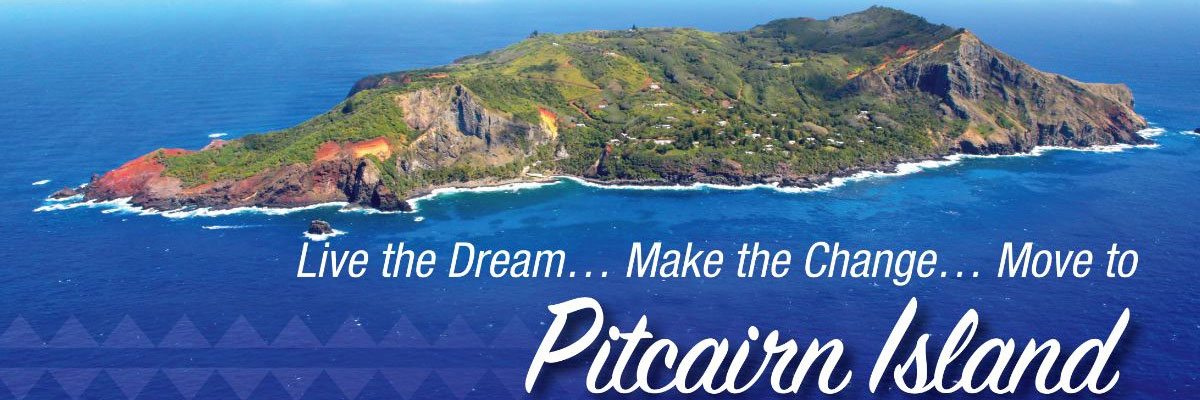
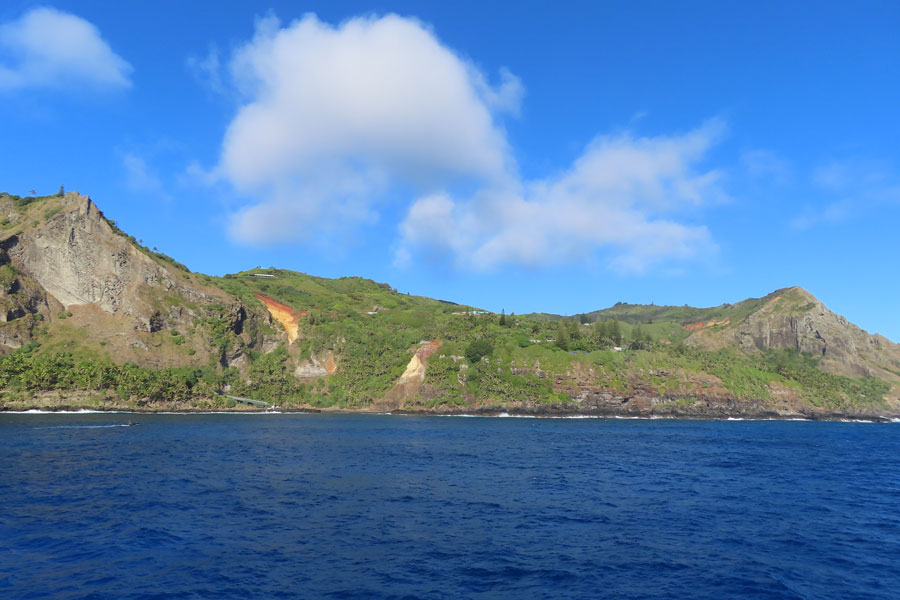
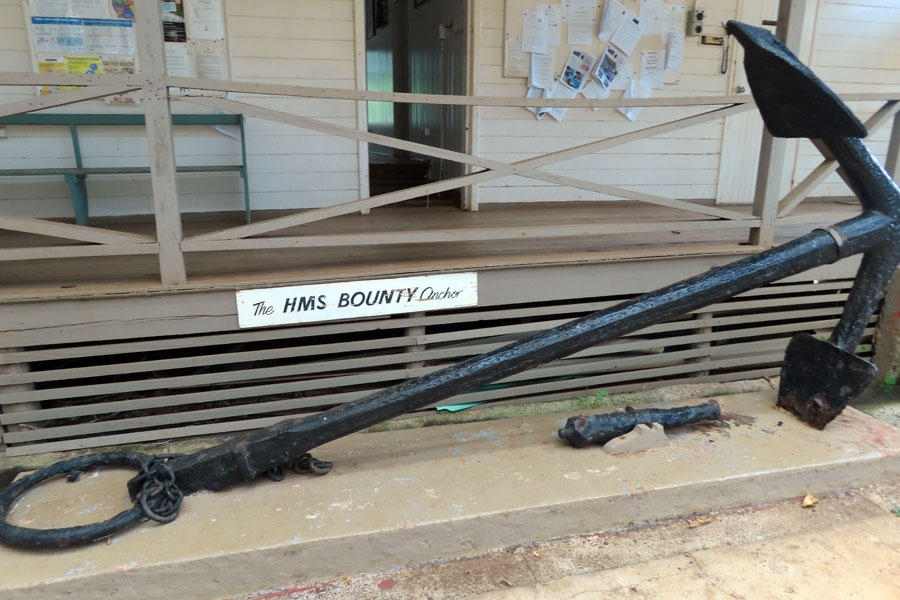
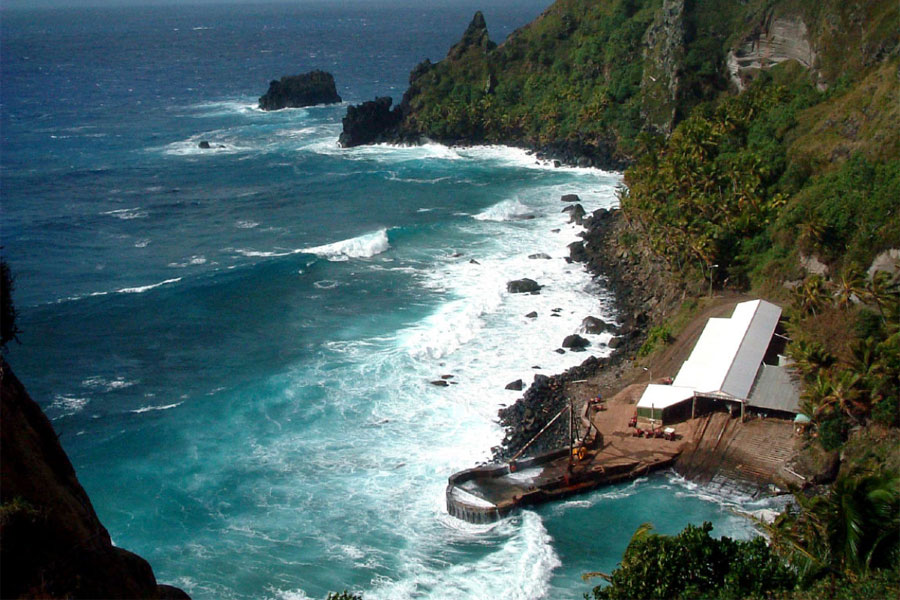
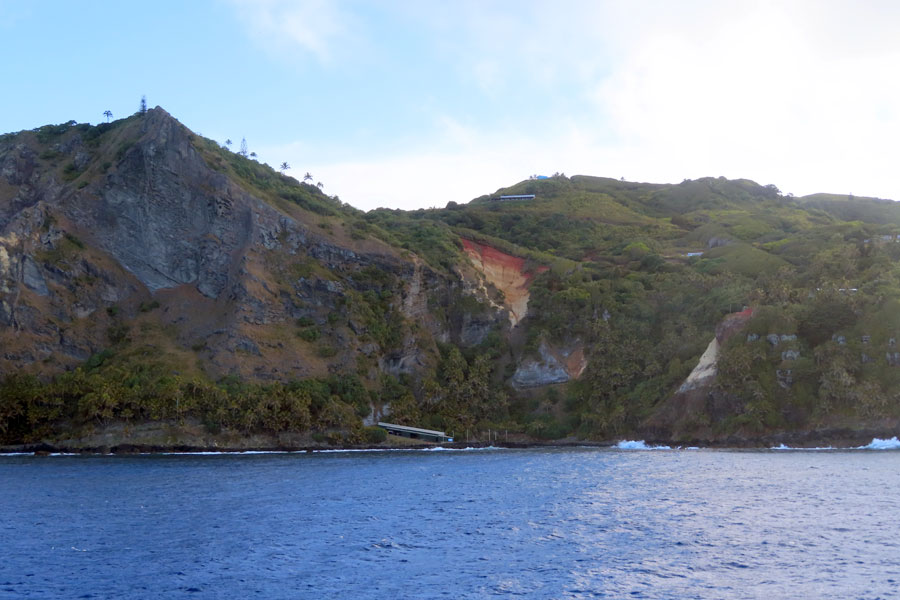
The Pitcairn Islands were formed by a centre of upwelling magma called the Pitcairn hotspot. Pitcairn Island is a volcanic remnant primarily formed of tuff, where the north side of the cone has been eroded. Pitcairn is the only permanently inhabited island. Adamstown, the main settlement on the island, lies within the volcanic basin. Pitcairn is accessible only by boat through Bounty Bay, due to the island's steep cliffs. In 1988, this island was designated as a UNESCO World Heritage site. The other islands are at a distance of more than 100 km and are not habitable. Pitcairn Island has no permanent water source; however, the island has three seasonal semi-permanent springs.
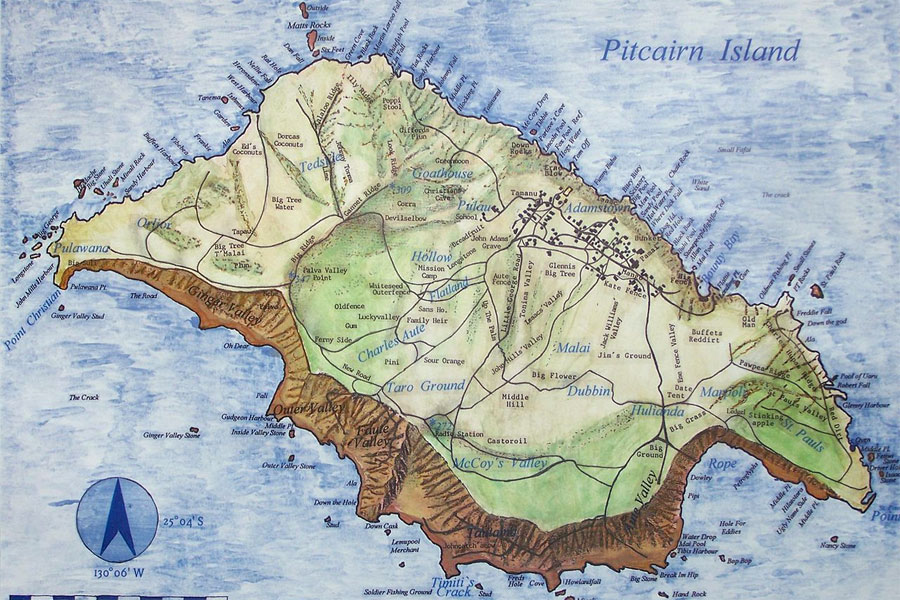
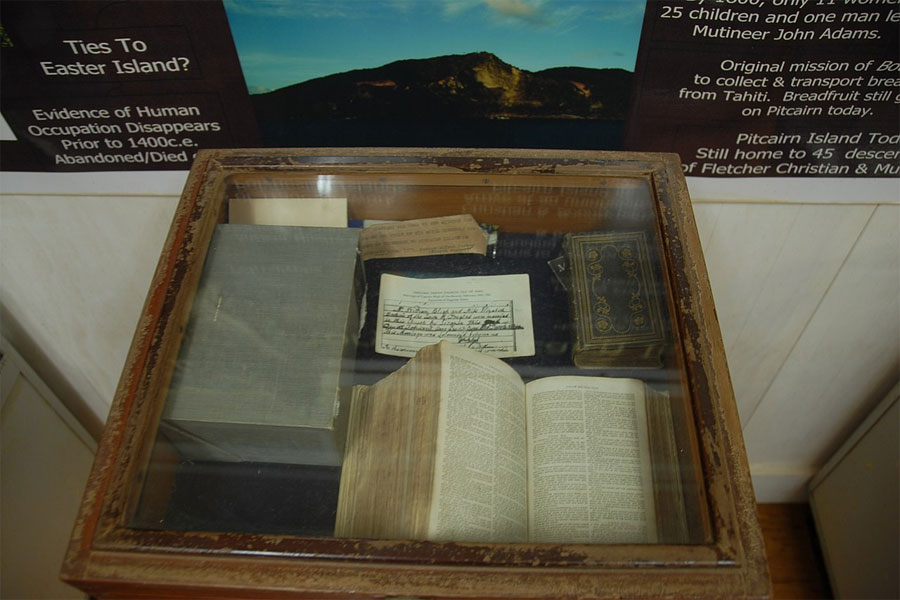
Home to the original mutineers of the Bounty, Adamstown’s is today the capital of all four Pitcairn Islands. Pitcairn is the archipelago’s only inhabited island, with the population of just 50 centred in Adamstown. It is no surprise that the nine mutineers along with six Tahitian men, 12 Tahitian women and one child stopped on Pitcairn in 1790; with its sloped and varied landscape, lush tropical promise and equidistant location between Peru and New Zealand, Pitcairn would have seemed an ideal hiding spot for the mutineers to settle. The ship was burnt to avoid detection (the ballast stone remains of the wreck in Bounty Bay). However, the ideal bucolic life that mutineer leader Fletcher Christian had envisaged was not to be. Poor treatment of the Tahitian men led to alcoholism, chaos and carnage and by 1800 only John Adams – who had recently discovered Christianity – remained. Adams taught the women and children to read and write from the bible. The capital is named after him. Not only had the island been misplaced on early maps of the region, but it can also be very difficult to come ashore as large breakers tend to build up just in front of the small harbour of Bounty Bay. The local museum houses the HMS Bounty Bible, the same bible that Adams taught the women and children to read and write from in the early 19th century.
Pitcairn Island was sighted on 3 July 1767 by the crew of the British sloop HMS Swallow, commanded by Captain Philip Carteret. The island was named after midshipman Robert Pitcairn, a fifteen-year-old crew member who was the first to sight the island.. Carteret, who sailed without the newly invented marine chronometer, charted the island at 25°02′S 133°21′W, and although the latitude was reasonably accurate, his recorded longitude was incorrect by about 3°, putting his coordinates 330 km (210 mi) to the west of the actual island. This made Pitcairn difficult to find, as highlighted by the failure of captain James Cook to locate the island in July 1773.
In 1790, nine of the mutineers from the Bounty, along with the native Tahitian men and women who were with them (six men, 11 women, and a baby girl), settled on Pitcairn Island and set fire to the Bounty. The inhabitants of the island were well aware of the Bounty's location, which is still visible underwater in Bounty Bay, but the wreckage gained significant attention in 1957 when documented by National Geographic explorer Luis Marden. Although the settlers survived by farming and fishing, the initial period of settlement was marked by serious tensions among them. Alcoholism, murder, disease and other ills took the lives of most mutineers and Tahitian men. John Adams and Ned Young turned to the scriptures, using the ship's Bible as their guide for a new and peaceful society. Young eventually died of an asthmatic infection.
The Pitcairn islanders reported it was not until 27 December 1795 that the first ship since the Bounty was seen from the island, but it did not approach the land and they could not make out the nationality. A second ship appeared in 1801, but made no attempt to communicate with them. A third came sufficiently near to see their house, but did not try to send a boat on shore. Finally, the American sealing ship Topaz, under Mayhew Folger, became the first to visit the island, when the crew spent ten hours on Pitcairn in February 1808. Whalers subsequently became regular visitors to the island. The last recorded whaler to visit was the James Arnold in 1888. A report of Folger's discovery was forwarded to the Admiralty, mentioning the mutineers and giving a more precise location of the island: 25°02′S 130°00′W. However, this was not known to Sir Thomas Staines, who commanded a Royal Navy flotilla of two ships, HMS Briton and HMS Tagus, which found the island at 25°04′S 130°25′W (by meridian observation) on 17 September 1814. Staines sent a party ashore and wrote a detailed report for the Admiralty. By that time, only one mutineer, John Adams, remained alive. He was granted amnesty for his part in the mutiny.
Pitcairn Islanders consider that their islands "officially" became a British colony on 30 November 1838, at the same time becoming one of the first territories to extend voting rights to women. By the mid-1850s, the Pitcairn community was outgrowing the island; its leaders appealed to the British government for assistance, and were offered Norfolk Island. On 3 May 1856, the entire population of 193 people set sail for Norfolk on board the Morayshire, arriving on 8 June after a difficult five-week trip. However, just eighteen months later, seventeen of the Pitcairn Islanders returned to their home island, and another 27 followed five years later.
HMS Thetis visited Pitcairn Island on 18 April 1881 and "found the people very happy and contented, and in perfect health". At that time the population was 96, an increase of six since the visit of Admiral de Horsey in September 1878. Stores had recently been delivered from friends in England, including two whale-boats and Portland cement, which was used to make the reservoir watertight. HMS Thetis gave the islanders 200 lb (91 kg) of biscuits, 100 lb (45 kg) of candles, and 100 lb of soap and clothing to the value of £31, donated by the ship's company. An American trading ship called Venus had recently bestowed a supply of cotton seed, to provide the islanders with a crop for future trade. In 1886, the Seventh-day Adventist layman John Tay visited Pitcairn and persuaded most of the islanders to accept his faith. He returned in 1890 on the missionary schooner Pitcairn with an ordained minister to perform baptisms. Since then, the majority of Pitcairn Islanders have been Adventists
The population peaked at 233 in 1937. It has since decreased owing to emigration, primarily to Australia and New Zealand
In 2004, charges were laid against seven men living on Pitcairn and six living abroad. This accounted for nearly half of the island's adult males. After extensive trials, most of the men were convicted, some with multiple counts of sexual encounters with children. On 25 October 2004, six men were convicted, including Steve Christian, the island's mayor at the time In 2004, the islanders had about 20 firearms among them, which they surrendered ahead of the sexual assault trials. After the six men lost their final appeal, the British government set up a prison on the island at Bob's Valley. The men began serving their sentences in late 2006. By 2010, all had served their sentences or been granted home detention status. In 2016, Mike Warren, Pitcairn mayor from 2008 to 2013, was convicted and sentenced to 20 months imprisonment for possession of child pornography.
April 2nd. Pitcairn itself
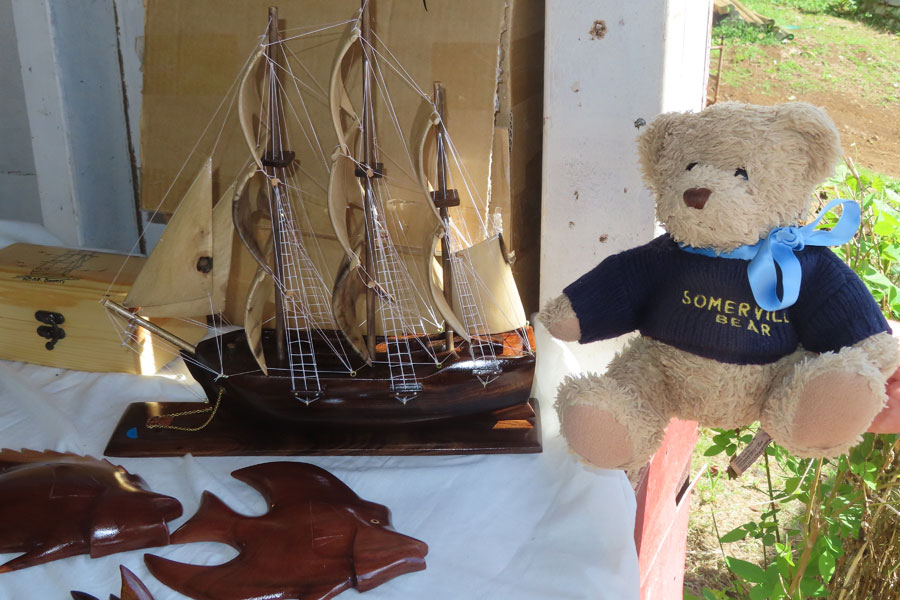
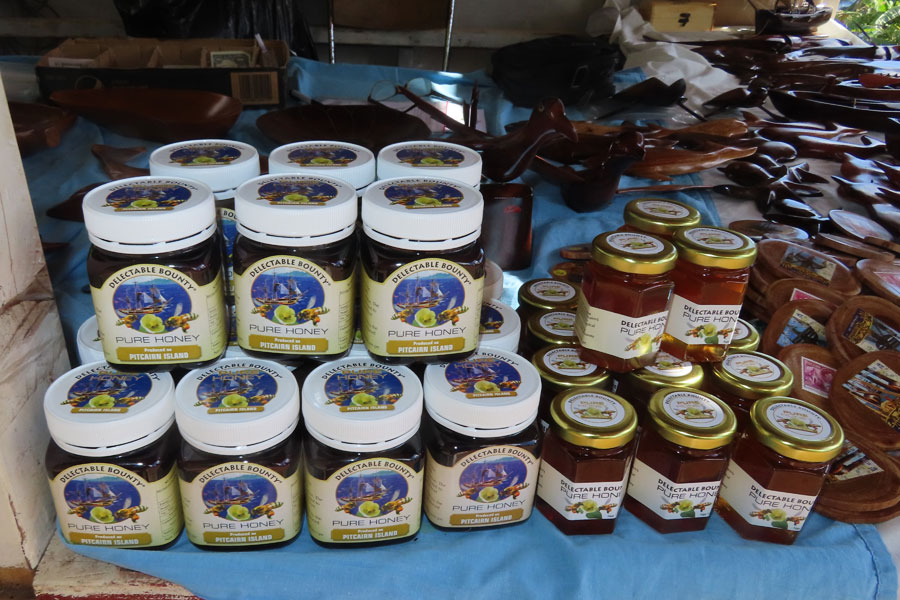
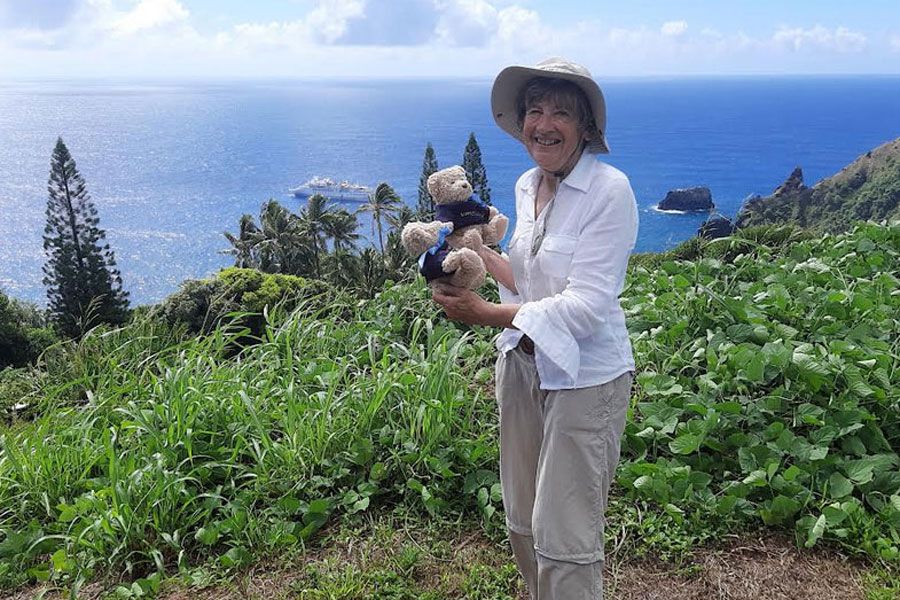
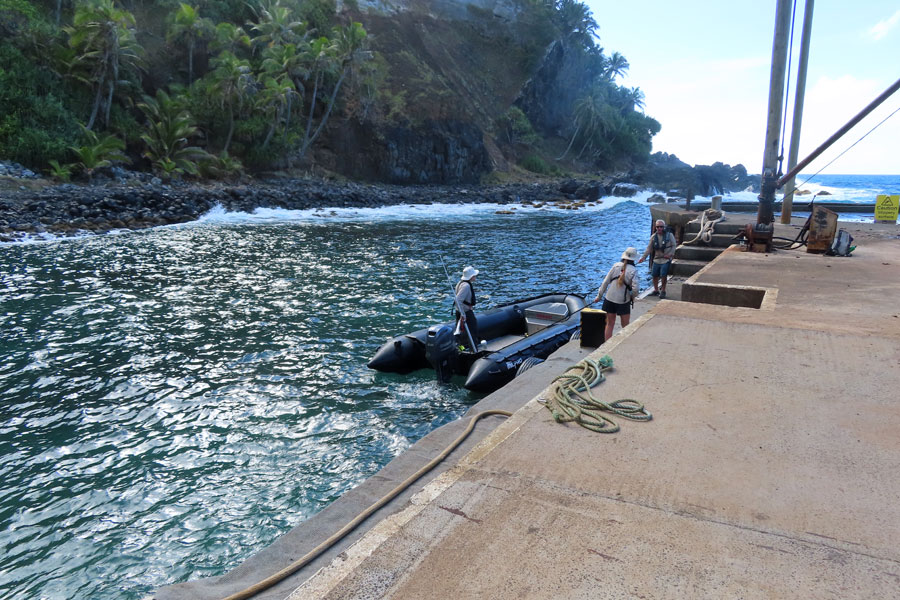
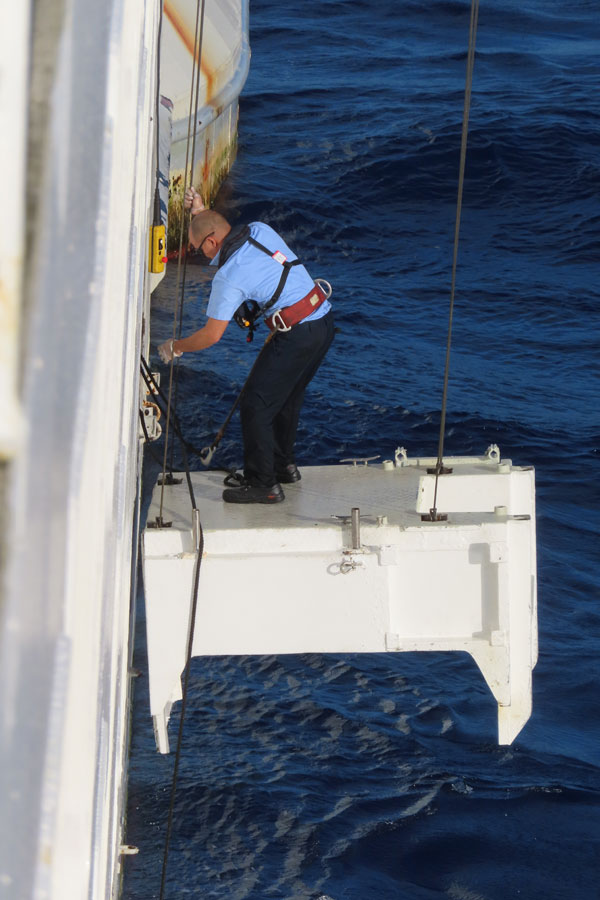
Woke up with Mariekás Good Morning; Europe had gone onto Summer time the previous Sunday and this was the first time the IPad had reregistered with a country!! So dashed into the restaurant to collect a plate of fruit and then had a coffee during Melvá's talk on Pitcairn. Landed at Pitcairn with some difficulty due to swell at the side gate and then a reef to traverse into the harbour. Quad bikes took us up the" hill of difficulty" up to the town plaza. We looked at the souvenir stalls there and chatted to one lady, who told us a bit about the difficulties of living there with just 47 inhabitants; the school had just closed, Three 12 year olds were at boarding school in NZ , otherwise the youngest inhabitant was 18
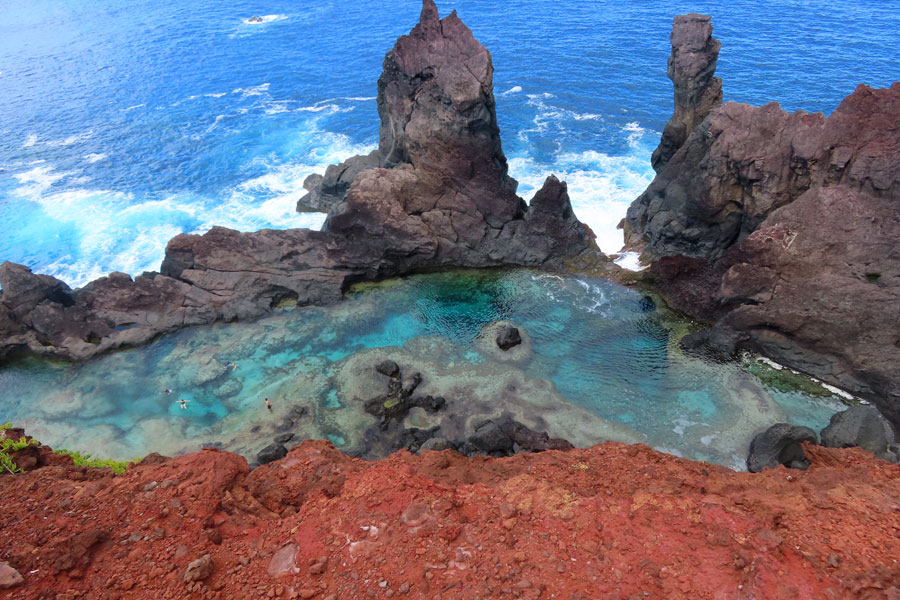
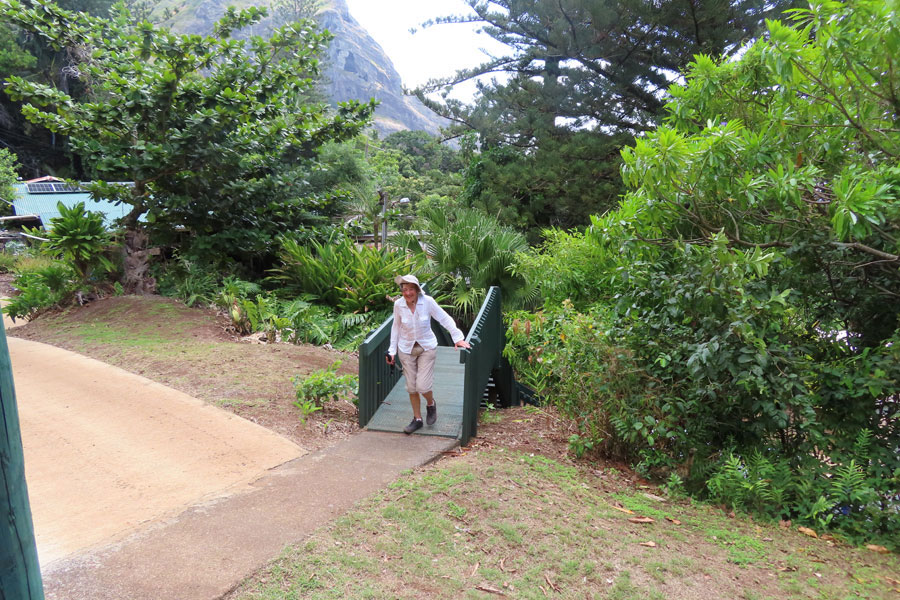
We then walked to the pool with a lovely guide Brenda: she had lived in England for 20 years but had been back on the island for 23 years and had built a house with a magnificent view. The walk was quite demanding, especially the very steep, loose gravelly part just before the pool. This was really beautiful but, unfortunately, there was no way Chris could walk over the final rocks to enter the pool.
click on a thumbnail to get a bigger photo
 |
 |
 |
 |
 |
 |
 |
 |
 |
 |
 |
 |
 |
 |
 |
 |
 |
 |
 |
 |
 |
 |
 |
 |
 |
 |
 |
 |
Christian's Cafe for lunch,
The way back was also tiring and we were ready for our lunch in Christian ´s Cafe. I had fish and breadfruit chips whilst Chris settled for a had a salad. We got there quite late, and all the decent seats were taken in the eating area, so we had to settle for a seat in the window )baking hot in the sun, but with a fabulous view) The meal was not a great meal, but was a memory of the island. The best bit, for me, was the cakes - great slabs of loveliness.
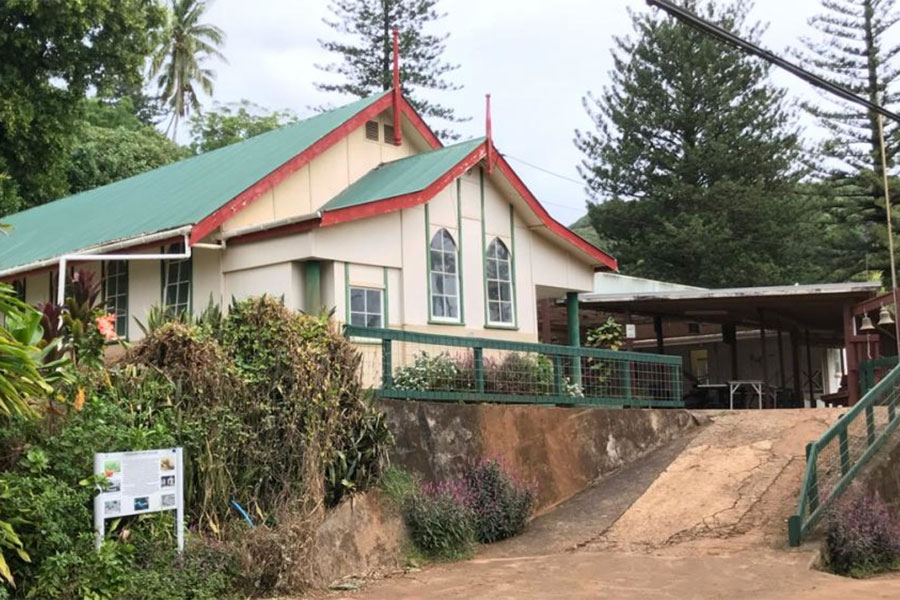
Christian’s Cafe is the weekly social hall. Due to the island’s historic moral laws, which previously required a permit to purchase or consume alcohol, Christian’s Cafe actually only began serving alcohol freely after 2009. Since the prohibitions on the island have been relaxed to encourage tourism, the lone cafe bar sees travellers on ten-day or three-day passes and even some guests from passing cruise ships.The establishment itself is a large, white room with a view of Pitcairn’s lush tropical foliage, providing a relaxing atmosphere in which to imbibe with the locals. The island has only 50 aging inhabitants and very little import of goods, so the bar hours are kept relatively short, opening only after 6:30pm on Fridays
click on a thumbnail to get a bigger photo
 |
 |
 |
 |
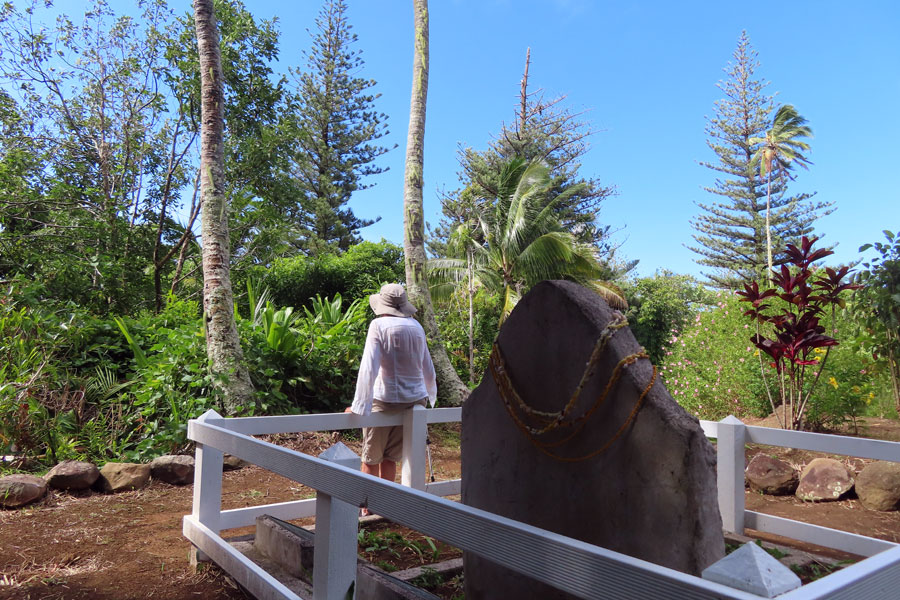
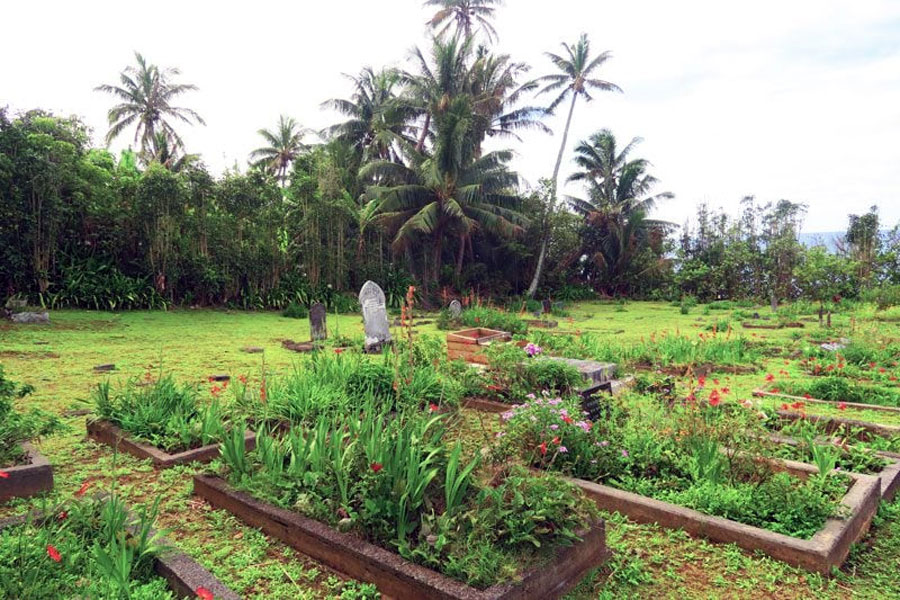
Afterwards we walked to the museum and then to the cannon, John Adam's grave and the cemetery.
We returned to the Cafe for another drink, being made very welcome, and Shawn. took us straight from there on his quad bike down to the jetty.
click on a thumbnail to get a bigger photo
 |
 |
 |
 |
 |
 |
 |
 |
 |
 |
 |
 |
 |
 |
 |
 |
 |
 |
 |
 |
 |
 |
 |
 |
Back aboard we really needed a shower as it had been so hot and humid. At the Sail Away party at 18.00 , Chris got talking to Hutch and Gillian from Guernsey and we continued on to have dinner with them and the Irish Joe and Maureen