
The first day, as always,tended to be taken up with briefings of one sort or another. The expedition leader Leá, was an old adversary of ours from a couple of trips on the Cloud last year. She presented her expedition team: Paulo. Marine biologist from Argentina; Mila , historian & archaeologist from Alaska; Jackie, cultural historian & archaeologist from Vancouver; Christophe , botanist from Austria; Damon birds from Australia ; Carolina from Argentina & Roger from Spain both expedition guides, Julie from California & Javier from Spain both staff assistants. Also Pedro the photographer.

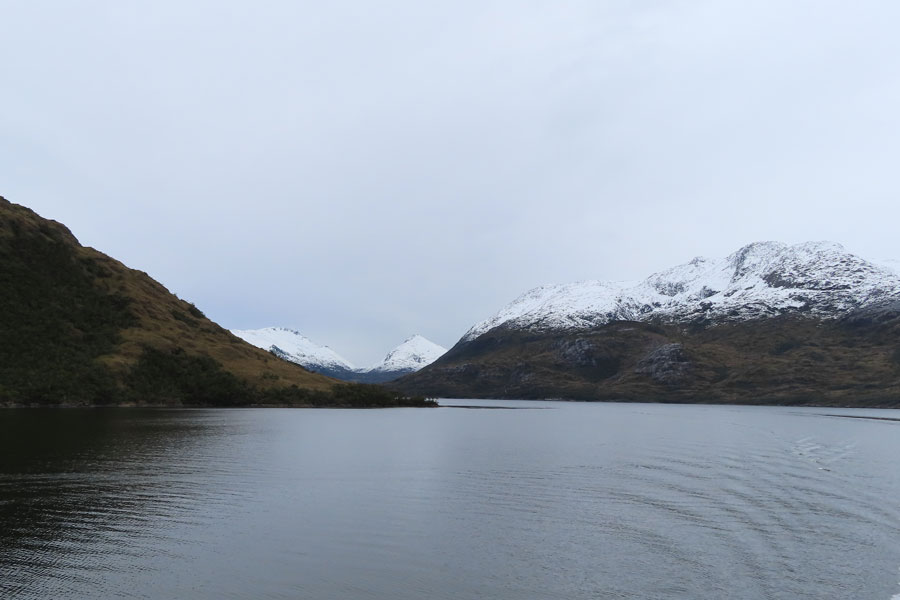
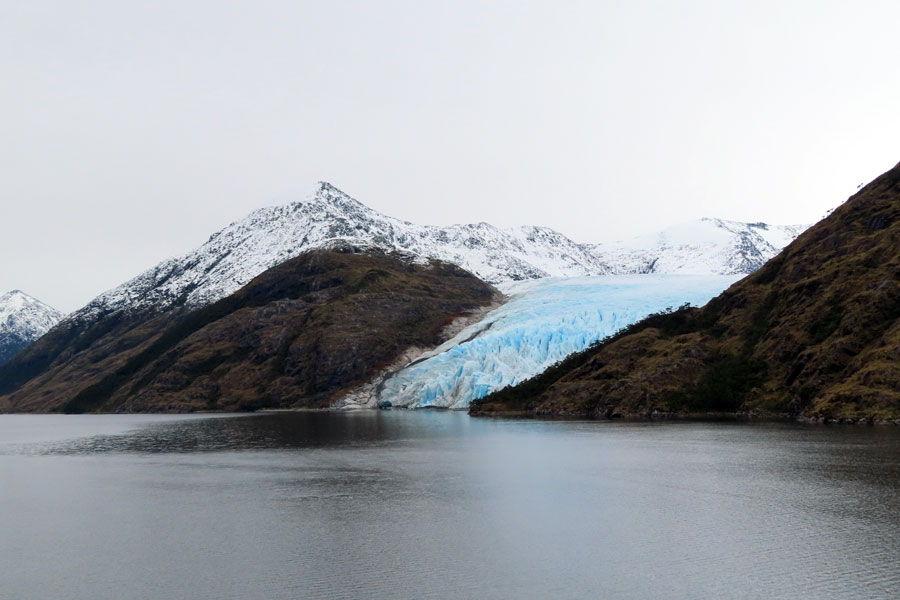
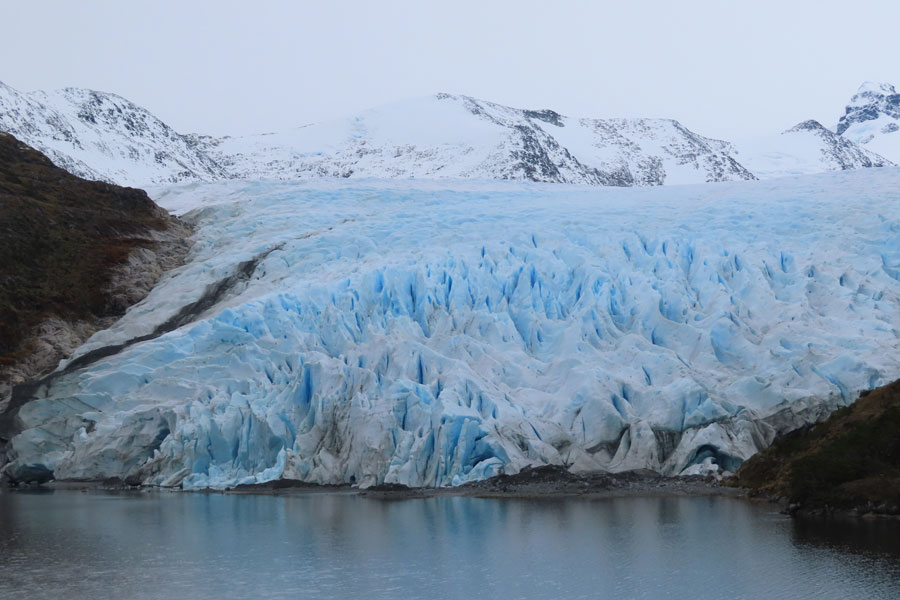
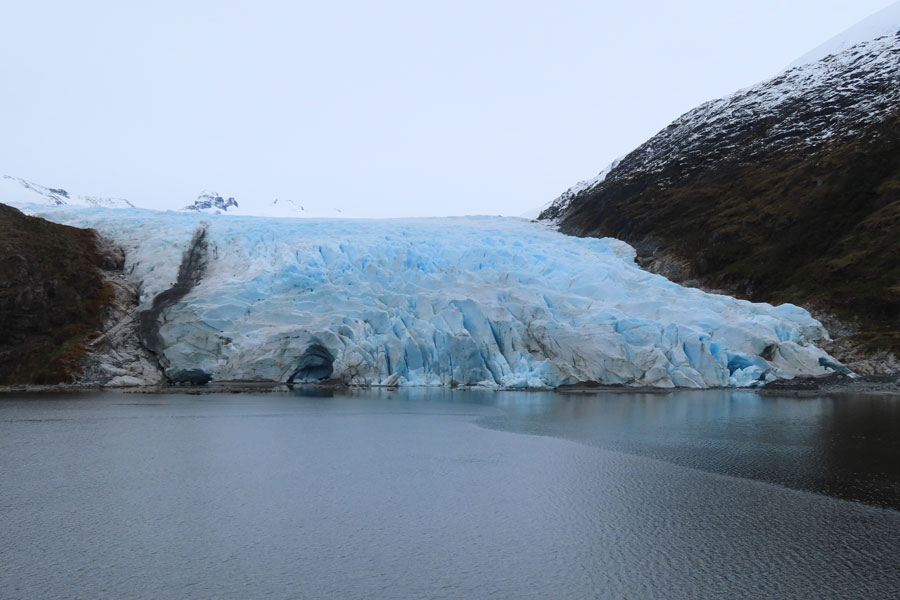
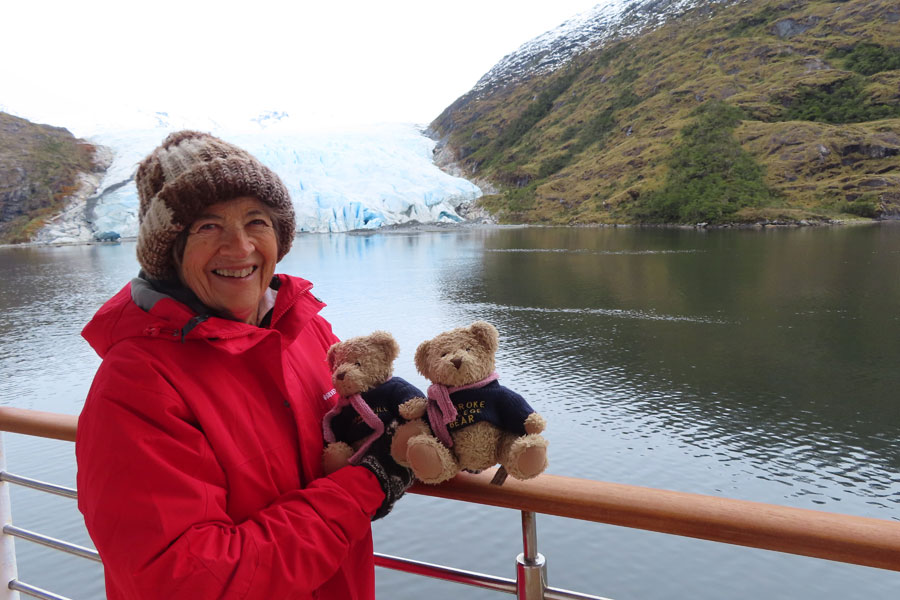
After lunch we approached the Fourier Fjord, a little visited fjord off the S W branch of the Beagle channel: there the ship cruised near the glacier for about 40 minutes.
click on a thumbnail to get a bigger photo
 |
 |
 |
 |
 |
 |
 |
 |
 |
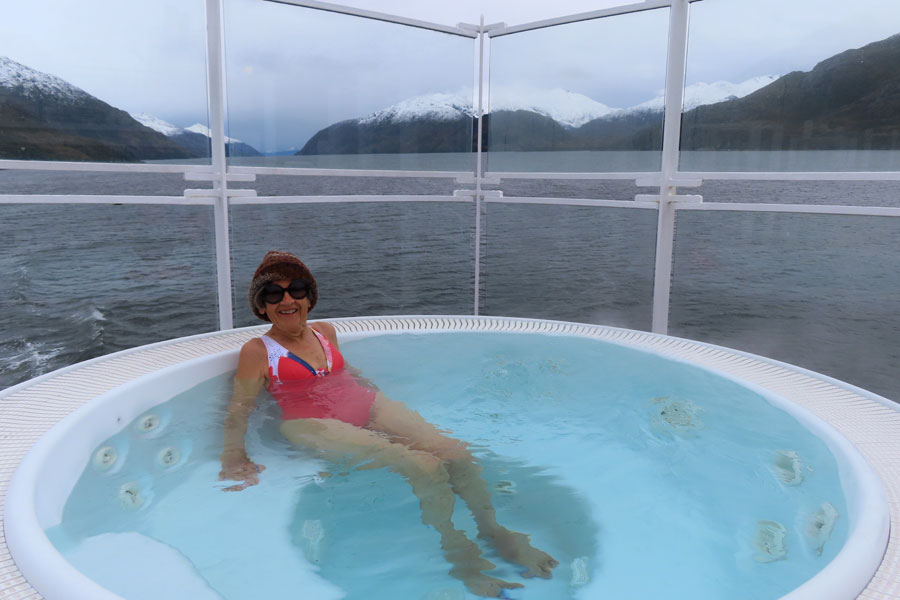
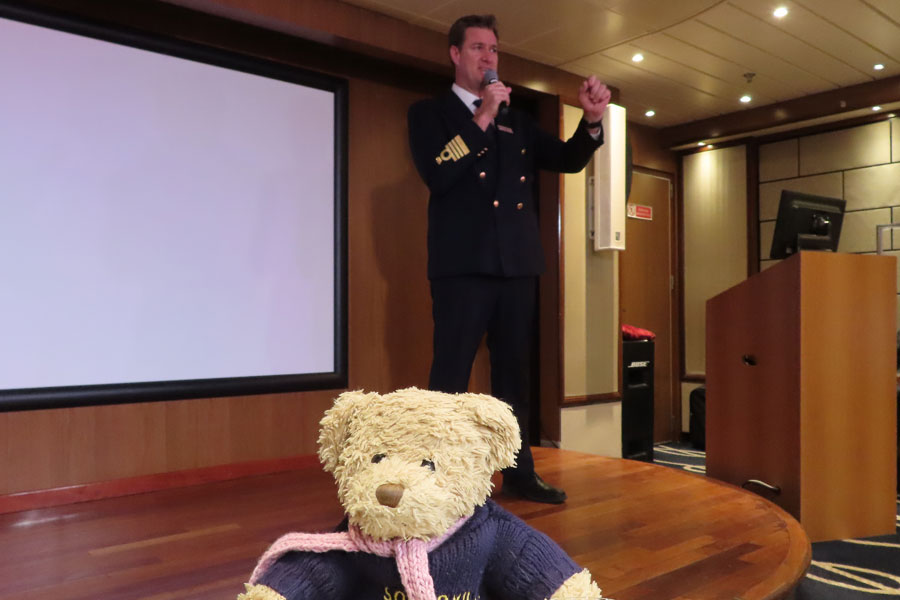
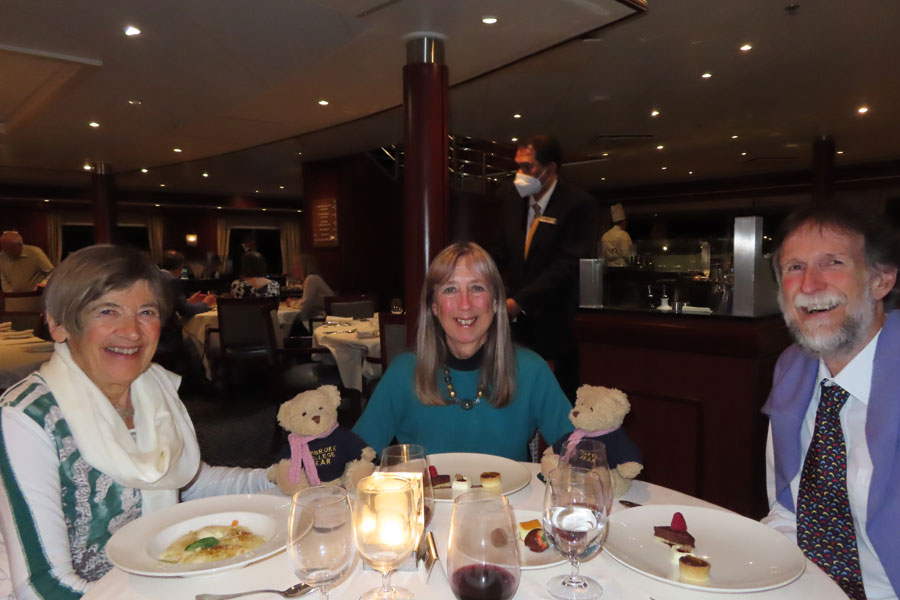
Chris had a jacuzzi and a sauna before afternoon tea and Trivia. Then a lecture by Damon on Chile.. The Captain's Welcome was at 7.30 where we got talking to Christine & Ian (also clients of Carmen), we then had dinner with them. Captain Freddy, of Finding the Endurance fame, introduced his officers, There was a "technical stop" at Puerto Williams in the early evening, to clear the ship out of Chile - it just anchored offshore and the officials came on board - so it did not impinge on us at all. By 10 pm we were ready for bed!
click on a thumbnail to get a bigger photo
 |
 |
 |
 |
We were docked at Ushuaia when we woke up the next morning. And were treated to a dramatic sunrise from our breakfast table in the dining room

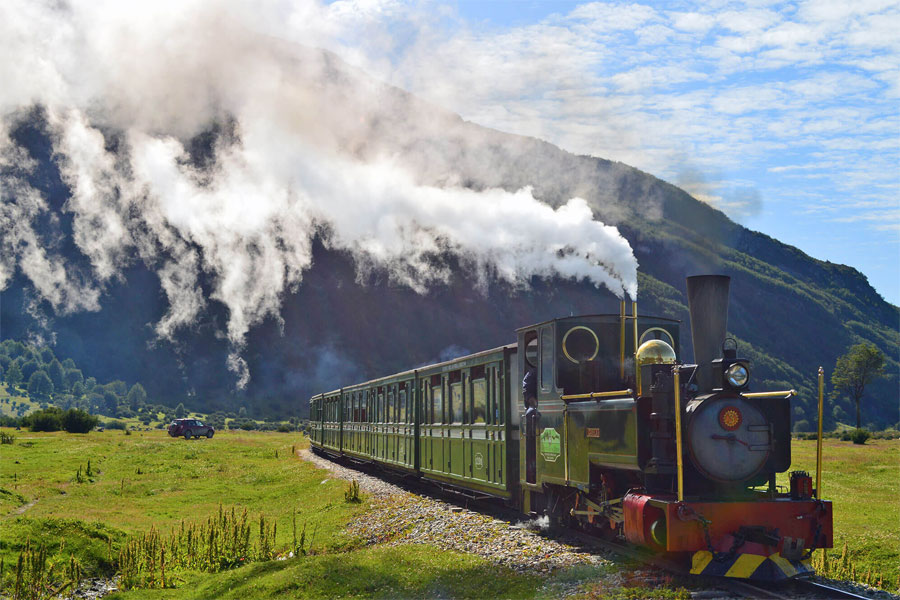
We had an early breakfast and boarded a coach before 08.00 to take us to the "Train at the End of the World " There was a stop en route at a scenic beach. And 30 minutes after that we were in the National Park admiring the snow covered peaks . Soon we boarded the old steam train. There had been a prison in Ushuaia since about 1900 and the prisoners had first built this line and then used it daily to get out to collect firewood and bring it back to town to the Electricity station.
click on a thumbnail to get a bigger photo
 |
 |
 |
 |
 |
 |
In 1994, the railway was rebuilt in 500 mm track gauge and began services again, although now in luxury relative to its origin as a prison train. A new 2-6-2T steam locomotive (Camila) was brought from England in 1995 with another made in Argentina and three diesel locomotives also serving on the line. Services leave from the 'End of the World' station (about 10 km west of Ushuaia's Airport and immediately west of the Ushuaia Golf Club). The route takes passengers along the Pico Valley in the Toro gorge and to Cascada de la Macarena station . The train then enters the national park and the forest, travelling through the valley below the mountains, reaching El Parque station which is the end of the line.
click on a thumbnail to get a bigger photo
 |
 |
 |
 |
 |
 |
 |
 |
 |
 |
 |
 |
 |
 |
 |
We then drove back into town and visited the old prison, followed by an, unexpected Tapas lunch in part of it. Known as the 'End of the World' Ushuaia looks out across the Beagle Channel, and is surrounded by the Martial Mountains to the north. Despite its remote location, Ushuaia is a surprisingly busy and lively resort.We walked by ourselves round the town. We had been in Ushuaia before in 2010 with Celebrity and in 2012 and in 2015 with Silversea
In an effort to consolidate Argentina’s sovereignty over Tierra del Fuego and open it up for further settlement, the Argentine government established a penal colony here in 1896. The early city’s buildings and infrastructure were built by forced convict labour. The prison eventually closed in 1947 and is now a museum, the Museo Marítimo y Presidio. The prison was designed in the panoptic style - the wings radiating out like spokes from a half wheel - to allow the wardens to observe inmates without them knowing they were being watched. The wings have now been opened up to the public; two host artworks and maritime exhibits, while wing four tells the tales of some of the most notorious residents, giving an insight into the horrors they endured. Conditions in the prison were spartan to say the least. Each of the cramped cells had a tiny window, a wooden platform that functioned as a bed, a rudimentary chair and a narrow counter. The only personal possessions a well-behaved prisoner was allowed were a couple of books, stationary, sugar and mate (a type of herbal tea, Argentina’s national drink). Dangerous convicts were kept in check by heavy shackles and ball-and-chains.
A couple of small heaters outside in the corridor were the only source of warmth for the whole wing. Today, even if you visit during the height of summer, there is a noticeable chill in the cells – what conditions were like in the depths of winter, when temperatures in Ushuaia can plunge well below zero, hardly bears thinking about. For those inmates deemed fit enough to work, backbreaking days were spent felling trees in the forests surrounding the prison, hacking at rocks in the quarry or laying railway tracks. One of the most famous prisoners here was Simón Radowitzky, an anarchist militant jailed in 1909 for the murder of a brutal police chief, Colonel Falcón, responsible for eights deaths at a May Day protest in Buenos Aires. He spent over 20 years in the prison – aside from a brief escape in 1918 – before being exiled from Argentina in 1930. You can also visit the cells of other notable inmates, such as Mateo Banks, an estate owner of Irish descent who in 1922 was convicted of killing eight people – including three of his siblings – and Cayetano Santos Godino, a criminally insane child murderer nicknamed El Petiso Orejudo (The Big-Eared Short Man).

El Petiso Orejudo was an Argentinian serial killer who terrorized Buenos Aires at age 16. In the early 20th century he was responsible for the murder of four children, the attempted murder of another seven children, and seven counts of arson. In 1913, entered a reformatory, where he tried to kill some of the inmates. Because medical reports declared him insane, the judge discontinued the case and ordered him to stay in the reformatory. In 1915, an appeal was approved ordering him to be moved to jail . In 1923, Cayetano was transferred to Ushuaia Penitentiary. Throughout 1933 he spent some time in the hospital for a beating he suffered from inmates after he killed two of their pet cats. From 1935 onwards, he was always ill and received no visitors until he died in 1944, under suspicious circumstances
The most evocative part of the museum, however, is Wing 1, which has been left largely untouched. Stepping into it eerily transports you back a century or more: there are no exhibits, information panels, heating or – generally – any other visitors, leaving you alone with just the empty cells and the peeling paint work for company. The only sounds are the echoes of your own footsteps and – when I was there at least – the plaintive mewing of an unseen cat. It is a sinister, unsettling place,

click on a thumbnail to get a bigger photo
|
 |
 |
 |
 |
 |
 |
 |
 |
 |
 |
 |
 |
 |
 |
 |
 |
 |
 |
 |
The ship sailed before 18.00 and we watched from the back deck with our first pisco sour of the day. Attended the Captain's Welcome party. After another pisco sour and tapas before dining with Robin & Philippa