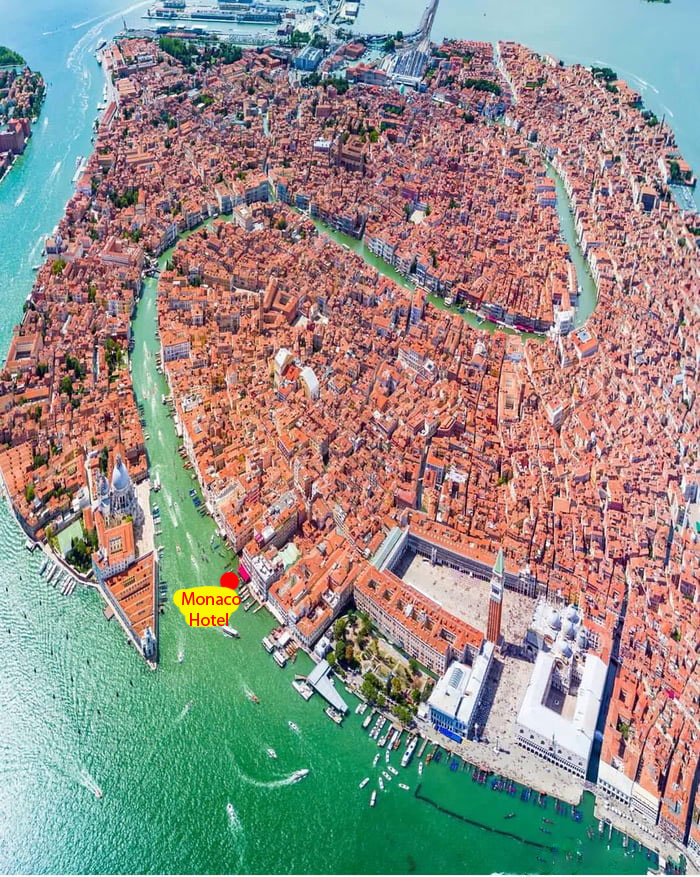
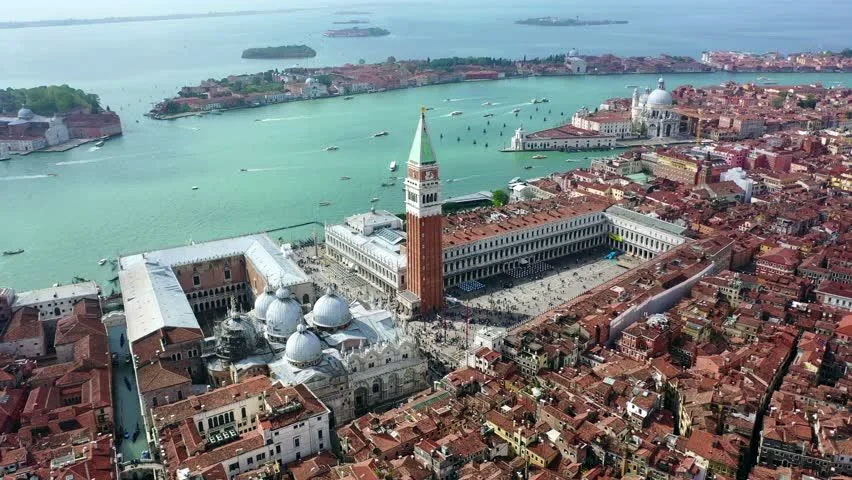
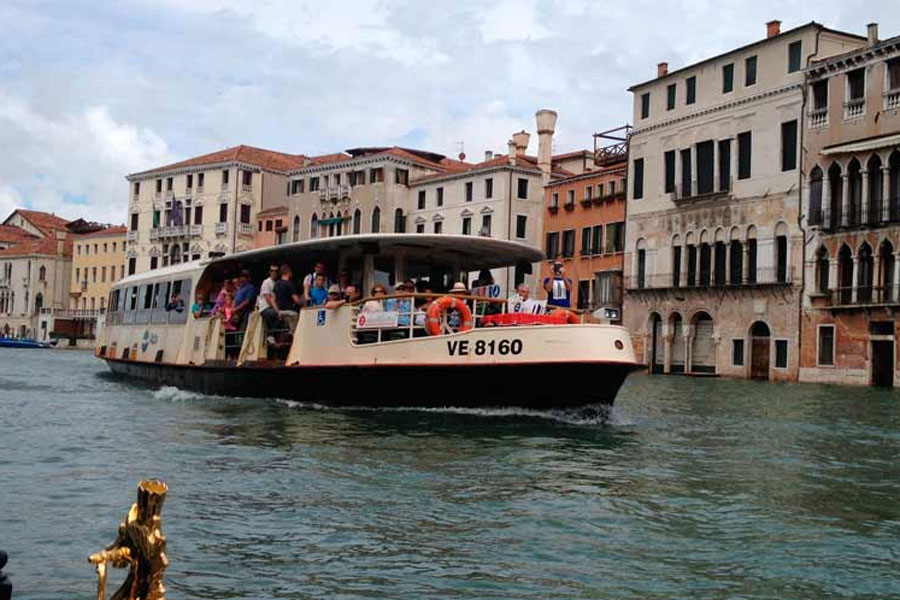
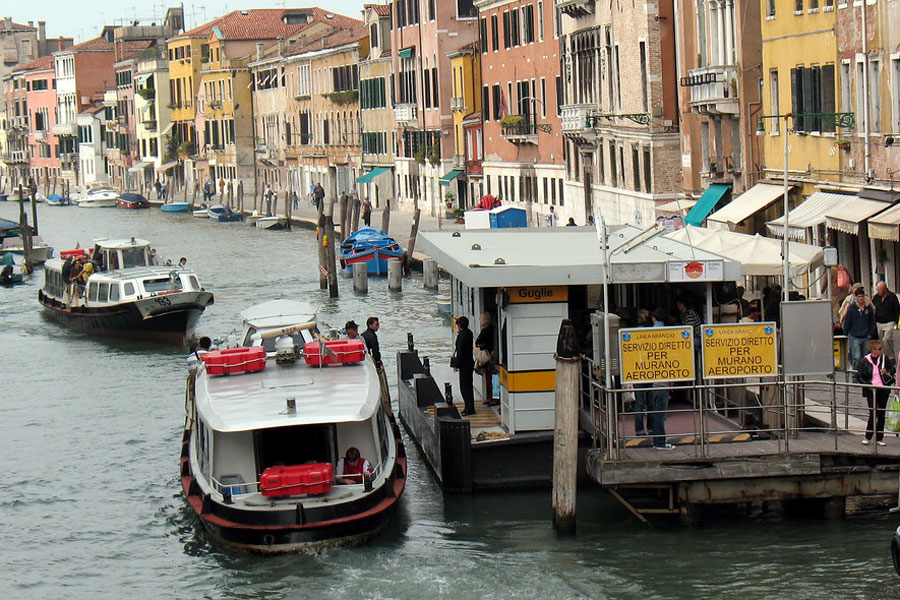
We parked (had to park as you cannot drive in Venice!) at the large Tronpetto Car Park at the Venice end of the causeway. Like most large multi story car parks it was a bit of a maze inside. Firstly to get a parking spot - a continual upward path on the spiral ramp to the 4th floor, then finding our way out on foot. From the car park to the nearby vaporetto stop - I had pre-purchased tickets online and they were on my mobile phone. The only challenge was to get the entrance barriers to accept these tickets. By the time I got us both through, we missed one boat and had to wait half an hour for the next. The trip down the Grand Canal should have been spectacular, but it was raining and the windows were pretty fogged up.But Chris opened one and enjoyed her view. Anyway, half an hour later we got to St Marks ferry landing, and our hotel, the Monaco & Grand Canal , was within a few yards of the landing stage
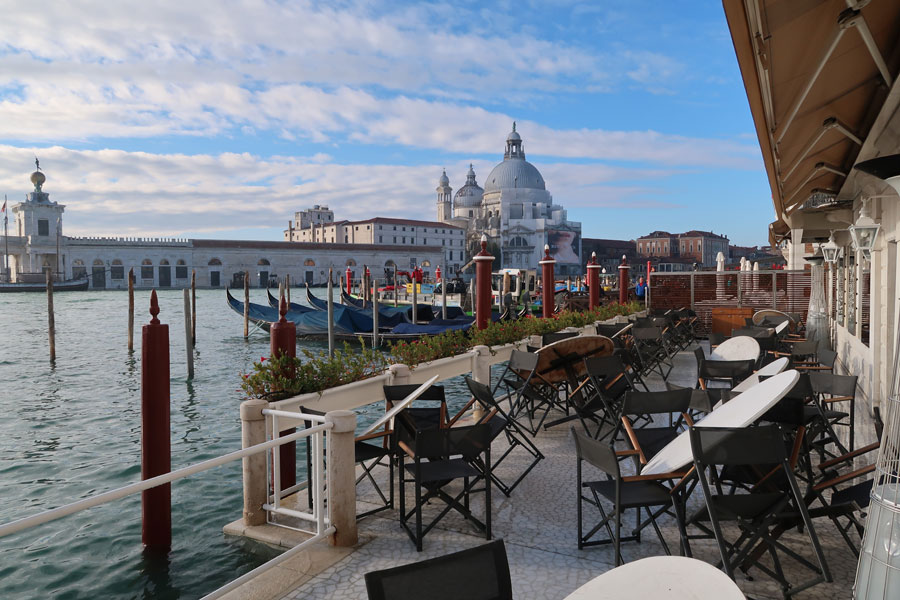
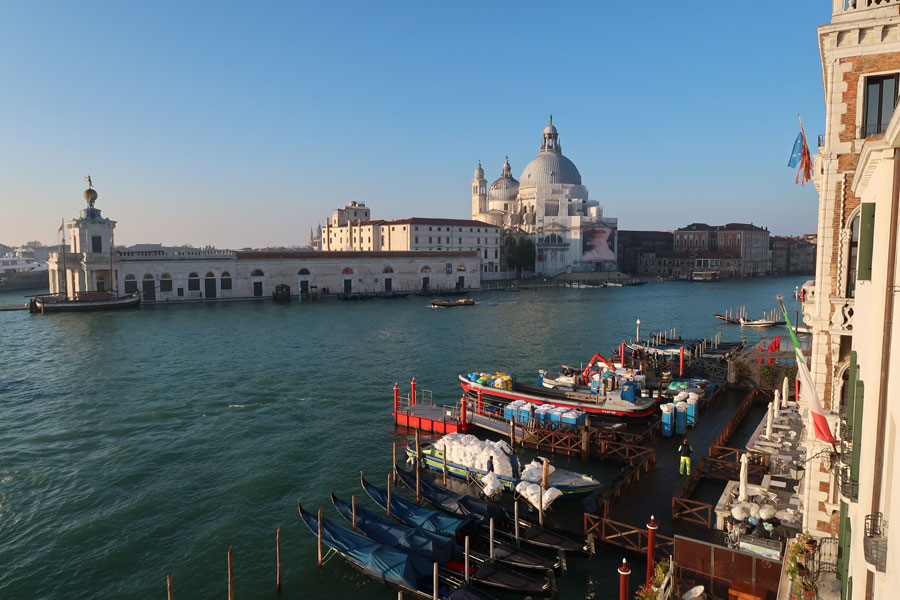
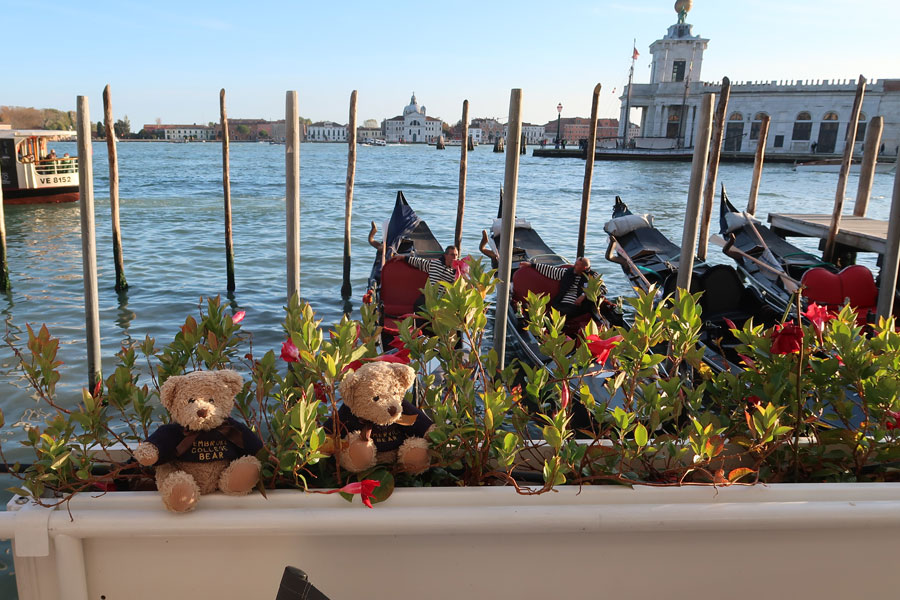
We found the lobby of the Hotel Monaco & Grand Canal at about 14.15 (our confirmation details said 14.00 check in, so we were not early), where the unfriendly receptionist told us we were too early and to return after 15.00. The day was "soft" rain outside and we had a wander through St Marks Square and along the front. We returned to the hotel and got our room, which was indeed "canal view" on the third floor and very nice. We looked down on a gondola station and across the lagoon to the glorious Santa Maria della Salute church. And away to the left was an island with San Giorgio Maggiore, a Palladian church, which is an important landmark.
Our first night yielded a storm. The shutters of the hotel flapped in the wind and the rain came down in torrents. But by morning it had passed, and all that there was to show was a flooded St Matks Square. After that we had sunshine almost all the way.
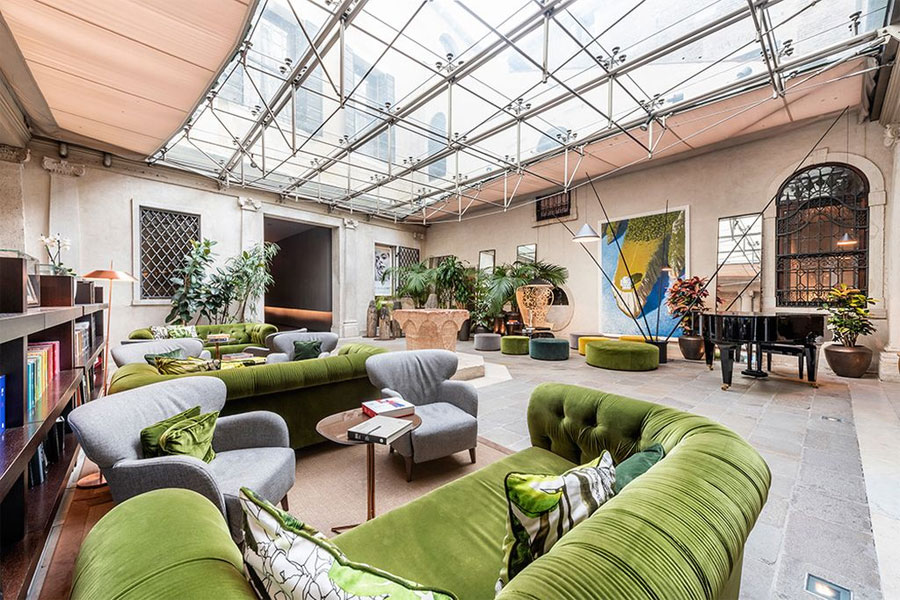
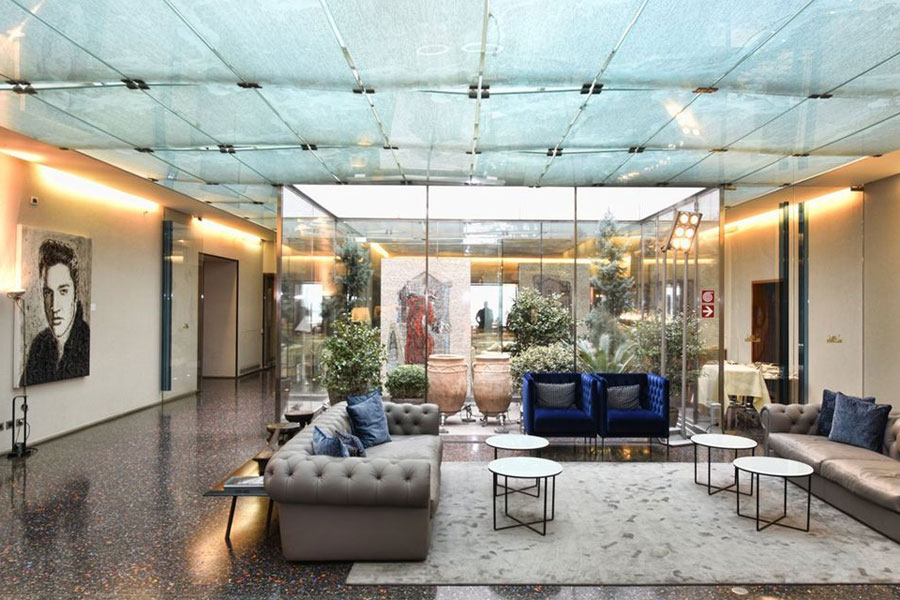
St Marks Square was only 100 metres walk away. Designer boutiques lined the thoroughfares nearby but the three palazzi that make up this hotel were surprisingly quiet. Spread over these three palazzi, this four-star hotel – owned by the Benetton group – mixes old and new. The ground floor public spaces, though striking - with smart contemporary sofas, colourful pouffes and potted plants , plus a selection of works of art, by local and international artists, decorating the walls - somehow did not quite come off, and did not attract any of the hotel guests to use them. So they were strangely empty and abandoned all the time
The restaurant served decent meals, at the kind of prices you'd expect for a ringside seat on the Grand Canal.. The problem was that in November they did not use the terrace. The restaurant staff seemed to run a fiefdom, independent of the hotel management, and refused to serve up anything on the terrace, not even a plate of pasta, not even a sandwich. We did find one couple eating there one night, who told us that it was necessary to "oil" the wheels to get a meal there. We had dinner in the restaurant on our first night, but decided that the inflated prices were not worth it for the poor atmosphere in the restaurant - hence the desire to eat on the terrace. As we were denied the terrace, we ate elsewhere
It was the same at breakfast. Nice sunny morning, and we were told we could not use the terrace. Without the use of the terrace, the hotel did not really have enough tables to seat guests, and service was somewhat chaotic. The hotel management neerd to sort this problem - a manager going round guests at breakfast would be a help
The Hotel Monaco & Grand Canal has been located in a historical building from 1638 and has been completely refurbished inside. It offers 99 air conditioned rooms. The rooms and suites are done out in quite a heavy Venetian-style décor; chandeliers are from Murano. Ours was one of the sixteen rooms that have Grand Canal views. Colour scheme has lots of gold leaf in stencil decorations and on ceilings which may not be to everyone's taste. There was no in-room tea or coffee making facilities. Our marble bathroom was luxurious and had a bathtub with shower.
We enjoyed our stay here, with the view over the canal. But I could have done without the friction with restaurant staff. And a hotel of this stature should be able to offer guests sustenance lighter that a full meal in the restaurant. - this lack of such food was not a misunderstanding, we tried several times, and it was the restaurant staff not wanting to be bothered. When we checked out, the receptionist was wonderful, and really apologised for our problems over food, but she should not have been put in the position of having to apologise.
Click on any thumbnail phot and get a larger photo
 |
 |
 |
 |
 |
 |
 |
 |
 |
 |
 |
 |
 |
 |
 |
 |
 |
 |
 |
 |
 |
 |
 |
 |
 |
St Marks Square
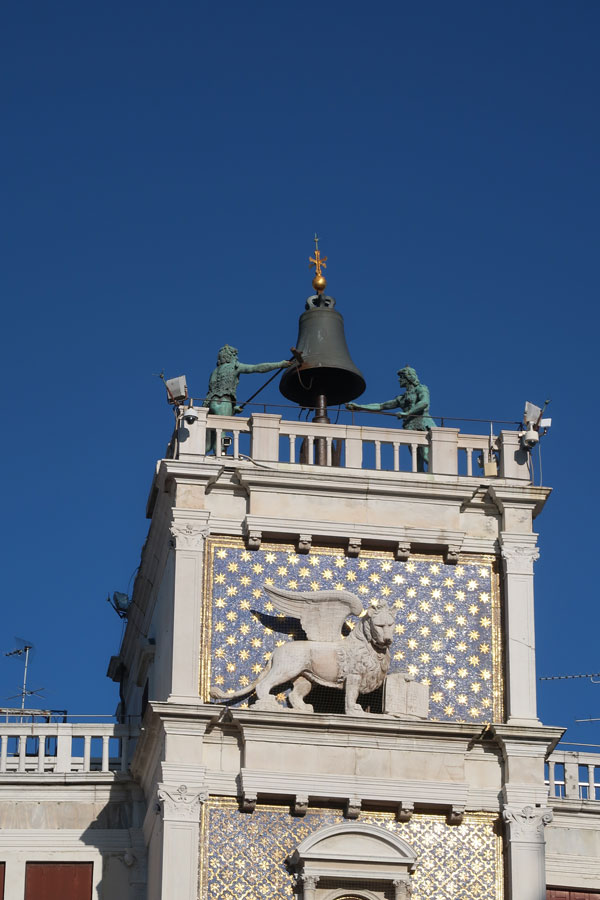
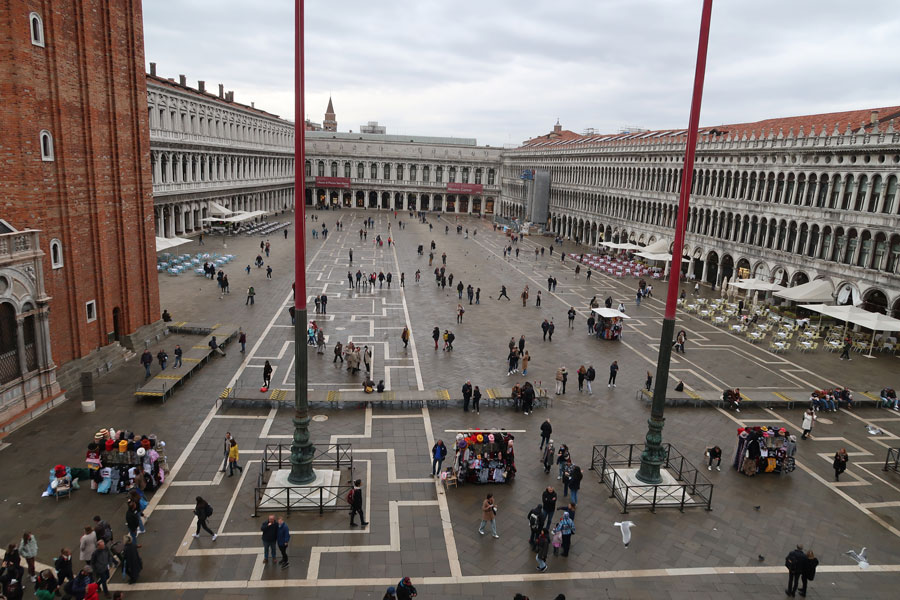
The heart of Venice. There was heavy rain overnight on our first night, and next morning St Marks was flooded, but a few hours later the floods had subsided. When Venice gets a tidal surge on a Spring Tide, the high tide prevents any surface water getting out of the city's drains, and in addition forces water into the city. This manifests itself by water bubbling up through the drains in St Marks Square - happily the problem sorts itself out as the tide falls, and St Marks can empty itself back into the sea, like a large bath emptying
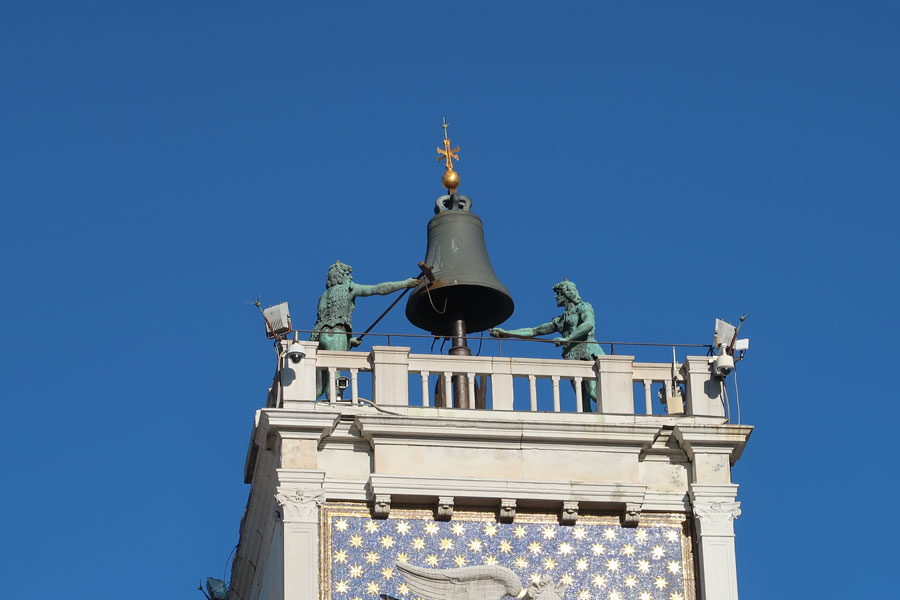
Given our hotel was so close, we passed through the square numerous times. Its aspect changes very much depending on the time of day and position of the sun
There was a full scale military parade on 4th November. Though we were told it was to commemorate the floods of 1967, I was not convinced.

Click on any thumbnail phot and get a larger photo
 |
 |
 |
 |
 |
 |
 |
 |
 |
 |
 |
 |
 |
 |
 |
 |
 |
 |
 |
 |
 |
 |
 |
 |
 |
Around Venice
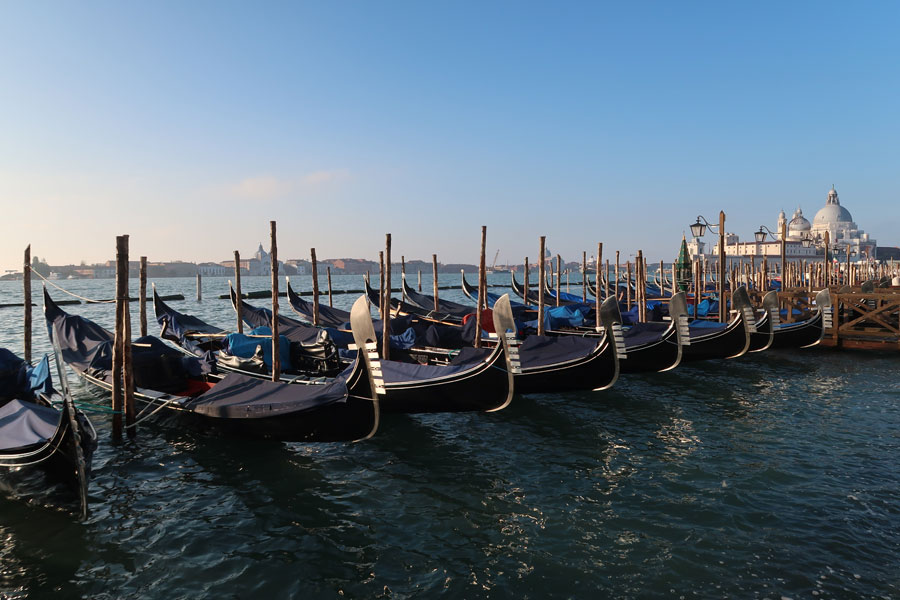
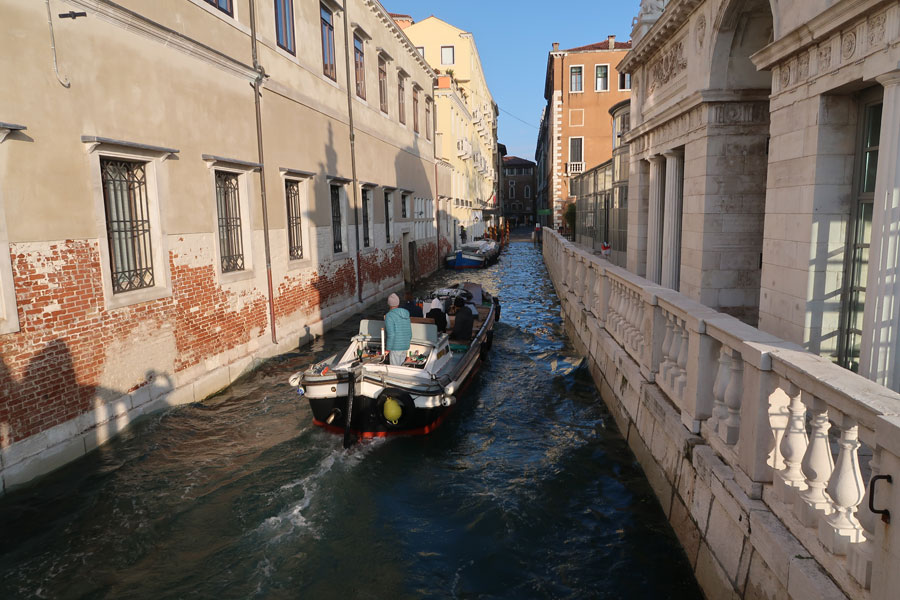
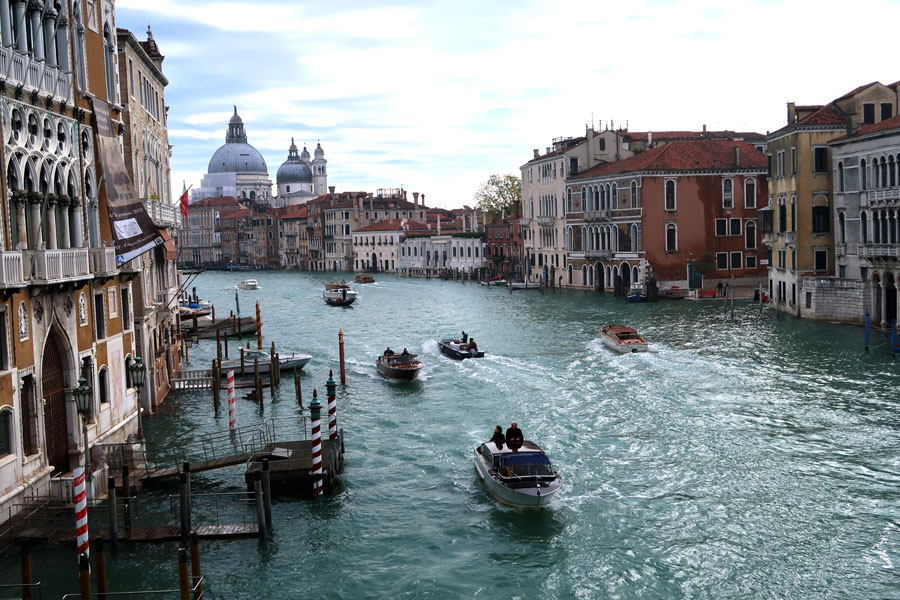
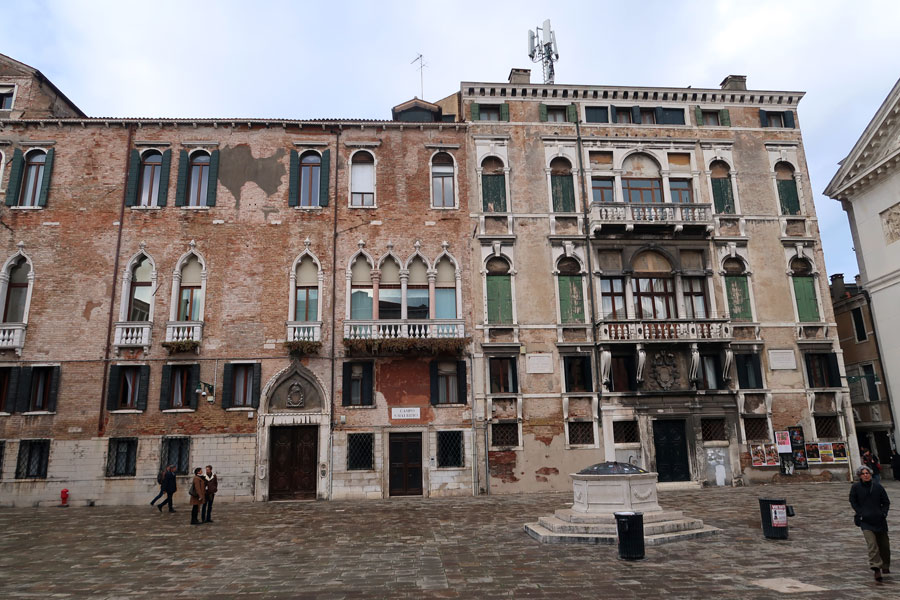
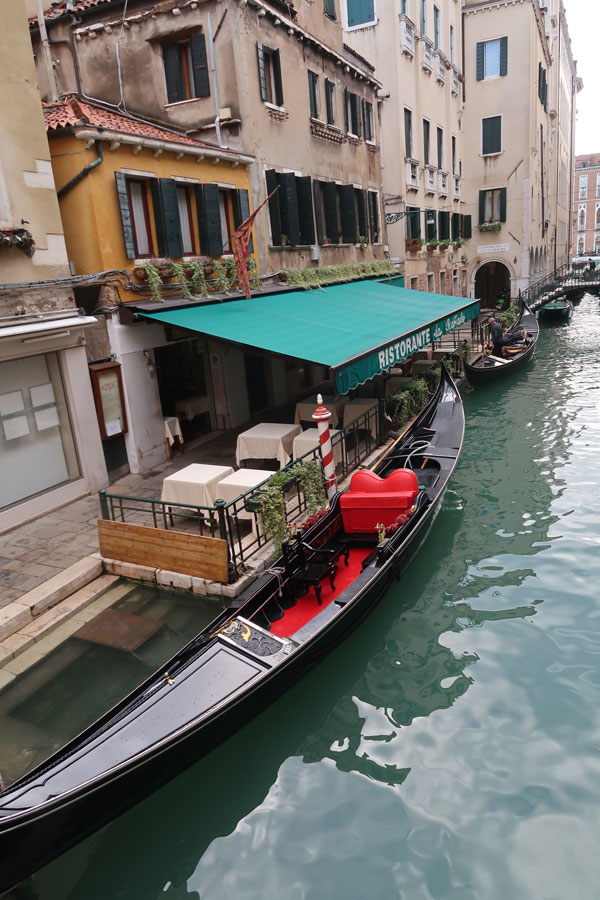
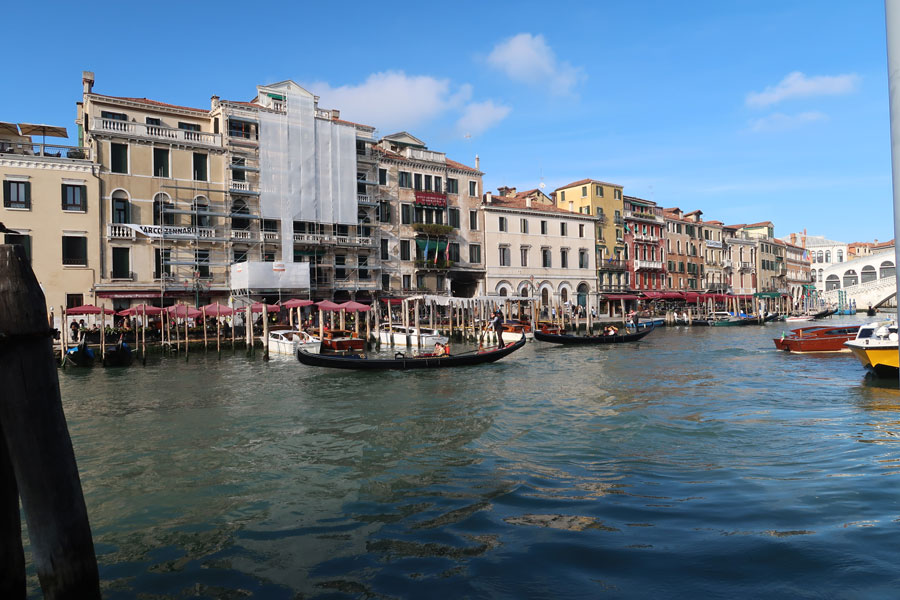
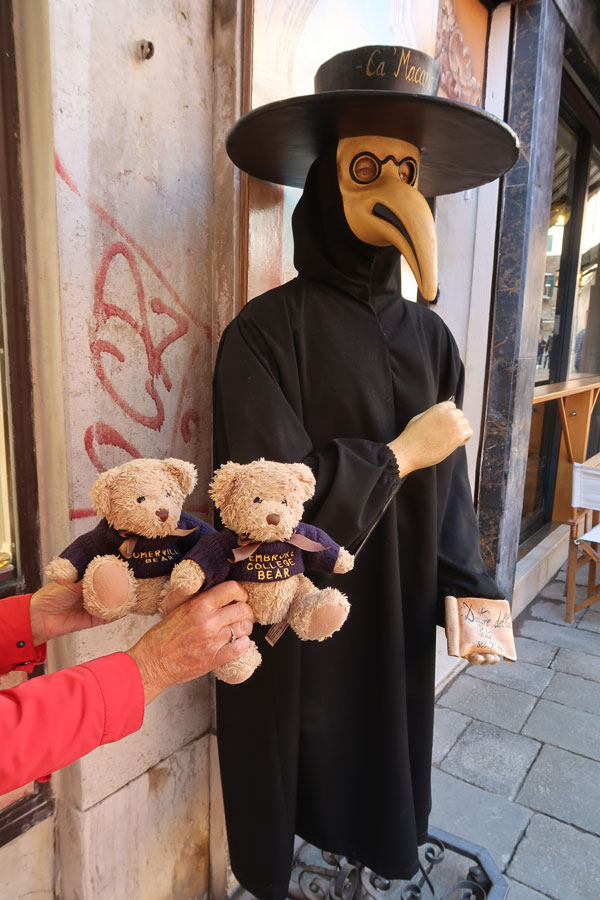
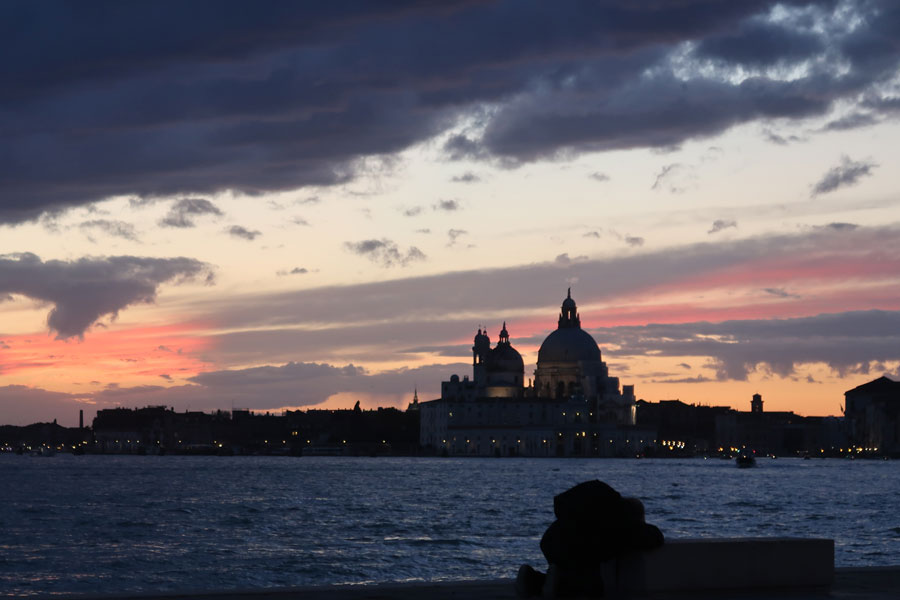
We did a fair amoumt of walking around Venice. This is a compilation of shots, of canals and gondolas, the Accademia Bridge and the Rialto Bridge - there are only 4 bridges over the Grand Canal. with the other two being close together near the Train Station.There was the bonus of a sunset over the Lagoon, whilst enjoying a Mohito
Thanks to our GPS on the mobile phone, navigating the streets of Venice was a comparatively simple matter - back in the days of paper maps it was a different story
We had our one excursion in a gondola, which was from our hotel to the basilica on the other side - but for 4 euros for the two of us in the gondola ferry, rather than the 80 euros for a "proper" gondola, it was a bargain. Mind you, one did not get the gondolier with the striped shirt and boater
Venice is really a city where you can just wander and be amazed by what you can find
Click on any thumbnail phot and get a larger photo
 |
 |
 |
 |
 |
 |
 |
 |
 |
 |
 |
 |
 |
 |
 |
 |
 |
 |
 |
 |
 |
 |
 |
 |
 |
 |
 |
 |
 |
 |
 |
 |
 |
 |
 |
 |
 |
 |
 |
 |
Santa Maria Gloriosa dei Frari
Usually just called the Frari, The largest church in the city, it has the status of a minor basilica. The church is dedicated to the Assumption of Mary. It took 100 years to complete, and was finished in 1338
Titian, the most prominent 16th-century Venetian painter, is interred in the Frari. The church also contains a number of his paintings. It also has the tomb dedicated to Antonio Canova (Canova was an eighteenth century Italian sculptor). This burial monument was built by the artist’s students. It is shaped like a pyramid. and was based on a design that had been intended for, but not used for, Titian. It was being restored when we were there

Click on any thumbnail photo and get a larger photo
 |
 |
 |
 |
 |
Accademia Gallery
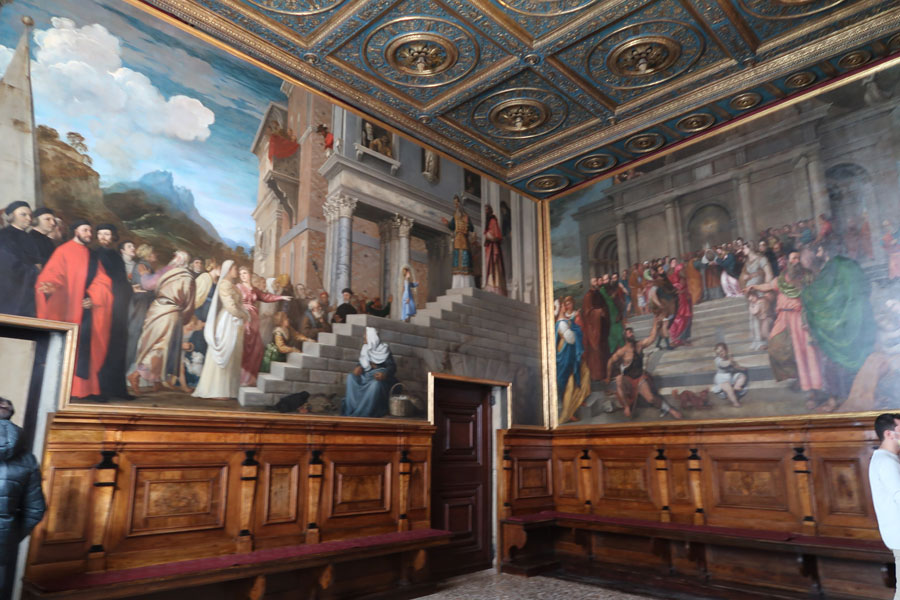
The Gallerie dell'Accademia is a museum gallery of pre-19th-century art. It is housed in the Scuola della Carità on the south bank of the Grand Canal. We bought timed tickets online in advance
The Napoleonic administration had disbanded many institutions in Venice including some churches, convents and Scuole. The Scuola della Carità, the Convento dei Canonici Lateranensi and the church of Santa Maria della Carità thus became the home of the Accademia. The Scuola della Carità was the oldest of the six Scuole Grandi and the building dates back to 1343. The Convento dei Canonici Lateranensi was started in 1561 by Andrea Palladio, though it was never fully completed. The facade of Santa Maria della Carità was completed in 1441 by Bartolomeo Bon.
The Gallerie dell’Accademia contains masterpieces of Venetian painting up to the 18th century, generally arranged chronologically . Artists represented include: Gentile and Giovanni Bellini, Bernardo Bellotto, Canaletto, Vittore Carpaccio, Luca Giordano, Leonardo da Vinci, Giambattista Piazzetta, Giambattista Pittoni, Tintoretto, Titian, Paolo Veronese.

The collection includes Leonardo da Vinci's drawing of the Vitruvian Man, which is displayed only rarely as the work, being on paper, is fragile and sensitive to light. In 2019, the Musée du Louvre in Paris requested the loan of the drawing for its exhibition of works by Leonardo. The request was refused by a cultural heritage group. A court tribunal in Venice, however, decided that the work would suffer no ill effects if shipped with great care and displayed under controlled conditions. The work was, therefore, part of the Louvre's exhibition from 24 October 2019 to 24 February 2020.

Click on any thumbnail phot and get a larger photo
 |
 |
 |
 |
 |
 |
 |
 |
 |
 |
Leonardo da Vinci Museum
I was intrigued by this museum. I had not been intending to visit, so I went in on a whim. Chris decided to forego Leonardo
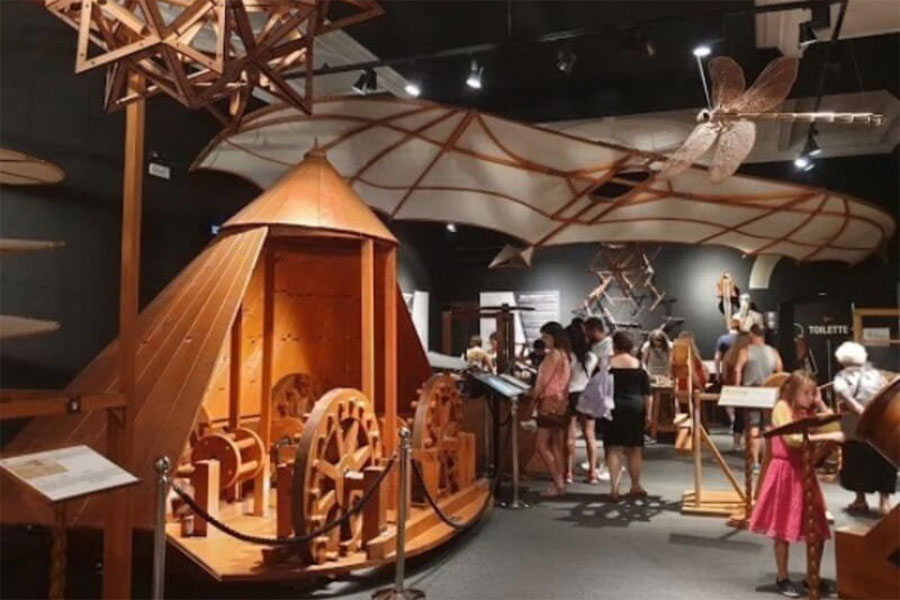
This museum houses a collection of machines made based on Leonardo da Vinci projects, built in full size. All machines work and many can be tested. Inside the museum there are also educational projections about the life and works of the Great Genius, as well as a reproduction of the main pictorial works of the artist and some of his main anatomical studies.
In Venice, Leonardo was employed as a military architect and engineer, devising methods to defend the city from naval attack.So a lot of the exhibits are of his military machines. I had a really enjoyable time dabbling with his machines

Click on any thumbnail photo and get a larger photo
 |
 |
 |
 |
 |
 |
 |
 |
 |
 |
Tour of Doges Palace
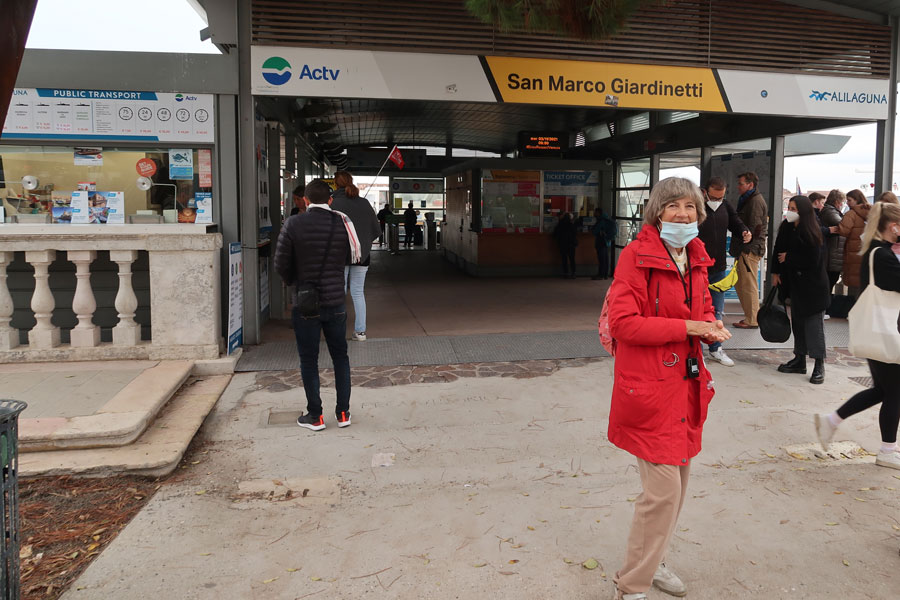
We signed up for an expensive, but turned out to be very good, guided tour of Doges Palace and Basilica. The guide was certainly better than the average guide we have encountered around the world, and certainly better than the guide we had on the Venetian Lagoon Islands the next day. Although the tour company claimed to "beat the queues", we only beat them for the Doge's Palace, for the Basilica we queued for 40 minutes with the rest of humanity
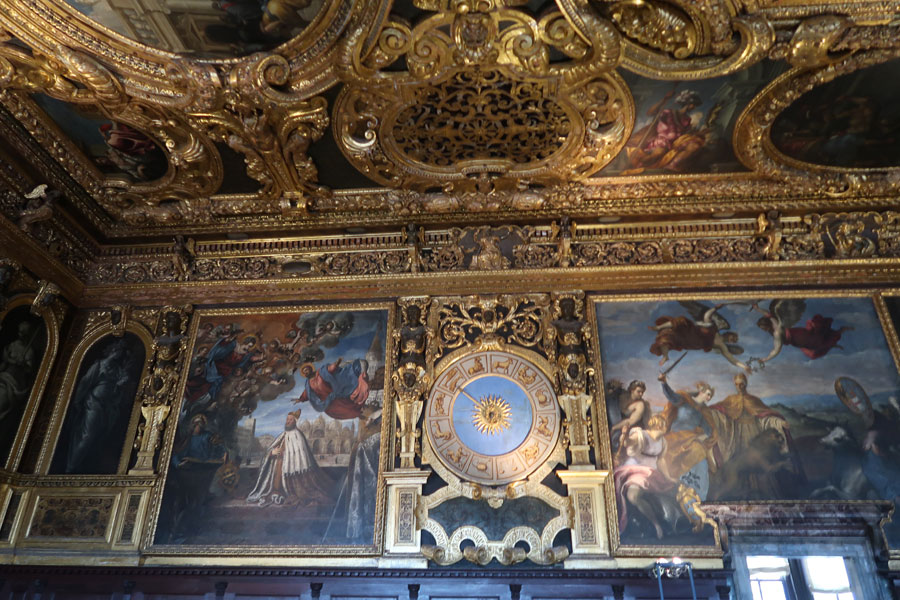
The Doges Palace is one of the main landmarks in Venice. The palace was the residence of the Doge of Venice, the supreme authority of the former Republic. It was built in 1340 and extended and modified in the following centuries. It became a museum in 1923.
For centuries Venice was the main military power in the Mediterranean, and the Doge was the elected head of State. The Doge's Palace was therefore not just built to house the Doge, but also as a seat of government. The state rooms were designed to impress, sort of "shock & awe". Visiting ambassadors would be visibly impressed by the decor, ceilings, paintings and general size of the building


Click on any thumbnail photo and get a larger photo
 |
 |
 |
 |
 |
 |
 |
 |
 |
 |
 |
 |
 |
 |
 |
St Marks Basilica
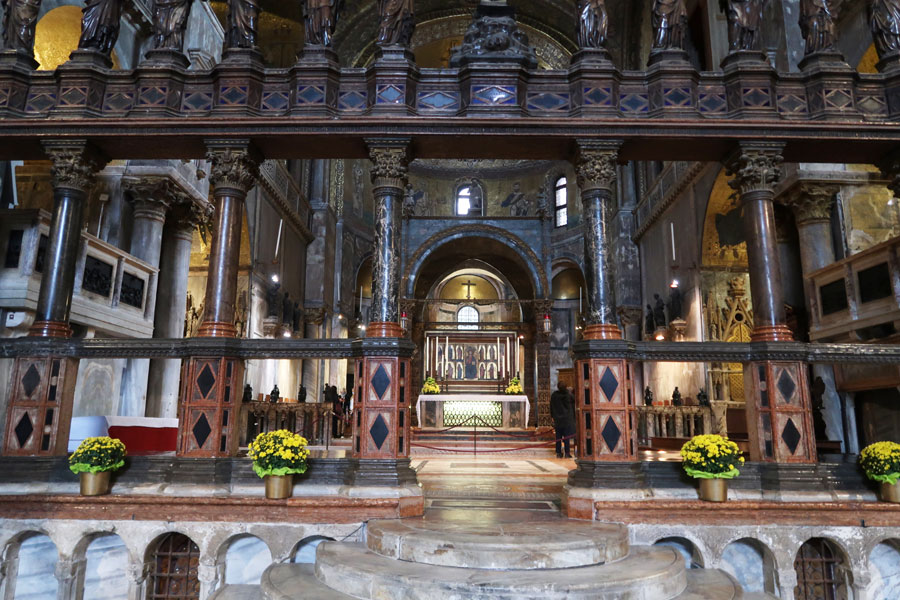
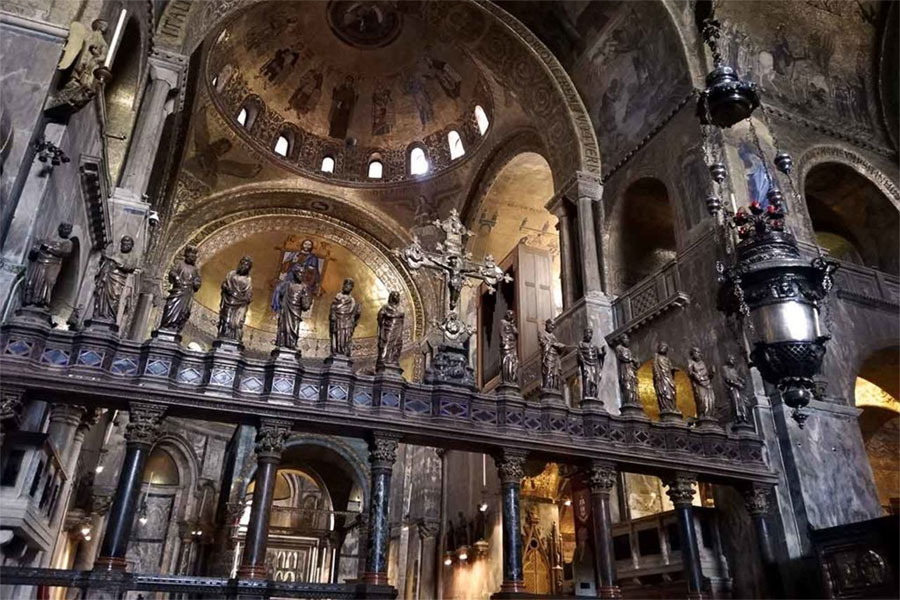
St Mark's Basilica is the cathedral church of the Roman Catholic Patriarchate of Venice; it became the episcopal seat of the Patriarch of Venice in 1807, replacing the earlier cathedral of San Pietro di Castello. It is dedicated to Saint Mark the Evangelist, the patron saint of the city, and it claims to holds his relics.
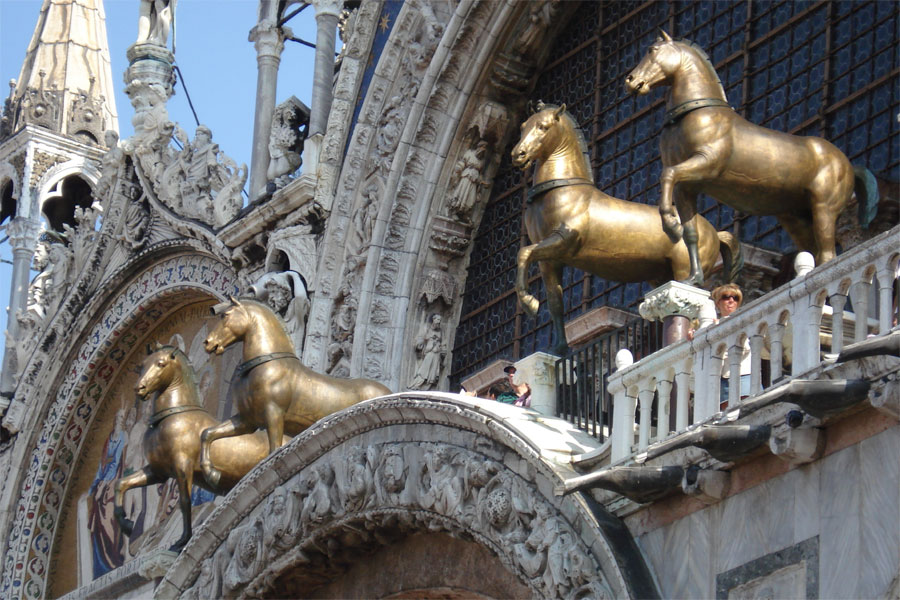
To convey the republic's wealth and power, the original brick façades and interior walls were embellished over time with precious stones and rare marbles, primarily in the thirteenth century. Many of the columns, reliefs, and sculptures were spoils stripped from the churches, palaces, and public monuments of Constantinople as a result of the Venetian participation in the Fourth Crusade. Among the plundered artefacts brought back to Venice to adorn St Mark's were the four ancient bronze horses that were placed prominently over the entry.
The interior of the domes, the vaults, and the upper walls were slowly covered with gold-ground mosaics depicting saints, prophets, and biblical scenes. Many of these mosaics were later retouched or remade as tastes changed and damaged mosaics had to be replaced. Some of them derive from traditional Byzantine representations; others are based on preparatory drawings made by prominent Renaissance artists from Venice and Florence, including Paolo Veronese, Tintoretto, Titian, Paolo Uccello, and Andrea del Castagno. For its singular importance, St Mark's Basilica was defined by the art historian and Byzantinist Otto Demus as "the key to the understanding of all of Venice, of its history, and of its art."
The relics of Saint Mark are recorded in Venice as early as the ninth-century in both the will of Doge Giustiniano Participazio (in office 827–829) and the travelogue of a Frankish monk on return from a pilgrimage to the Holy Land. However, the oldest surviving written account of the transfer of the relics from Alexandria in Egypt to Venice, dates only to the eleventh century.
As narrated, a fleet of ten Venetian trading vessels seeks shelter in the Muslim-controlled city of Alexandria during a storm. In Alexandria, two of the Venetian merchants go daily to pray at the tomb of Saint Mark, located in a church near the port, and, there, they make the acquaintance of Theodore and Stauracius, a priest and monk respectively. Theodore, fearful for the dwindling Christian community under Islamic rule, makes it known that the Caliph Al-Ma'mun has ordered the demolition of the church in order to recover building materials for new mosques, and it is suggested that the body of the saint be removed to Venice for safety. The relics, placed into a basket and covered in pork, are then successfully smuggled past the Muslim customs officials and embarked on the Venetians' ship, which is preserved from shipwreck during the voyage by Saint Mark who appears and warns the sailors. Other miracles occur, confirming the authenticity of the relics, until finally the ship arrives in Venice where the body is received by the Bishop of Olivolo and then taken in solemn procession to the Doge. Independently of the miraculous details and pious inventions, the overall narration serves to justify the right of Venice to possess the relics.The transfer of the relics to Venice is therefore a return of Mark to his rightful resting place.
The Horses of Saint Mark were installed on the balcony above the portal of the basilica in about 1254. They date to Classical Antiquity,and presumably were originally the team pulling a quadriga chariot, probably containing an emperor. By some accounts they once adorned the Arch of Trajan. The horses were long displayed at the Hippodrome of Constantinople, and in 1204 Doge Enrico Dandolo sent them back to Venice as part of the loot sacked from Constantinople in the Fourth Crusade. They were taken to Paris by Napoleon in 1797 but returned to Venice in 1815. They were moved temporarily to the Palazzo Venezia in Rome during the first World War for safekeeping. During World War II, they were hidden in Praglia Abbey, a Benedictine monastery in Teolo. After a long restoration, since the 1970s the copper mercury-gilded originals have been kept in St Mark's Museum inside the basilica and the horses now on the facade of the cathedral are bronze replicas.

Click on any thumbnail photo and get a larger photo
 |
 |
 |
 |
 |
 |
 |
 |
 |
 |
 |
 |
 |
 |
 |
 |
 |
 |
 |
 |
Bistrot di Venise
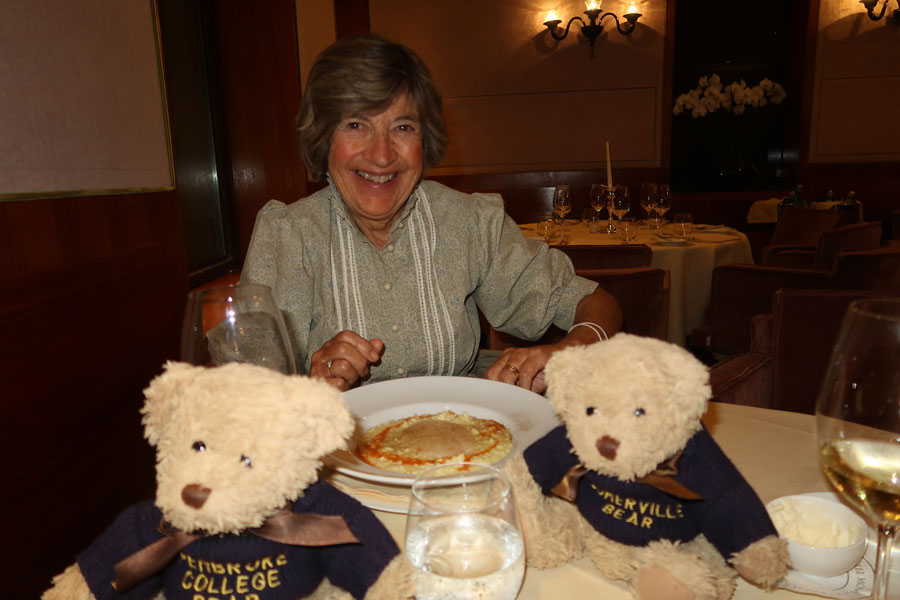
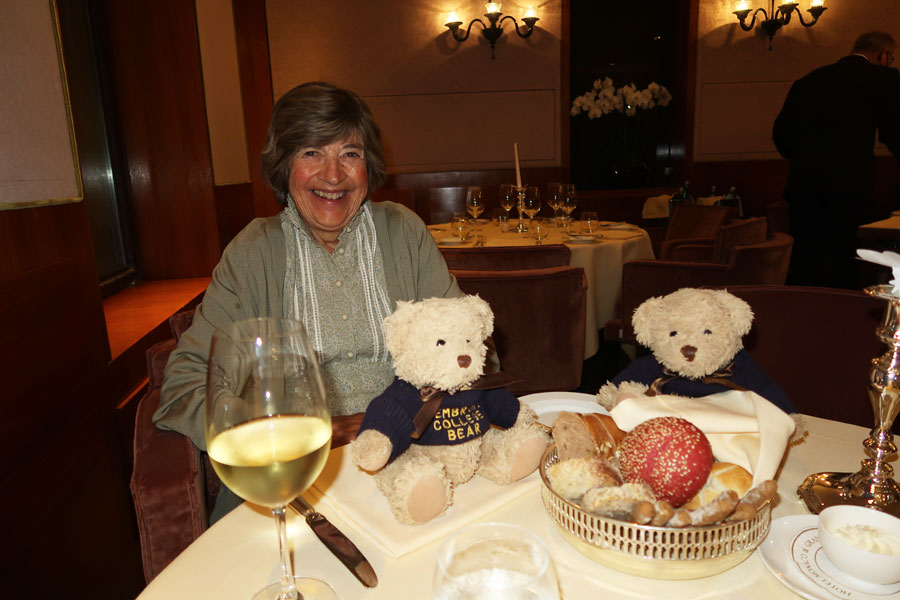
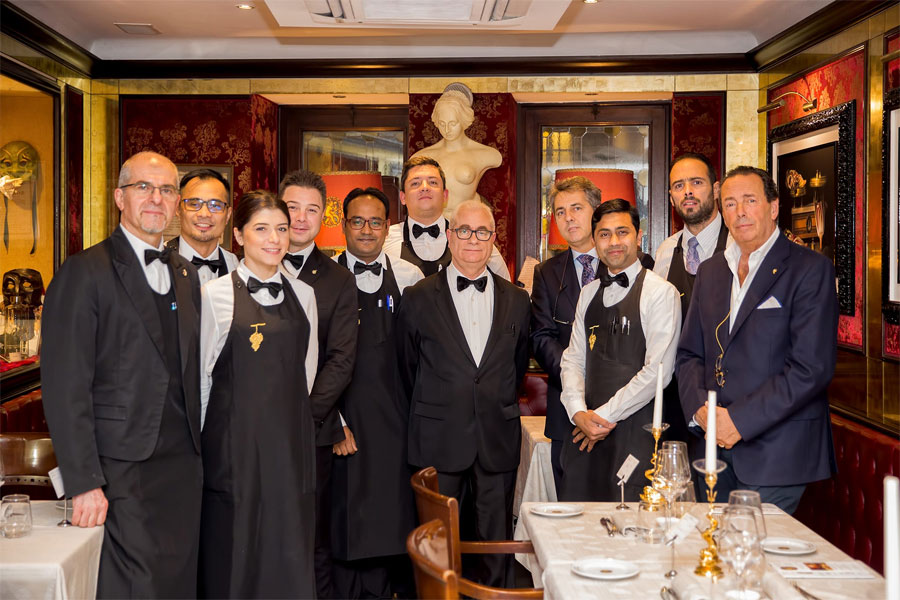
A bit "over the top" but nevertheless an enjoyable evening. This place is much more of a restarurant than a bistro.
Full of formal waiters and formal service, it is Michelin recommended rather than Michelin Star, but its prices are more in the high category. There is an a la carte menu plus two tasting menus at 74 euros and 110 euros.
We had the cheaper of the two menus, plus 3 glasses of wine and water. The bill came to just under 200 euros for the two os us The presentation is theatrical and entertaining, the service is "old fashioned" formal. The food is interesting and good, but not quite star level Probably a little expensive for what it was, but this is Venice and I was happy to pay the price

Click on any thumbnail photo and get a larger photo
 |
 |
 |
 |
 |
 |
The tour of the Lagoon Islands - Murano, Torcello and Burano
This was an organised "tour" but with minimum guiding and little commentary. I enjoyed the stops at the three islands which were all different

Murano
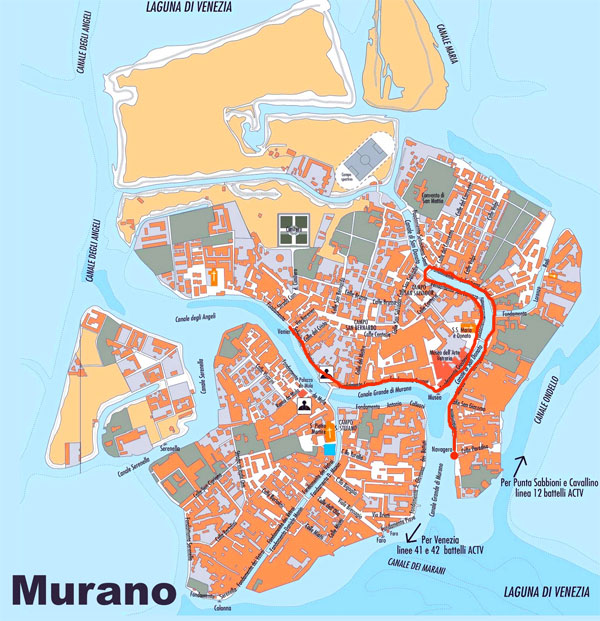
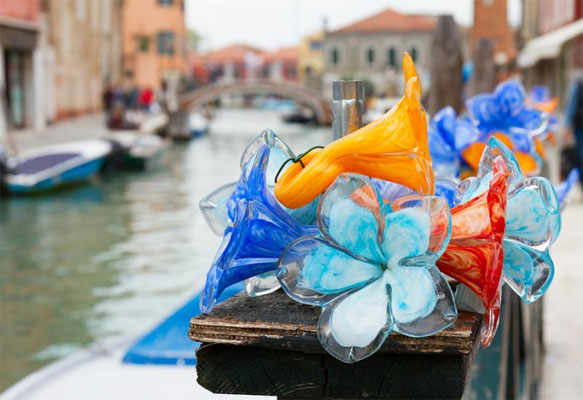
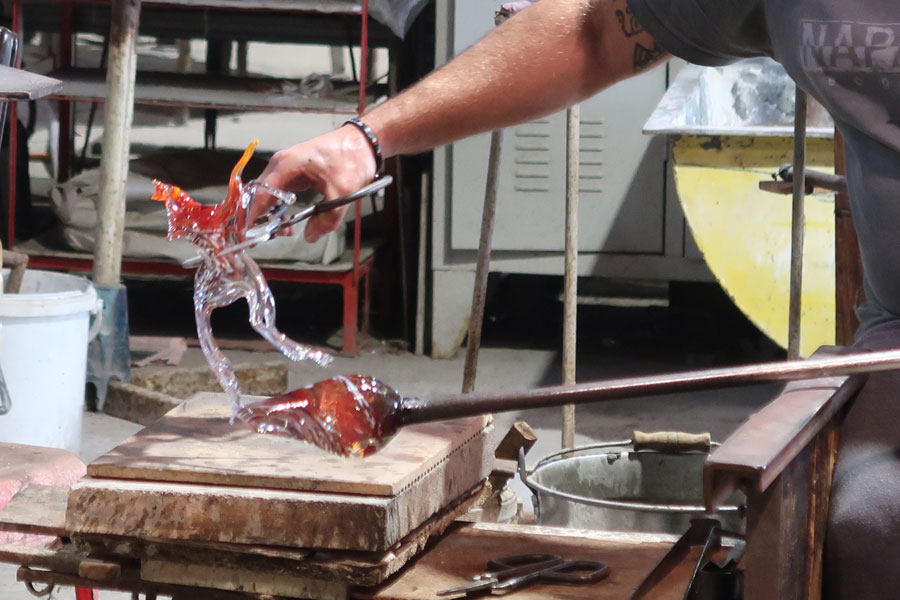
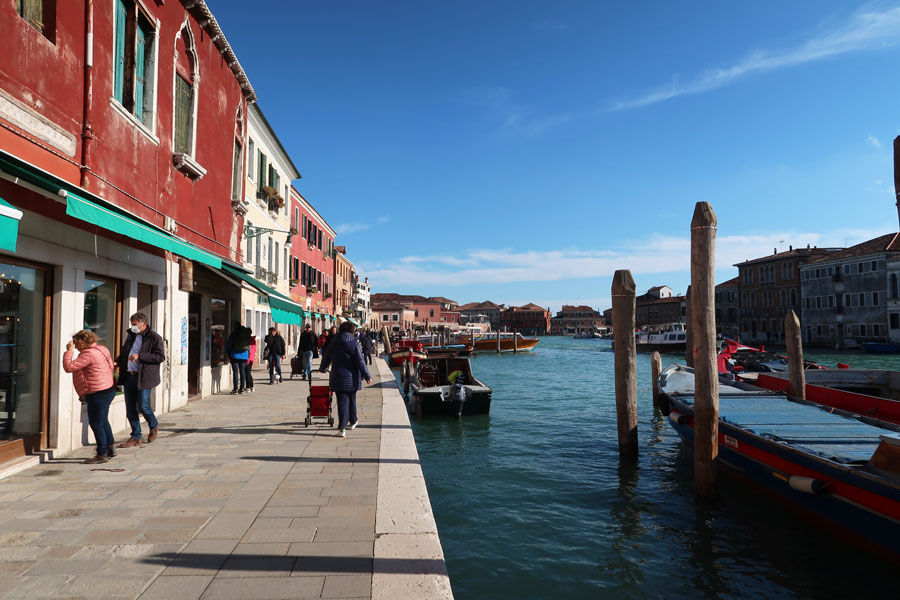
Murano is where they moved the glass factories when their fire risk was deemed unacceptable. Today there are some 260 companies remaining in operation, employing 1,100 staff member
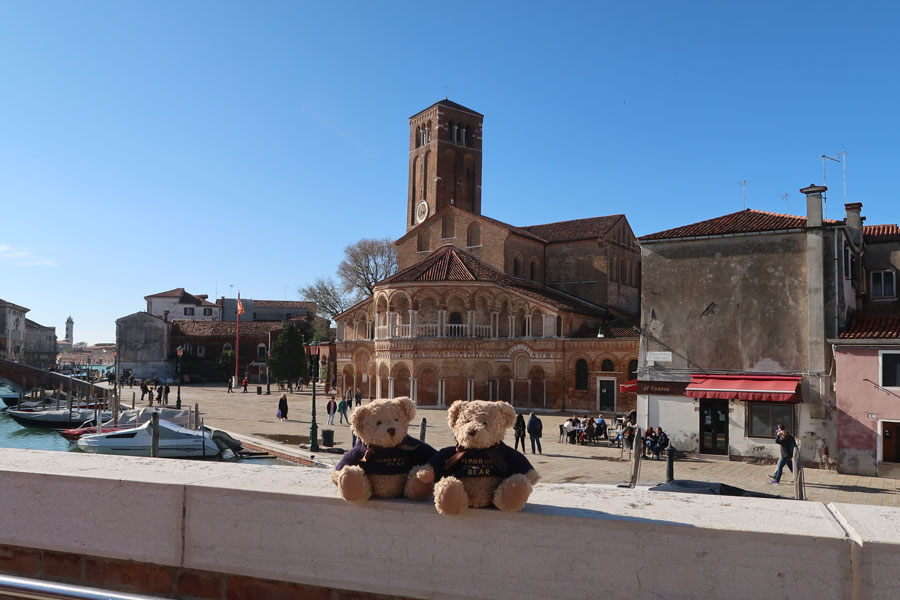
Murano is actually a series of islands linked by bridges. It lies about 1.5 kilometres north of Venice and measures about 1.5 km across with a population of just over 5,000.
Murano's glassmakers held a monopoly on high-quality glassmaking for centuries, developing or refining many technologies including optically clear glass, enamelled glass (smalto), glass with threads of gold (aventurine), multicolored glass (millefiori), milk glass (lattimo), and imitation gemstones made of glass. Today, the artisans of Murano still employ these centuries-old techniques, crafting everything from contemporary art glass and glass jewellery to Murano glass chandeliers and wine stoppers. Venice kept protecting the secret of the production of glass and of crystal but, notwithstanding it, the Republic partially lost its monopoly at the end of the sixteenth century, because of some glass makers who let the secret be known in many European countries.
Overall, the industry has been shrinking as demand has waned. Imitation works (recognizable by experts but not by the typical tourist) from Asia and Eastern Europe take an estimated 40 to 45 percent of the market for Murano glass, and public tastes have changed while the designs in Murano have largely stayed the same. To fight the imitation problem, a group of companies created a trademark in 1994 that certifies that the product was made on Murano. By 2012, about 50 companies were using the Artistic Glass Murano® trademark of origin.
 |
 |
 |
Click on any thumbnail photo and get a larger photo
 |
 |
 |
 |
 |
 |
 |
 |
 |
 |
 |
 |
 |
 |
 |
Torcello
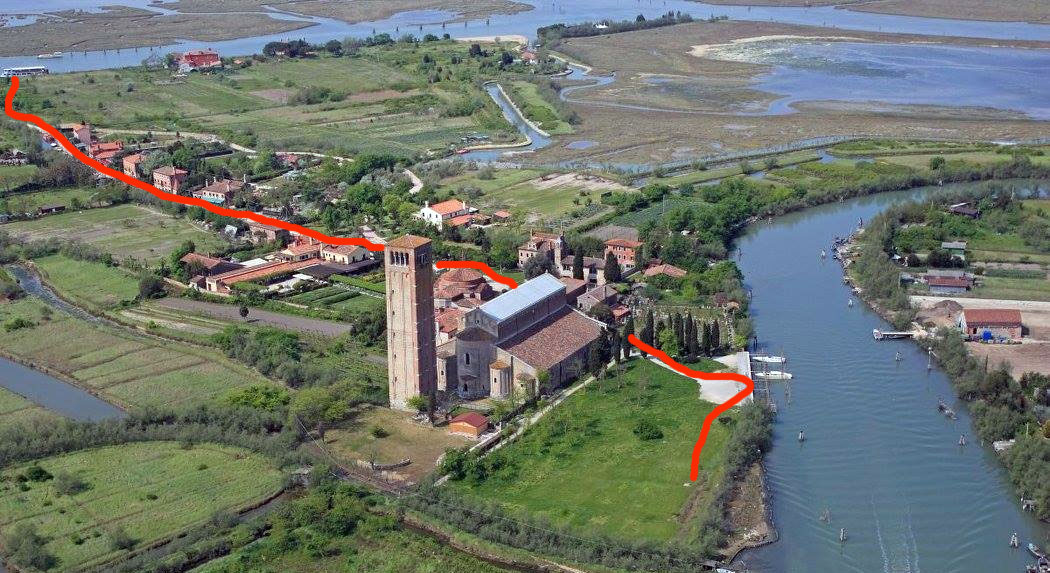
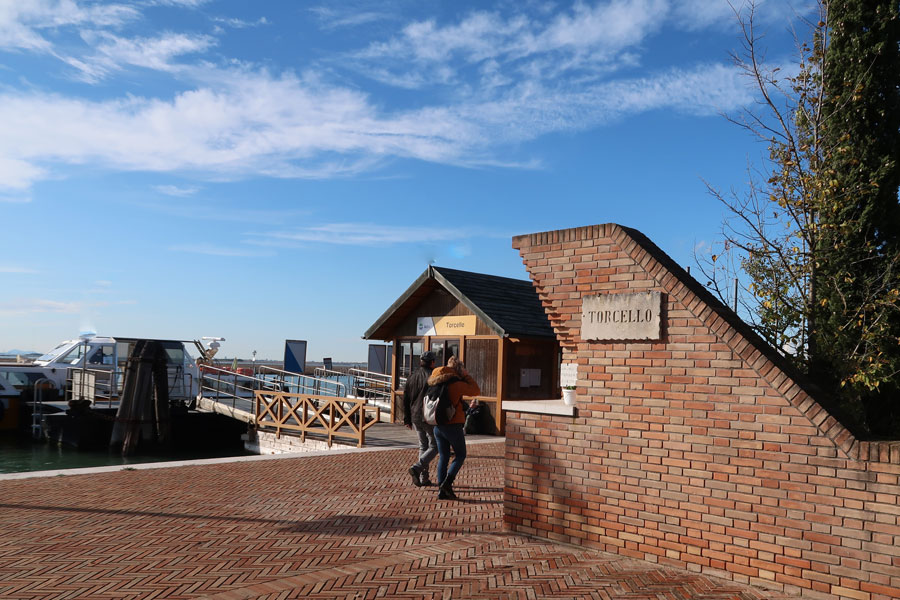
Tiny Torcello island has few residents but it's busy with sightseers. They come to visit the Basilica di Santa Maria Assunta, with its Venetian-Byzantine mosaics and views of nearby Burano from the bell tower, or to check out the Ponte del Diavolo, a bridge with no parapets, and the stone seat known as Trono di Attila. A handful of eateries along the main canal serve lunch.
Torcello was once the most important and populated island in the Venetian Lagoon, with over 20,000 residents. The population that lived on the mainland fled to the marshy islands when the people of Lombardy and the Hun invaded the north of Italy. It remained great for approximately one century and then was hit by an outbreak of malaria that decimated the population and the power was moved to Venice. As a result of various plagues, by the late 14th century, a substantial number of people left the island for Murano, Burano or Venice. In 1689, the bishopric transferred to Murano, and by 1797, the population had dropped to about 300. It now has a full-time population of just 10 people, including the parish priest.
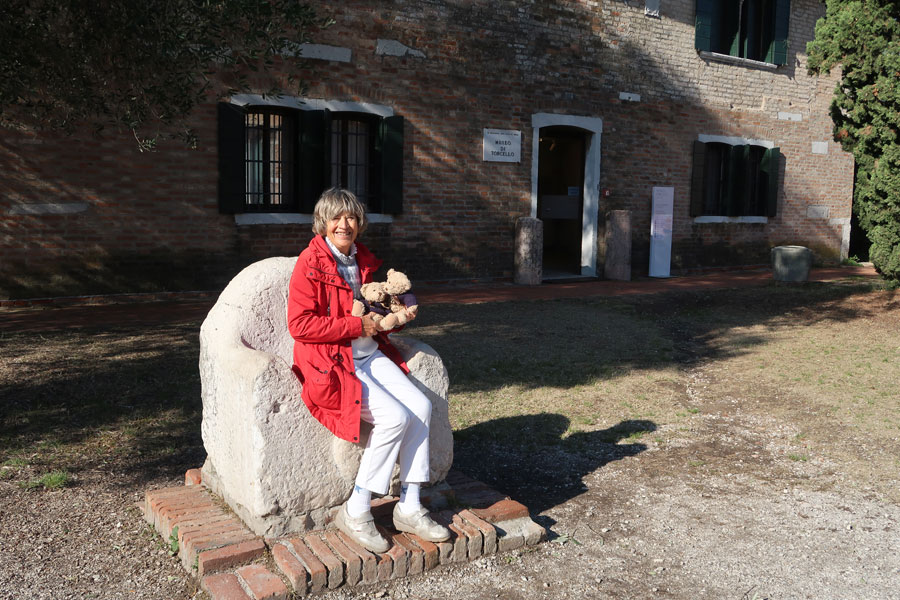
One of the highlights of Torcello is Attila’s Throne, which is an ancient chair made of stone. It is located in the main square of the town and it is believed that this chair was used by Attila, King of the Huns.
The Cathedral of Santa Maria Assunta is the oldest building in the Venetian Lagoon. Its interior has remarkable Byzantine mosaics from the twelfth and thirteenth centuries. This impressive temple was founded in 639 and it still preserves a ninth century portico with arches. Next to the Basilica is the Santa Fosca church, surrounded by a pentagonal portico.
Click on any thumbnail photo and get a larger photo
 |
 |
 |
 |
 |
 |
 |
 |
 |
 |
 |
 |
 |
 |
 |
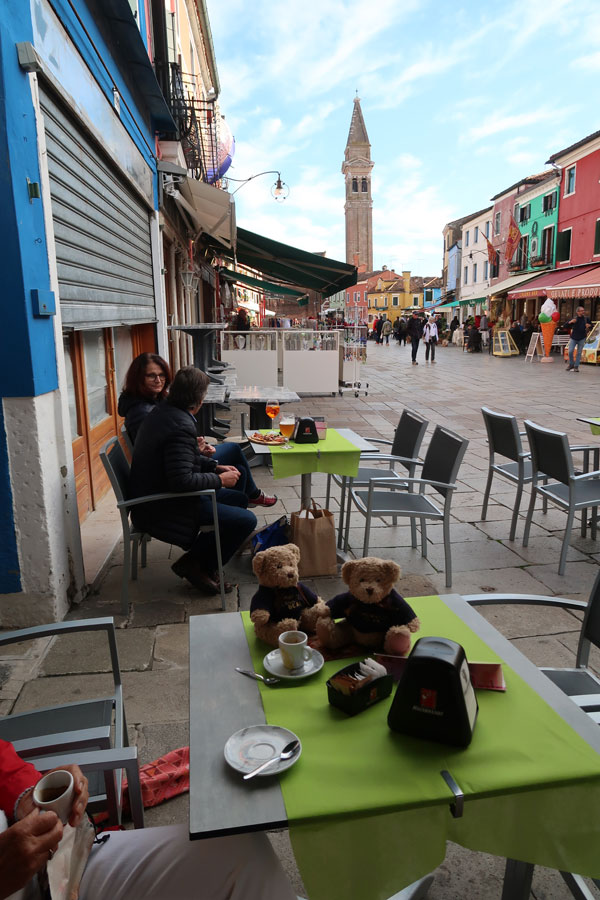
Burano
Burano is an island near Torcello at the northern end of the lagoon, known for its lace work and brightly coloured homes. The primary economy is tourism
Settled in Roman times, the island soon became a thriving settlement, but was administered from Torcello and had none of the privileges of that island or of Murano. It rose in importance only in the 16th century, when women on the island began making lace with needles, being introduced to such a trade via Venetian-ruled Cyprus. When Leonardo da Vinci visited in 1481, he visited the small town of Pano Lefkara and purchased a cloth for the main altar of the Duomo di Milano. The lace was soon exported across Europe, but trade began to decline in the 18th century and the industry did not revive until 1872, when a school of lacemaking was opened. Lacemaking on the island boomed again, but today few make lace in the traditional manner as it is extremely time-consuming and therefore expensive.
Burano is also known for its small, brightly painted houses, which are popular with artists. The colours of the houses follow a specific system, originating from the golden age of its development. If someone wishes to paint their home, one must send a request to the government, who will respond by making notice of the certain colours permitted for that lot


Click on any thumbnail photo and get a larger photo
 |
 |
 |
 |
 |
 |
 |
 |
 |
 |
 |
 |
 |
 |
 |
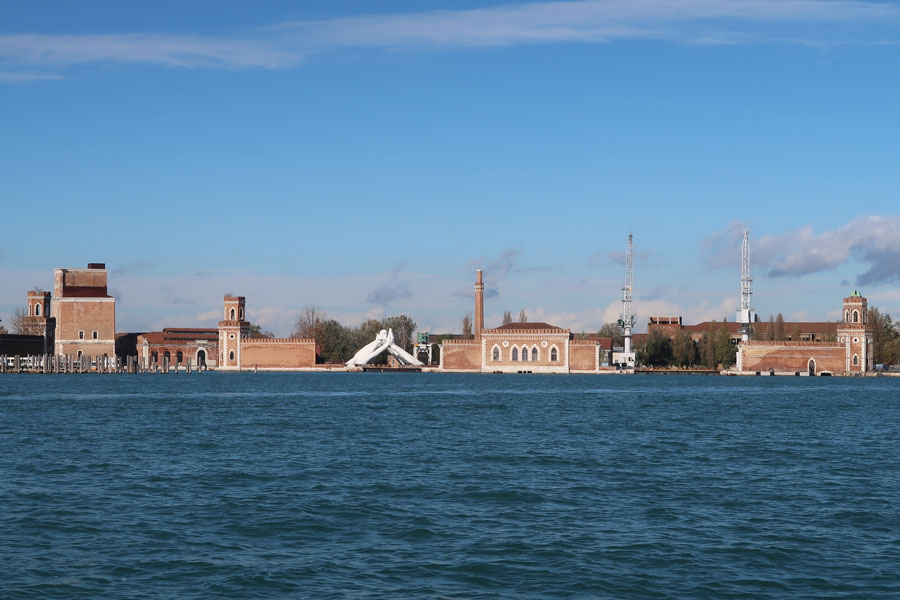
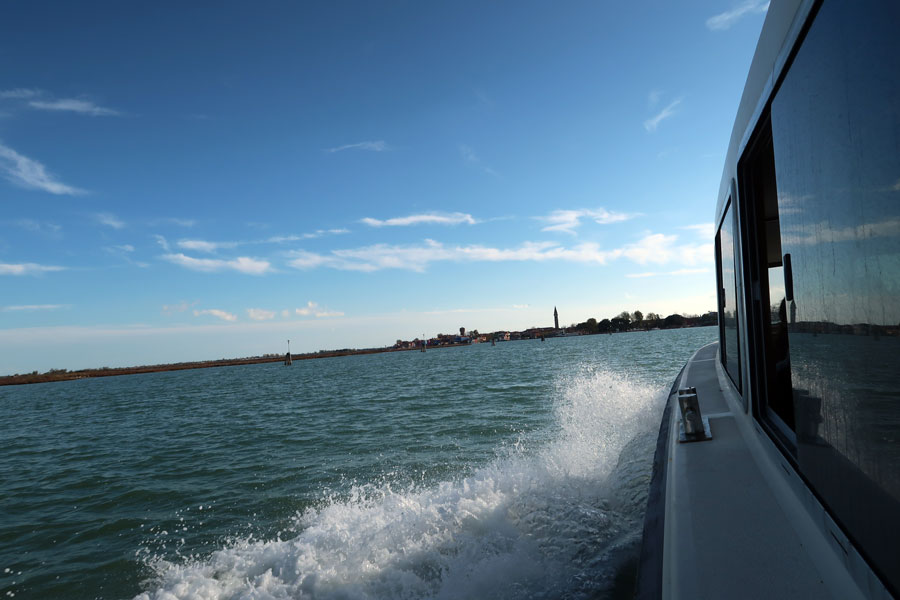
And before you know it, it is time to leave. We took a water taxi back to Tronpetto Parking - I thought that it was a better way to leave, rather than packing in to the vaporetta. The water taxi went to Tronpetto the direct way, which is outside the island of Venice, rather than via the Grand Canal

Click on any thumbnail photo and get a larger photo
 |
 |
 |
 |
 |
From here it was a question of setting the GPS and the 7 hour drive back to Chateau St Roux again