We boarded the Silver Cloud on 11th April and set sail from Accra in the late afternoon. Our first stop was the following morning at Takoradi, still in Ghana. Sekondi-Takoradi is the twin city of of Sekondi and Takoradi, an industrial and commercial centre, with a population of 445,205 people. There was little for the tourist in the city, and our excursion took us to two of the slave castles of the Cape Coast .
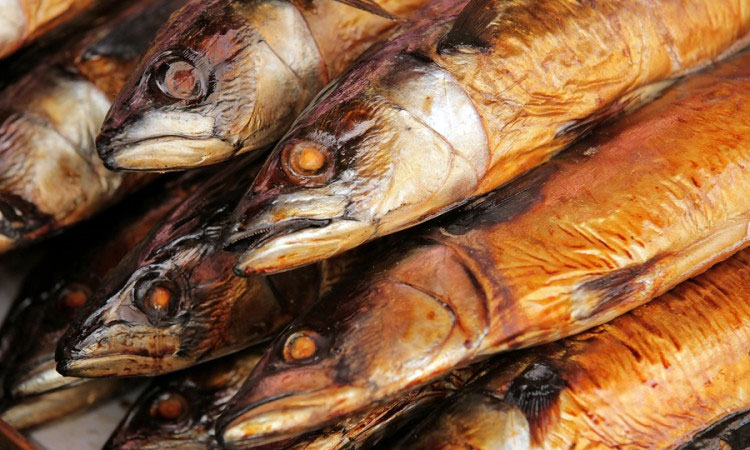
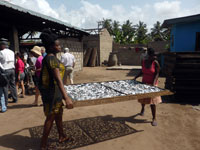
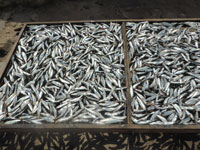
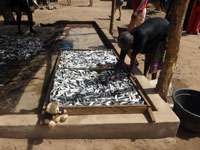
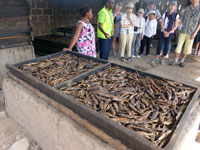
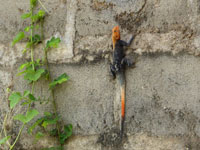
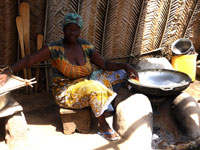
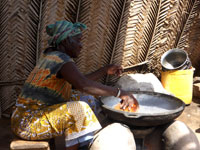
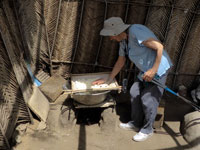
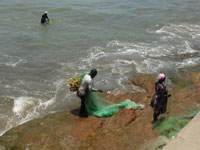
We visited a village where they were smoking fish - the fish looked like sardines. Smoking is one of the oldest methods of food preservation and smoking fish enhances its flavour and colour. Fish smoking is one of the most widely used traditional processing methods in Ghana. Research indicates that about 80 per cent of fish in Ghana is processed through smoking. Consumption of smoked fish has increased over the years in Ghana, with salmon leading as the most consumed smoked fish, followed by herrings (amane) and mudfish (adwen). Smoking is done to prevent spoilage, prolong the shelf life and improve the quality of the fish. In addition it enables easier transportation and storage.
Click on any of the thumbnails to get a bigger version of the picture
 |
 |
 |
 |
 |
 |
 |
 |
 |
 |
 |
 |
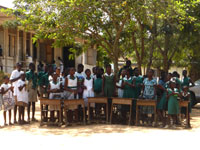
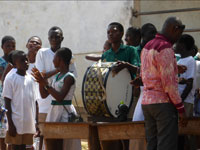
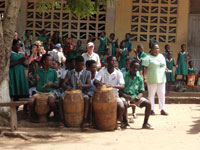
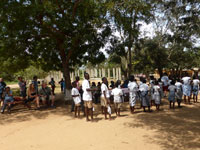
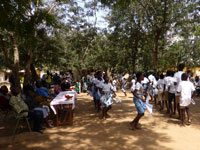
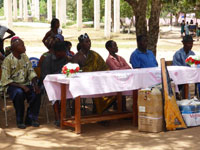
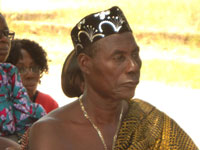
We stopped at this quite interesting school. The dancing went on a bit longer than I would have liked. And at the end the village chief was given supplies from the Silver Cloud. This was very authentic (unlike another school we were taken to in The Gambia which was corrupt)

Click on any of the thumbnails to get a bigger version of the picture
 |
 |
 |
 |
 |
 |
 |
 |
 |
 |
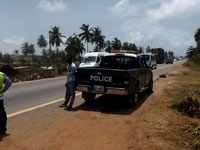
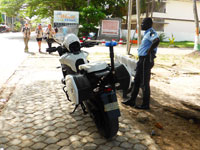
A feature of our visits to most sub-Saharan African countries was the police escort to guide our buses through the horrendous traffic that one gets in all African cities. With sirens flashing they channeled us through the traffic, forcing cars travelling in both directions to pull off the road

Click on any of the thumbnails to get a bigger version of the picture
 |
 |
 |
 |
 |
Ghana |
Ghana |
Ivory Coast |
Ghana |
Ghana |
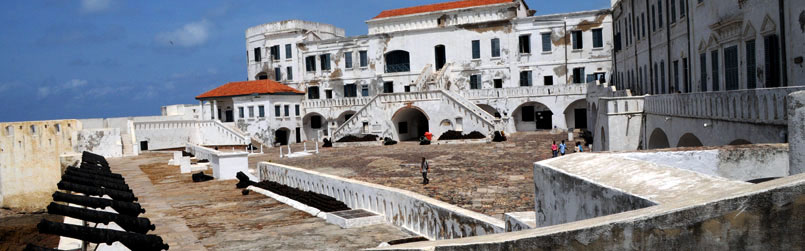
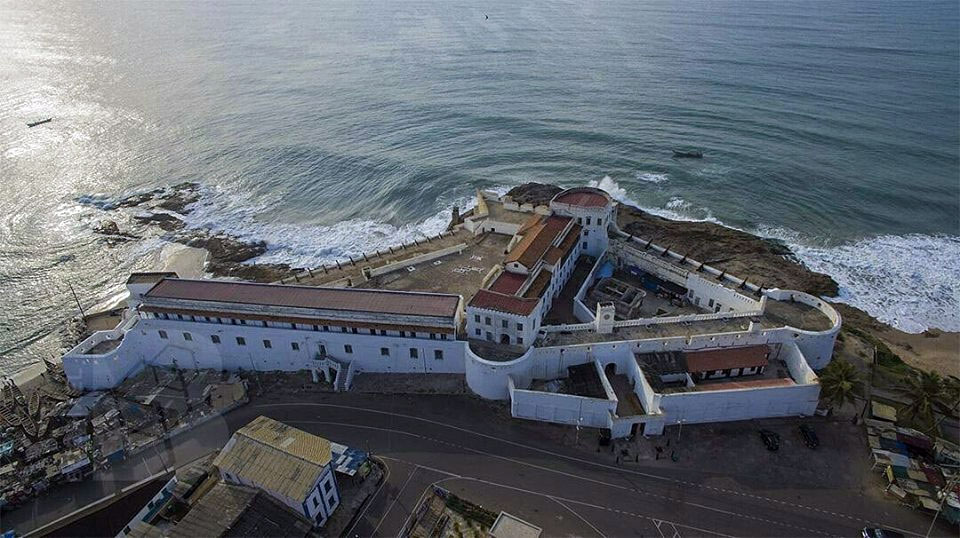
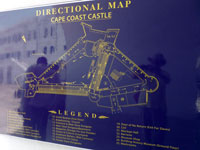
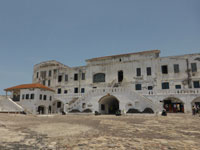
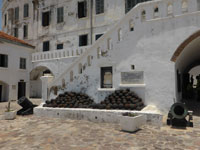
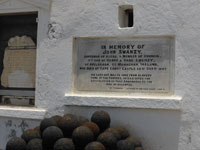
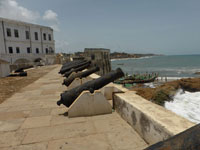
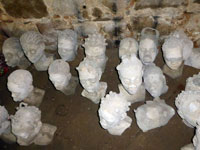
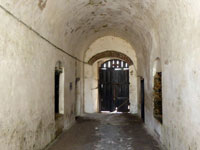
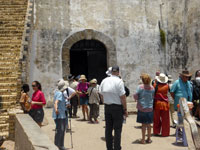
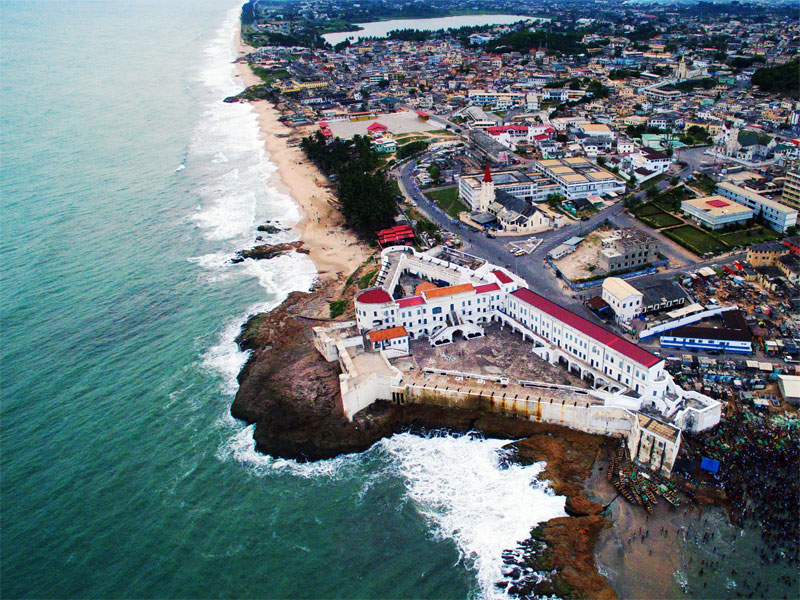
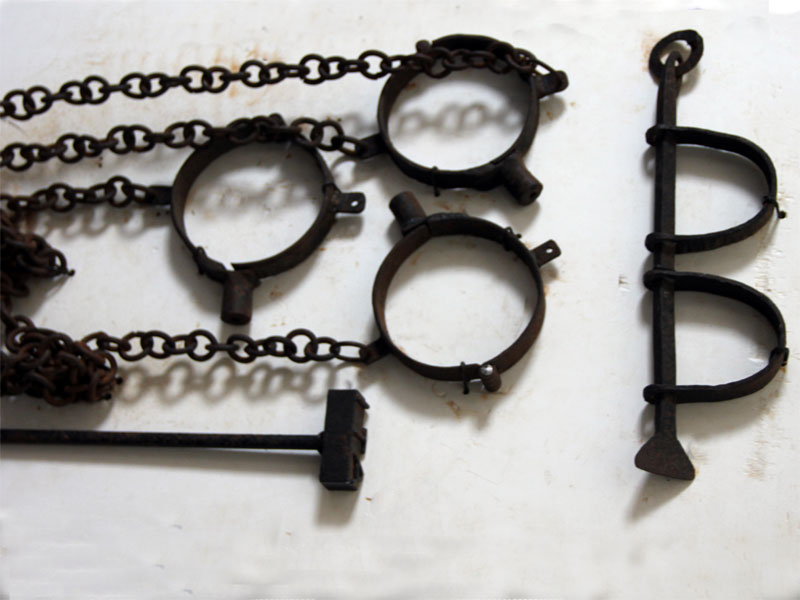
Cape Coast Castle is a World Heritage site, with its origins in the colonial past and the slave trade. It is one of about forty "slave castles", or large commercial forts, built on the Gold Coast of West Africa by European traders. It was originally built by the Swedes for trade in timber and gold, but later used in the trans-Atlantic slave trade. The castles were used to hold slaves before they were loaded onto ships and sold in the Americas, especially the Caribbean. This “gate of no return” was the last stop before crossing the Atlantic.
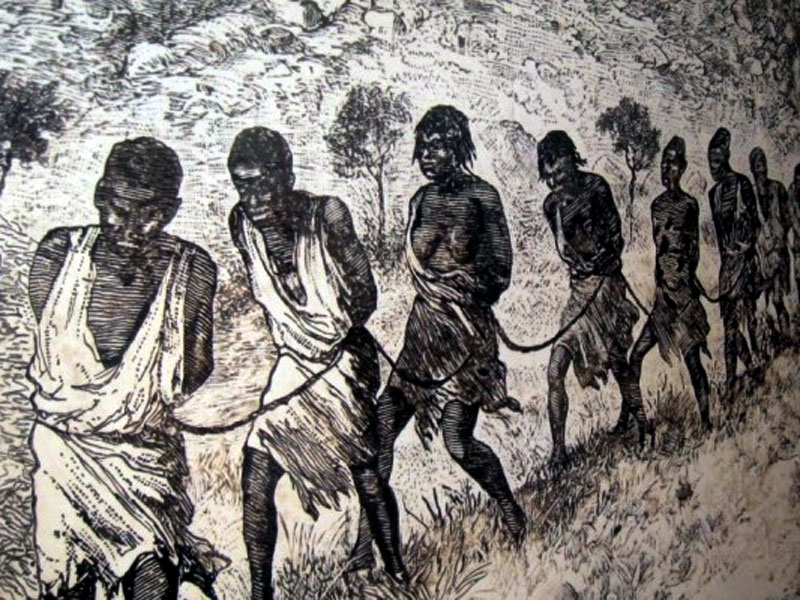
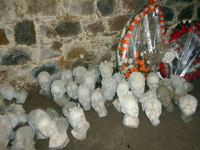
The large quantity of gold found in Ghana was what primarily attracted Europeans. In exchange for gold, mahogany, slaves and other local items, the natives received clothing, blankets, spices, sugar, silk and many other items. The castle at Cape Coast was a market where these transactions took place. At the time slaves were a valuable commodity in the Americas, and slaves became the principal item traded in Cape Coast. Due to this, many changes were made to Cape Coast Castle. For example, the addition of large underground dungeons that could hold as many as a thousand slaves awaiting export. Trading was very competitive and this led to conflict. Hence the castle at Cape Coast changed hands many times.
Throughout the 18th century, the Castle served as a “grand emporium” of the British slave trade. Thousands of enslaved Africans, sometimes from hundreds of miles away, were brought here to be sold to British slave ships. During the interim period, Africans were imprisoned in what the British called “slave holes,” or dungeons in the basement of the Castle that had little ventilation and no windows. When the British abolished the transatlantic slave trade in 1807, 90% of the British commerce on the Gold Coast was rendered illegal. Though some in Britain argued that the African settlements should be abandoned, an 1821 Act of Parliament transferred the management of the Castle from the Company of Merchants to the British Crown. The Castle served as the head of English administration of the Gold Coast until 1877, when the colonial government moved its headquarters to Christiansborg. Since then, the Cape Coast Castle has functioned as a provincial centre, complete with a law court and a school. After Ghana gained independence in 1957 the Castle underwent an ambitious restoration project sponsored by the Ghana Museum and Monuments Board. Today the Castle is a museum.
The Cape Coast Castle, and other forts and castles in Ghana, are included on the UNESCO World Heritage List.
Click on any of the thumbnails to get a bigger version of the picture
 |
 |
 |
 |
 |
 |
 |
 |
 |
 |
 |
 |
 |
 |
 |
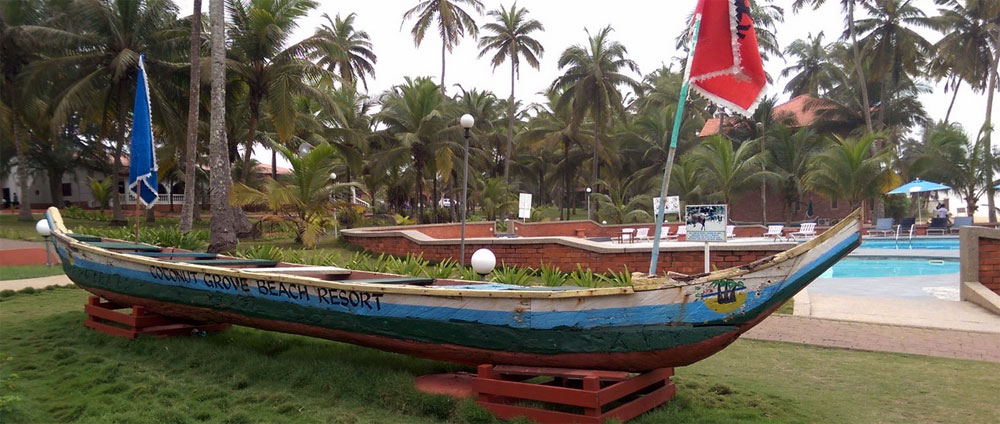
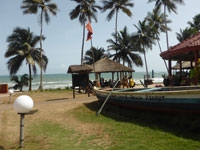
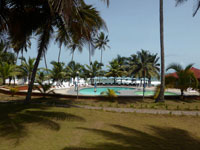
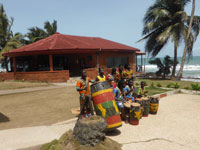
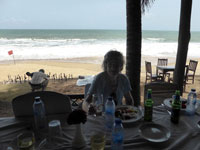
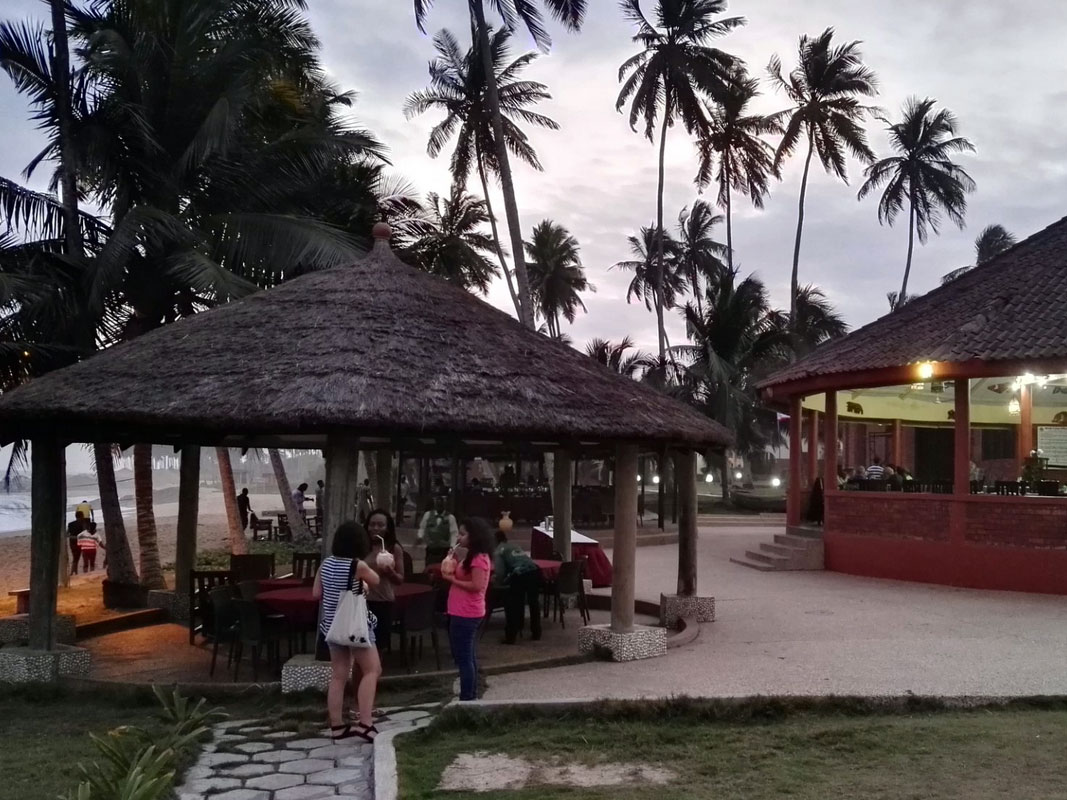
A pause for lunch at Coconut Grove Beach Resort. It is not one of the world's great beach resorts nor are its lunches gourmet, but for this remote part of Africa it was more than one could have hoped for. As a bonus for Chris, there was a decent swimming pool
Click on any of the thumbnails to get a bigger version of the picture
 |
 |
 |
 |
 |
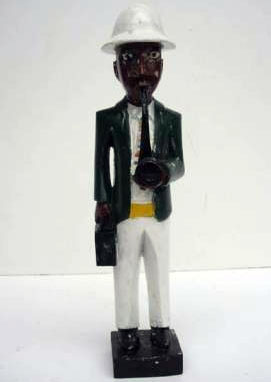
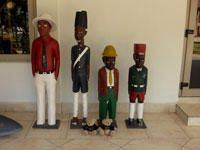
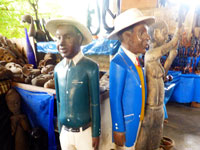
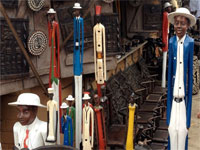
The only pieces of African Art that took my fancy were these "Colon" carved figures. They were too big for me to consider bringing them back home, but I am seeing now if I can source them in Europe
Colon is a term derived from the French word for a colonist. The statues commonly depict European colonial officials such as civil servants, doctors, soldiers or technicians or Europeanised middle-class Africans. They are often characterised by recurrent motifs, such as pith helmets, suits, official uniforms or tobacco pipes, and are painted in bright or glossy colours with vegetable-based paints. As a genre, colon statues originated in West Africa, apparently among the Baoulé in Ivory Coast. They achieved international popularity after World War II and after decolonisation. It is debated whether the statues were originally seen as satirical caricatures of colonial officials or simply as depictions of new subjects in local styles.
 |
 |
 |
 |
 |
In a hotel in Takoradi, Ghana |
Grand Bassam, Ivory Coast |
In a hotel in Malawi |
A market in Senegal |
Abadjan market |
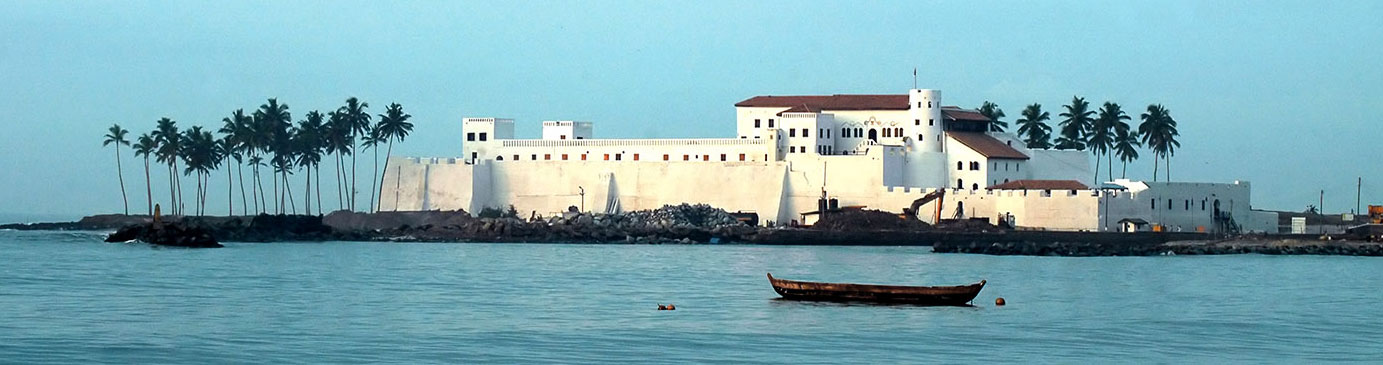
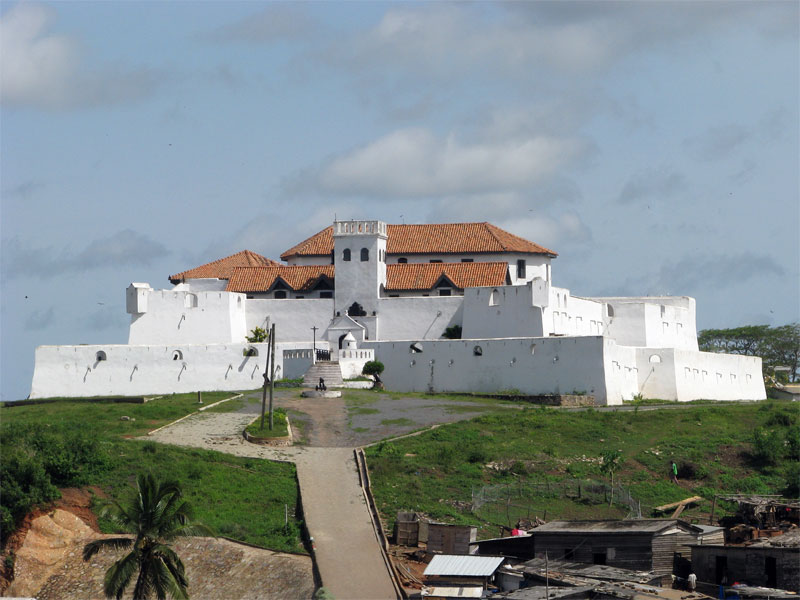
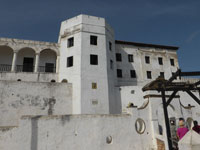
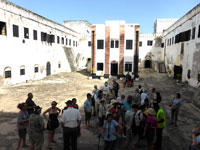
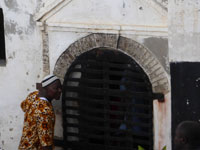
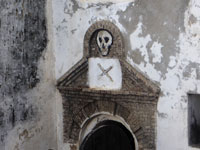
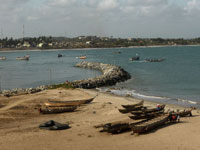
Elmina Castle was built by the Portuguese in 1482. It was the first trading post built on the Gulf of Guinea, so is the oldest European building in existence south of the Sahara. First established as a trade settlement, the castle later became one of the most important stops on the route of the Atlantic slave trade. The Dutch seized the fort from the Portuguese in 1637, and took over all the Portuguese Gold Coast in 1642. The slave trade continued under the Dutch until 1814; in 1872, the Dutch Gold Coast, including the fort, became a possession of the British Empire. Today Elmina Castle is recognized by UNESCO as a World Heritage Site.
Elmina was clearly extensively used for holding and trading slaves. However, as often occurs, the modern guides gloss over the fact that this trade was not just the doing of evil European slave traders, failing to mention that it was native African traders who captured them in the first place, then transporting them to the coast and selling them to the Europeans. Such was the health problems up-country, hat virtually no Europeans ventured inland. They built their castles on the coast, and conducted their trading from these castles
Click on any of the thumbnails to get a bigger version of the picture
 |
 |
 |
 |
 |
 |
 |
 |
 |
 |
 |
 |