Mayotte was purchased by France in 1841. In the immediate aftermath, slavery was abolished and labourers were imported to the area to work in fields and plantations. The abolition of slavery led to several slave-owning elites leaving Mayotte as their authority was undermined. However, the freed slaves were often subsequently forced to work under harsher conditions for the French government or colonists in their plantations. Mayotte therefore became a French island, but it remained an island with a sparse population due to decades of wars, as well as by the exodus of former elites and some of their slaves: most of the cities were abandoned, and nature reclaimed the old plantations. As it had done in the West Indies and Réunion, the French government planned to make Mayotte a sugar island: despite the steep slopes, large plantations were developed, 17 sugar factories were built and hundreds of foreign workers (mainly African, in particular Mozambic Makwas) hired from 1851 onwards. However, production remained mediocre, and the sugar crisis of 1883–1885 quickly led to the end of this crop in Mayotte (which had just reached its peak of production), leaving only a few factory ruins, some of which are still visible now. The last sugar plant to be closed was Dzoumogné in 1955
At the Berlin Conference in 1885, France took control over the whole Comoros archipelago, which was actually already ruled by French traders; the colony took the name of "Mayotte and Dependencies".
Mayotte was the only island in the archipelago that voted in referendums in 1974 and 1976 to retain its link with France and forgo independence (with 63.8% and 99.4% of votes respectively). UN General Assembly resolutions, which are legally non-binding, have voted not to recognise France's continued rule of Mayotte, and the independent Comoros have never ceased to claim the island. A draft 1976 United Nations Security Council resolution recognising Comorian sovereignty over Mayotte, supported by 11 of the 15 members of the council, was vetoed by France. It was the only time, as of 2020, that France cast a lone veto in the council. In the decades since 1995, the subject of Mayotte has not been discussed by the General Assembly, and all the following referendums over Mayotte independence have shown a strong will of Mayotte people to remain French.

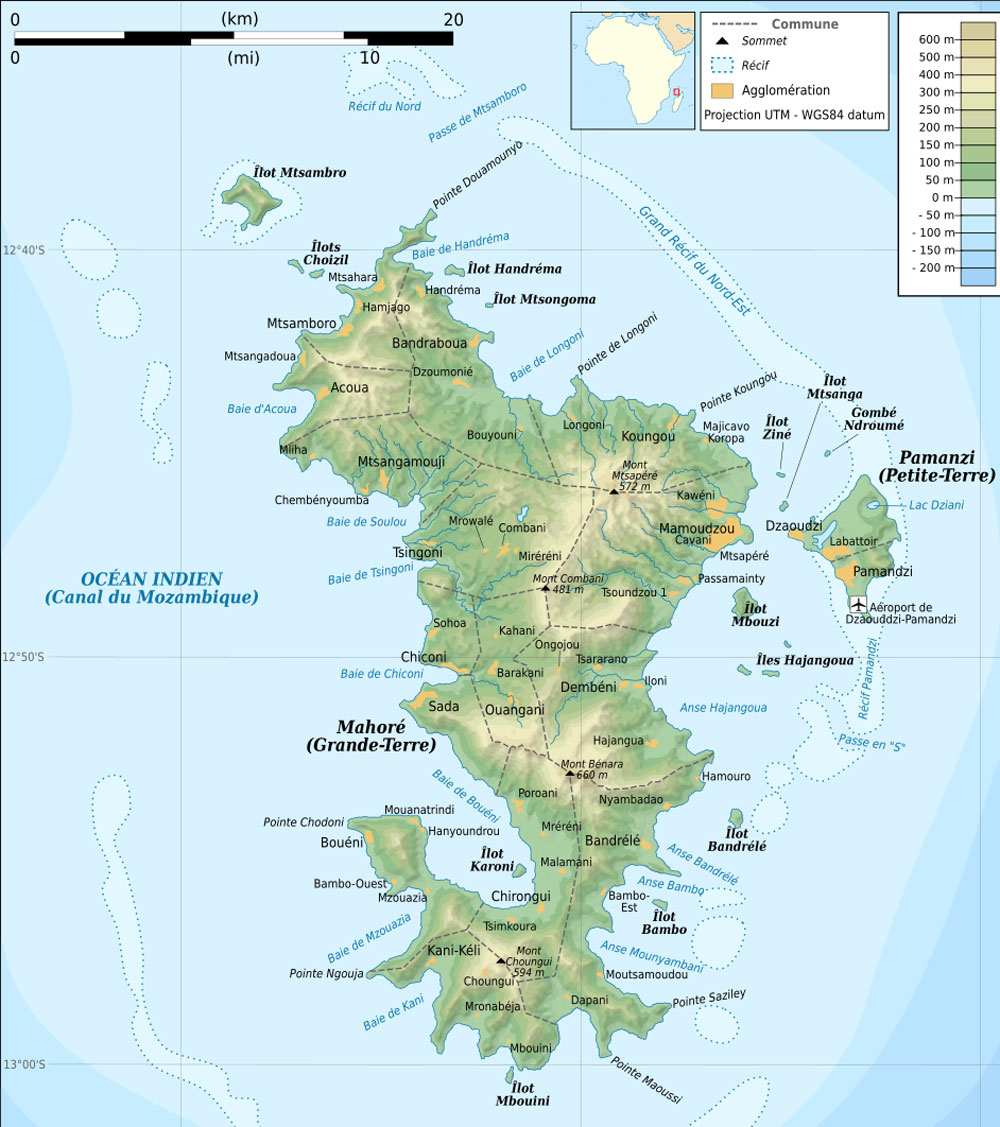
Mayotte consists of a main island, Grande-Terre, a smaller island, Petite-Terre (or Pamanzi), as well as several islets around these two. Mayotte's land area is 144 sq mi and, with its 320,901 people according to January 2024 official estimates, is very densely populated . The biggest city and prefecture is Mamoudzou on the larger Grande-Terre. The Dzaoudzi–Pamandzi International Airport is located on the neighbouring smaller island of Petite-Terre.
A referendum on becoming an overseas department of France was held in Mayotte in 2009. Mayotte had been a departmental collectivity of France since 2001. In contrast to the four other similar regions (French Guiana, Guadeloupe, Martinique, and Réunion), Mayotte would not have become an Overseas Department (DOM) or an Overseas Region (ROM), but would only have had a single assembly; the four other existing DOM/ROM will have the option of changing their status to this format as well. As a result of the yes vote, Mayotte became the 101st French department in 2011, and the first with a population overwhelmingly of the Muslim faith.
The population of Mayotte was approximately 186,000 at the time of the election. Ninety-five percent of Maorais are Sunni Muslims. Many Maorais are fluent only in local languages, including Shimaore and Bushi, rather than the French language. It is believed that one-third of the population consists of illegal immigrants, mostly from the neighbouring, impoverished Comoros islands. Continued political union with France has allowed Mayotte to remain relatively prosperous, at least by regional standards,compared to the independent Comoros. The Comoros, which has suffered from economic and political instability since its independence, continues to claim Mayotte as part of its territory
Sunday Jun 21 Arrive Mayotte
The hotel was a 100 metre walk from the airport terminal. We had to wait for our rooms until 1.45 and sat round the pool during the 45 minutes wait. It was a good pool but when we returned to it after receiving our rooms there was a disco there and loads of children so it was not a very agreeable place to sit and relax.
The first room we were allocated was on the ground floor and was shabby and looked out over a wasteland and the car park. So I went back to reception but met Olaf on the way there. He asked what was the matter and then he offered to swap his room on the first floor. He said he really wasn’t affected by what sort of room he had and the first floor room was indeed more modern having been updated and had a slightly better view though very dirty windows. So we thanked him profusely and accepted the offer and settled in. Later we went down to the pool, but this was out of the question with the volume of noise there so we moved our sun beds as far away as possible in the large garden and sat there until 4.30 when I ventured out for a swim. By this time most of the children and the adults had disappeared from round the pool and I was able to enjoy the swimming although the volume of the music was still far too loud After this we went back to the room and read for a couple of hours.

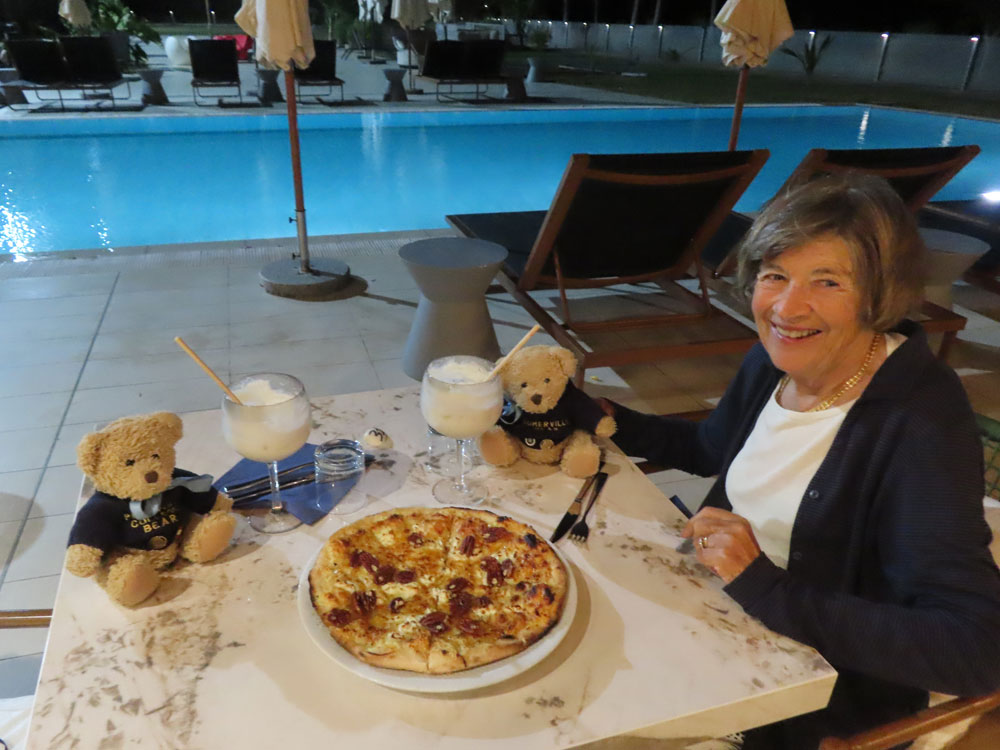
We went down for a late dinner but found that the only choice was a buffet or a pizza , so we settled for the latter, the buffet at lunch had been €59, which seemed excessive in this very basic three star hotel but it was Father’s Day and they were making the most of it. They did offer the buffet in the evening at €29 but we declined this. We get "buffeted out" on this sort of trip.We sat outside their fairly pleasant restaurant overlooking the pool and enjoyed a mocktail piña colada with a honey and goats cheese pizza. We then had a long chat to Carol who was also looking for a light snack so had one piece of our pizza. We hope that we do not encounter any other hotels on this voyage of this standard.
Ibis Hotel Mayotte Airport
To get a larger photo, click on a thumbprint below
 |
 |
 |
 |
 |
 |
 |
 |
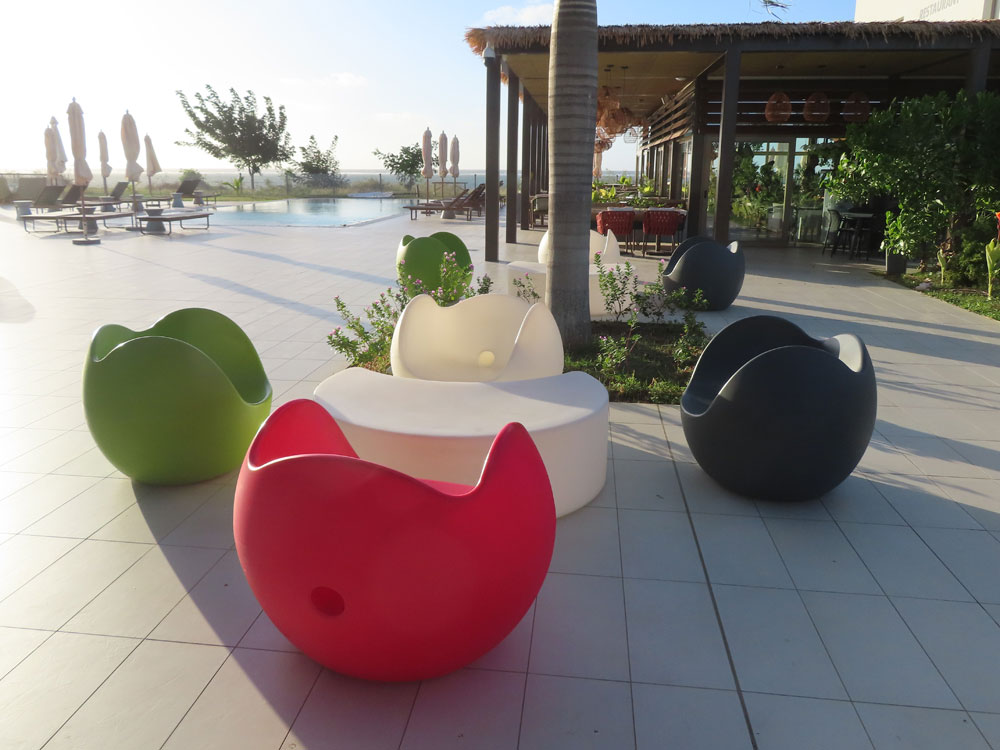
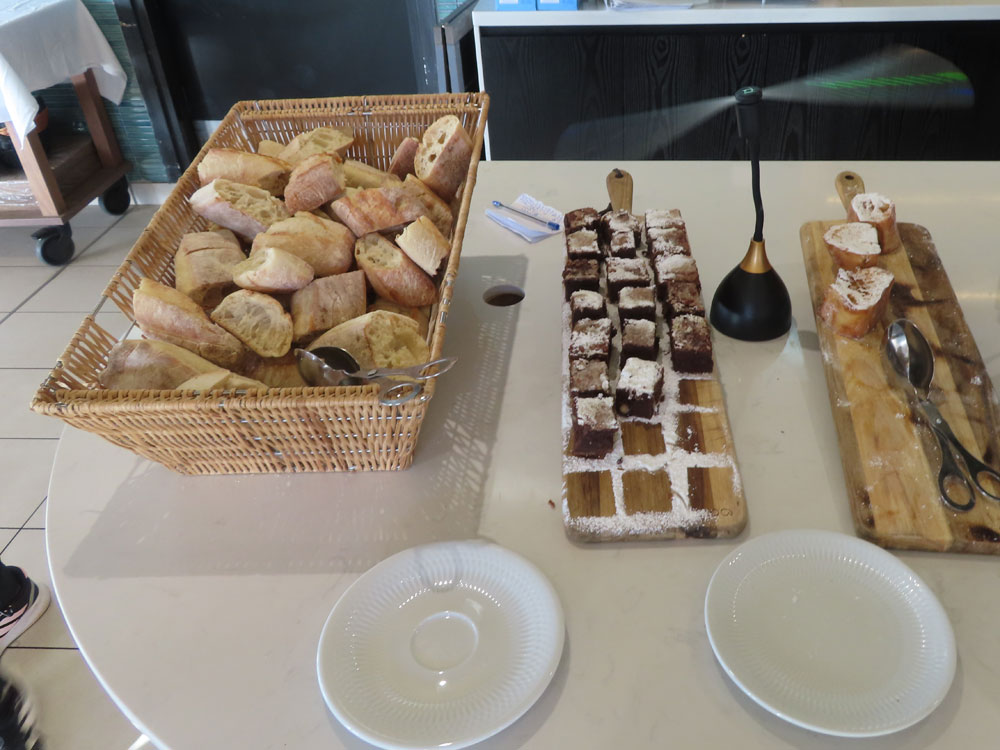
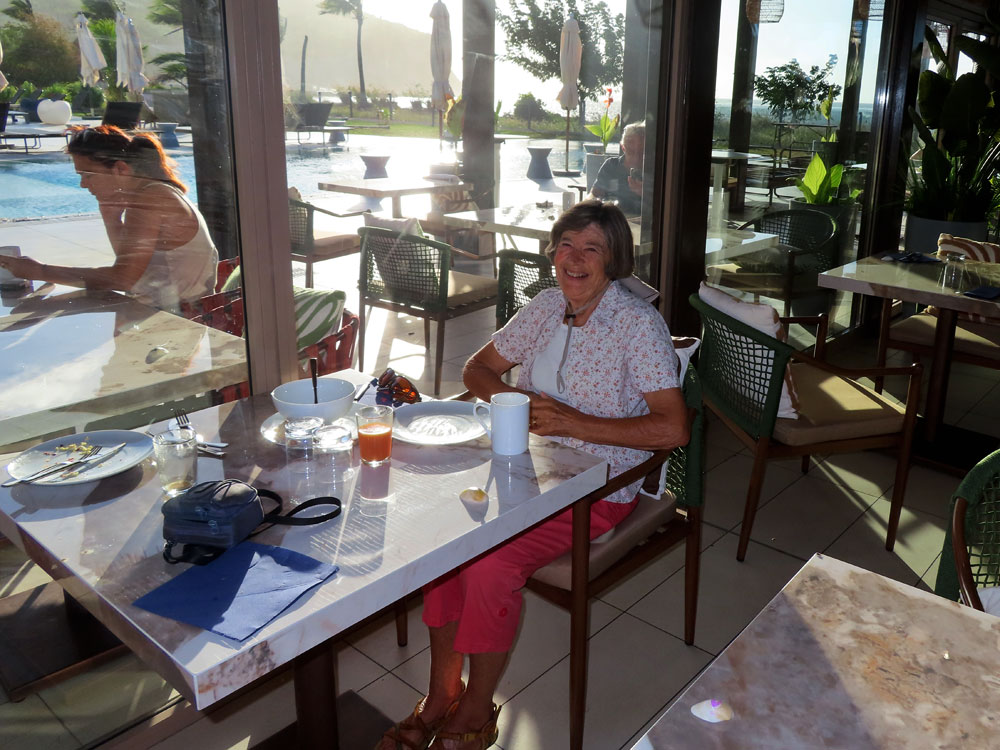
| The Airport Ibis was a typical 3 star Ibis, no frills. It certainly was France as the quality of the patisserie improved over Zanzibar and Comoros. The pool as nice, but noisy on Sunday with locals and a DJ. Not the sort of hotel to linger for longer | |||
Monday June 22. Mayotte to Reunion
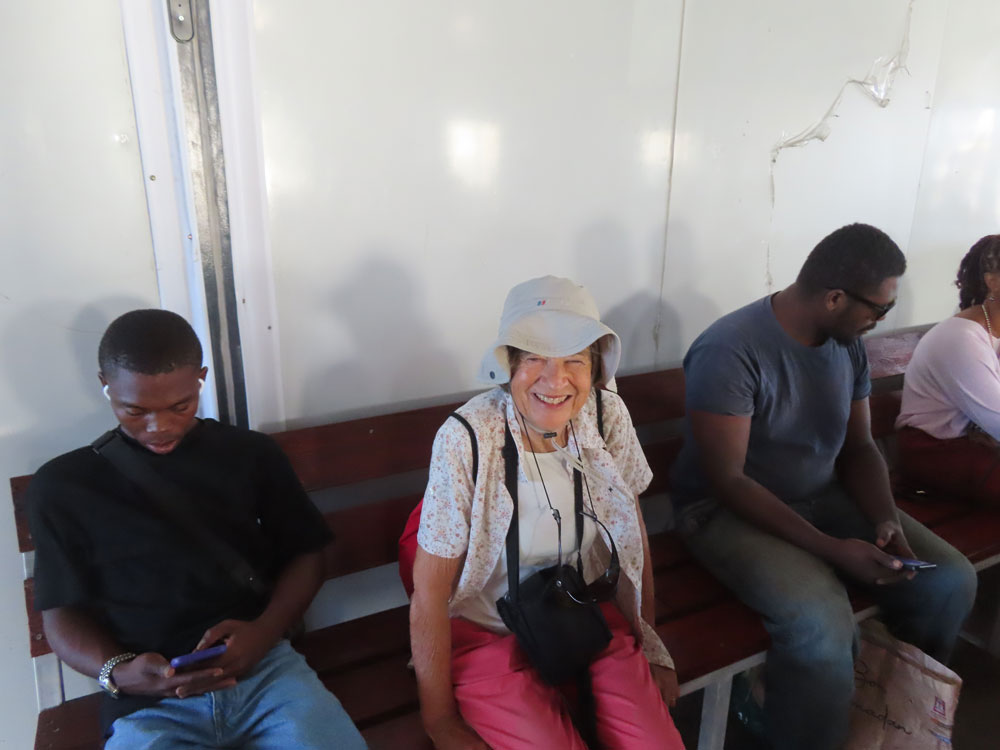
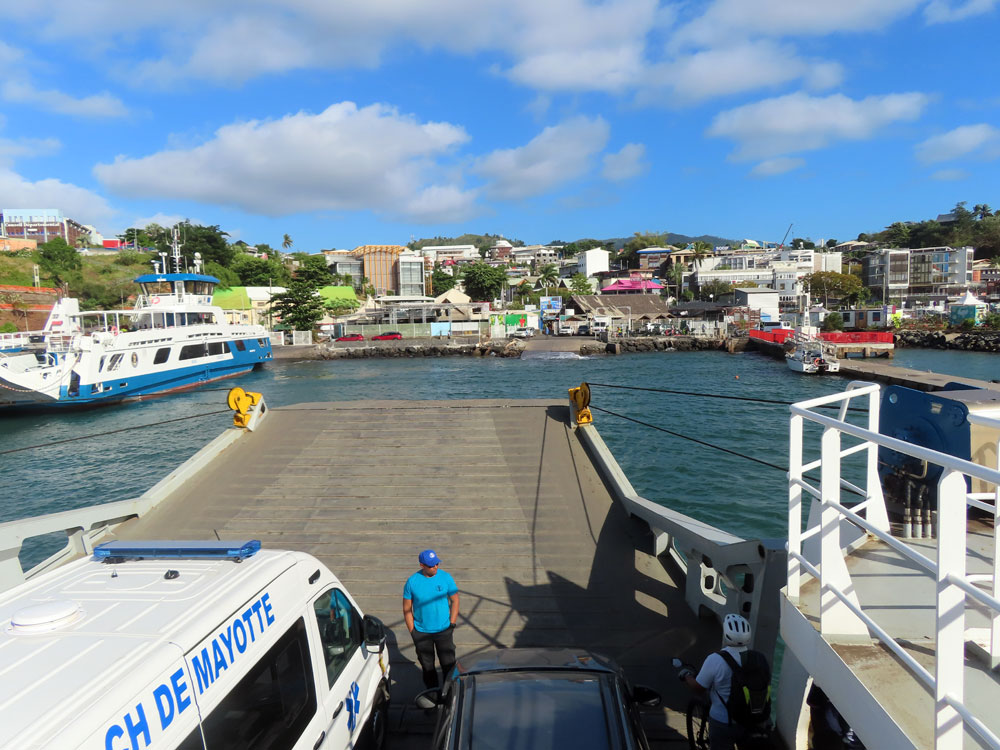
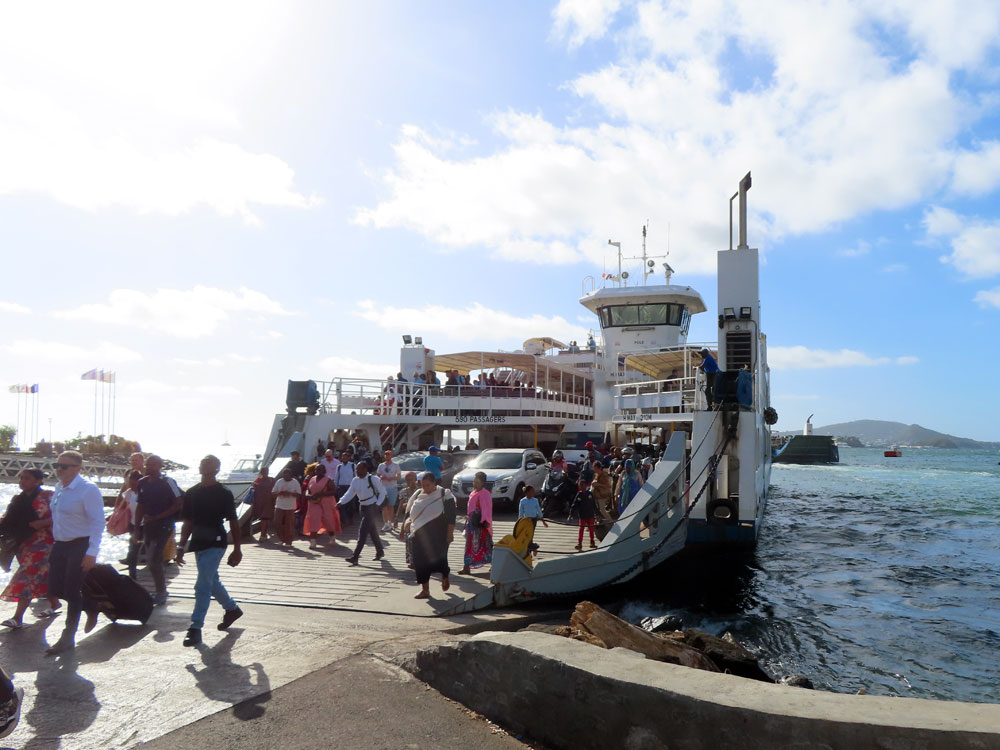
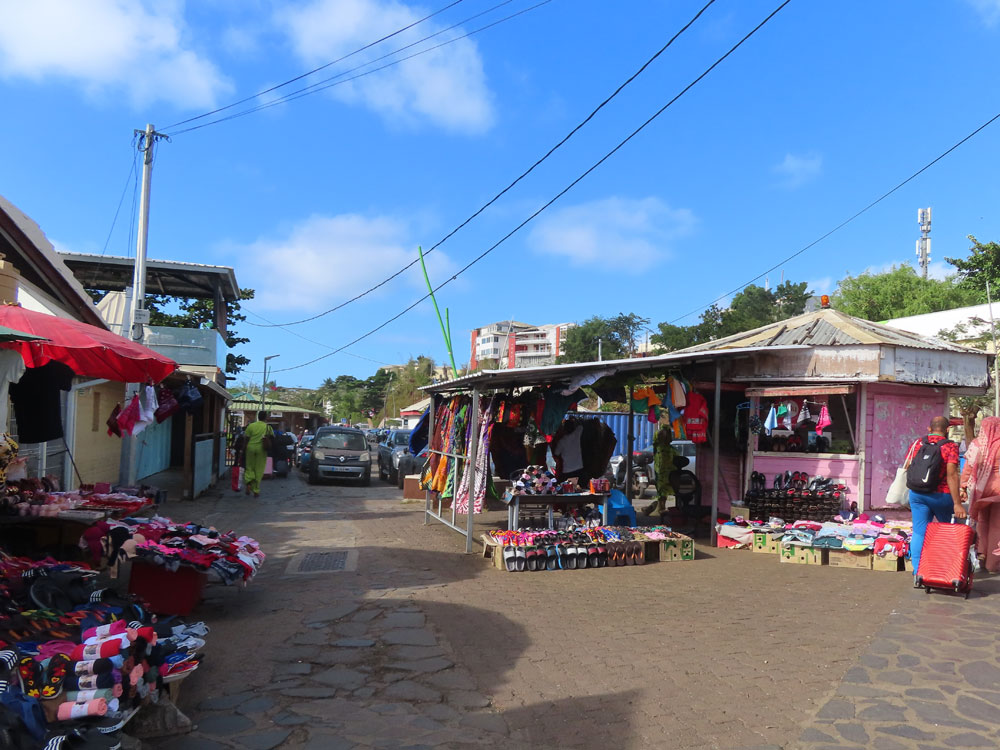
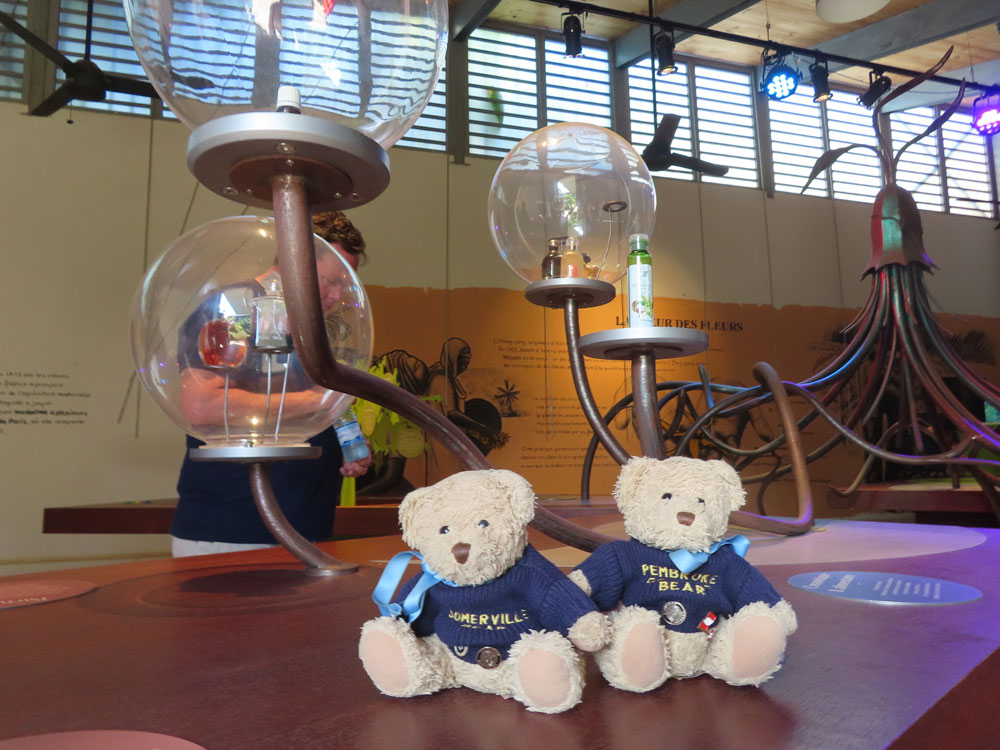
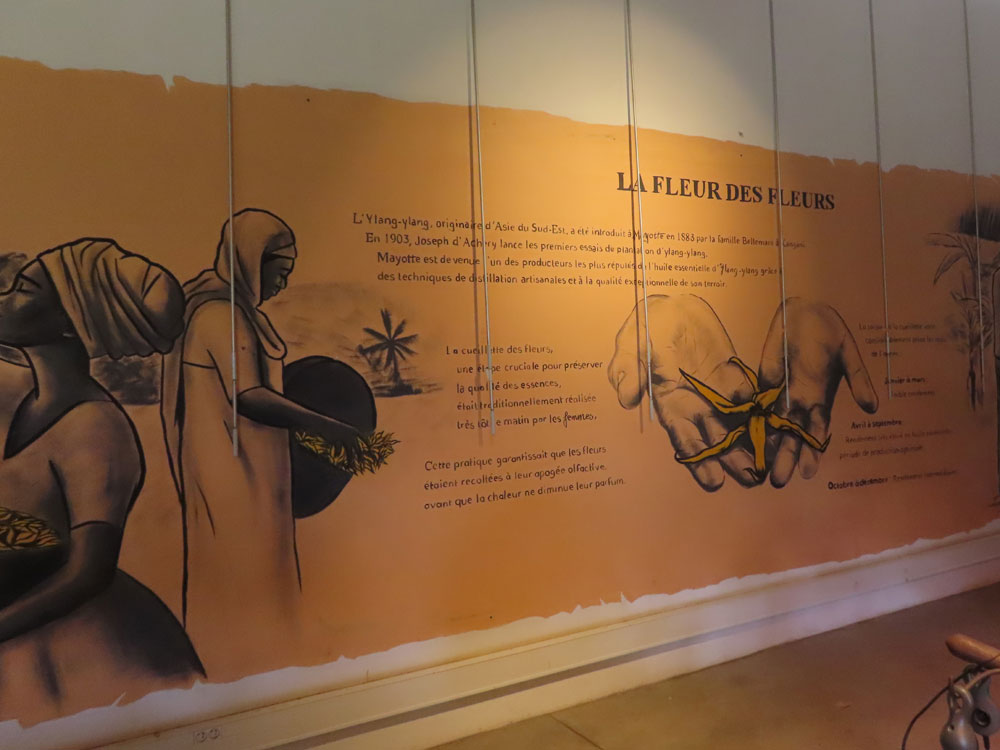
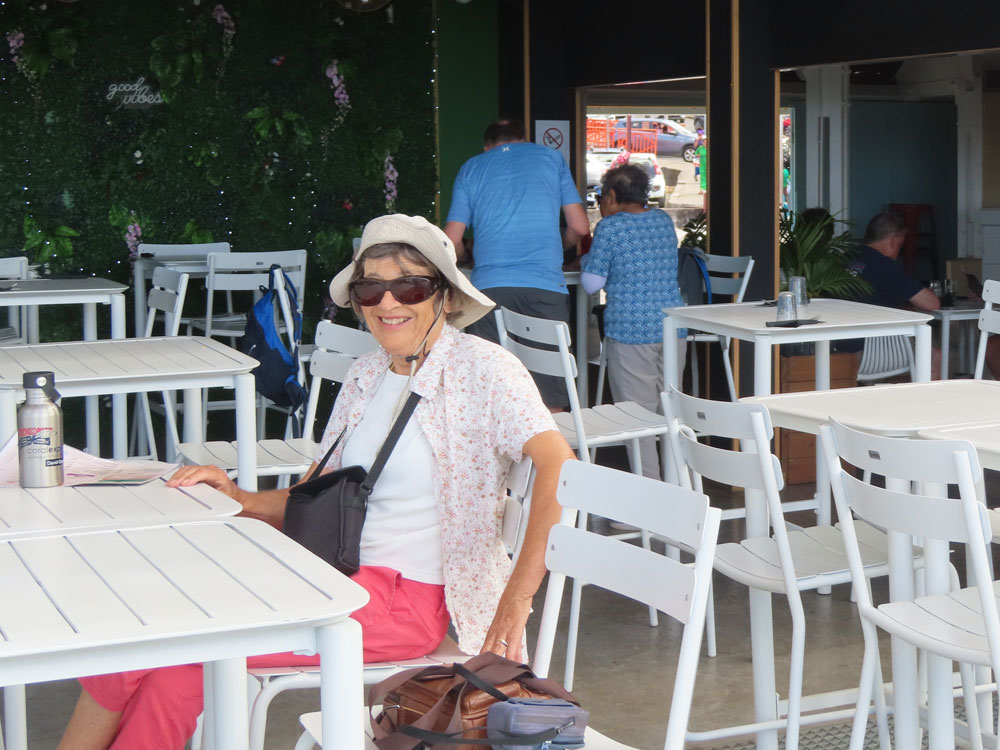
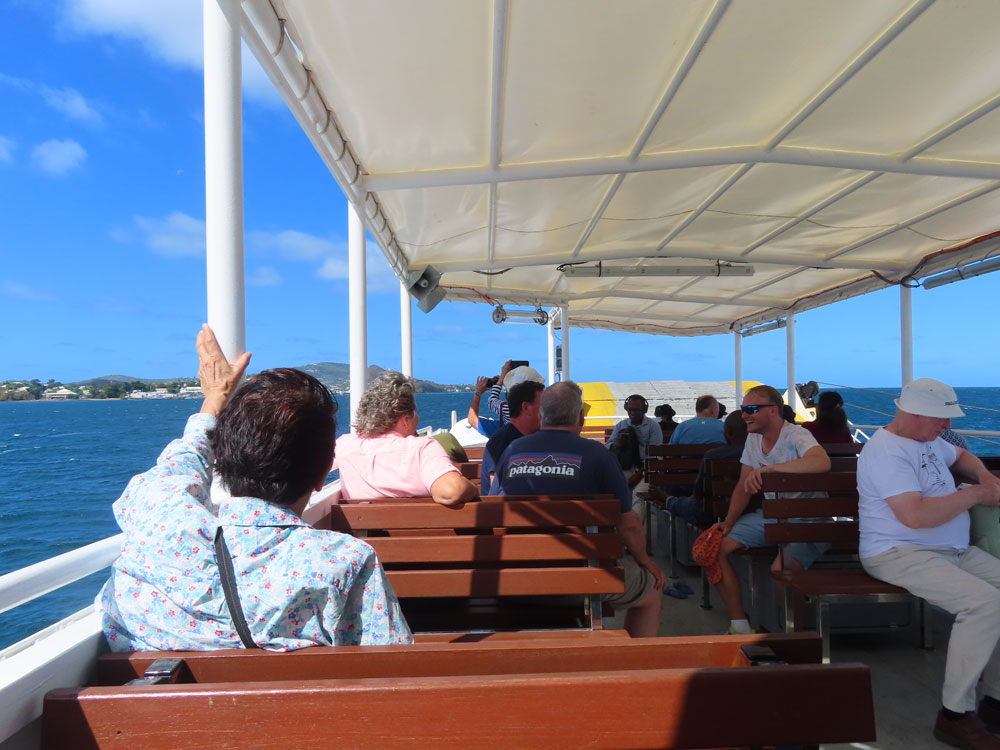
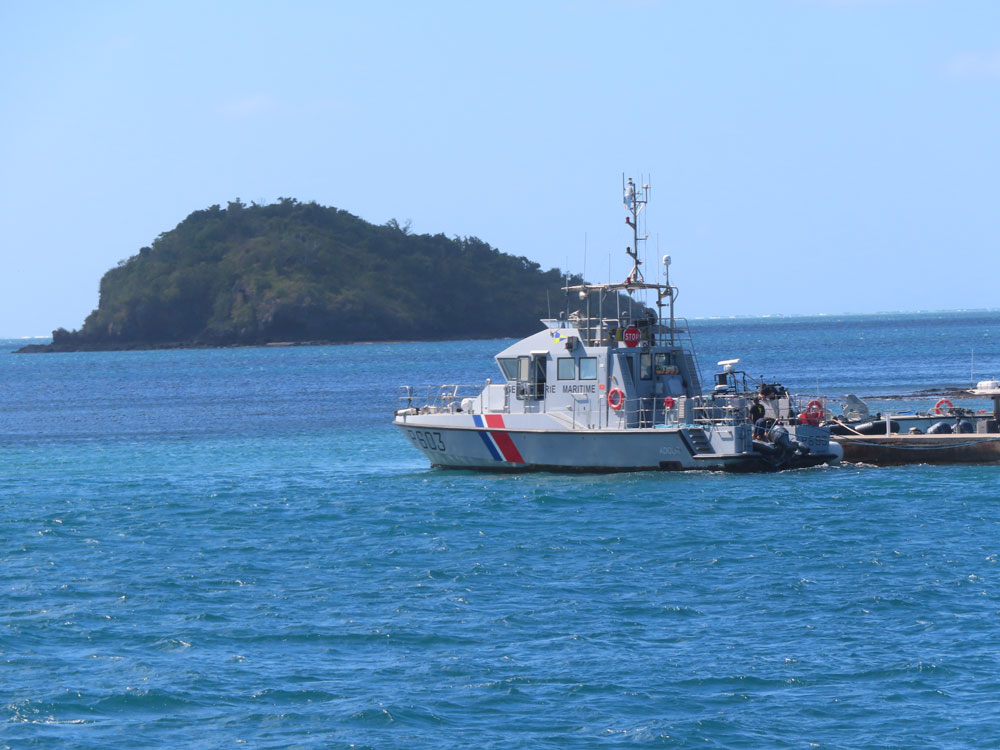
I had a swim before 7 am breakfast and we were away at 8:30 am with the group. We had two taxis to take us to the ferry that went across to the main island of Mayotte Grande. It was a really pleasant ferry ride across, very crowded as it was rush-hour, and we felt we were really exploring islands. A much better way to do so than by planes. Once at the other side, we again had two mini vans to transport us around. First stop was the Ylang Ylang distillery, a much more commercial set up than what we had seen in Mayotte.
Our guide for the day. Ibrahim was absolutely useless , but as Olaf said, he was useful for obtaining transport.
To get a larger photo, click on a thumbprint below
 |
 |
 |
 |
 |
 |
 |
 |
 |
 |
 |
 |
 |
 |
 |
 |
Salt works
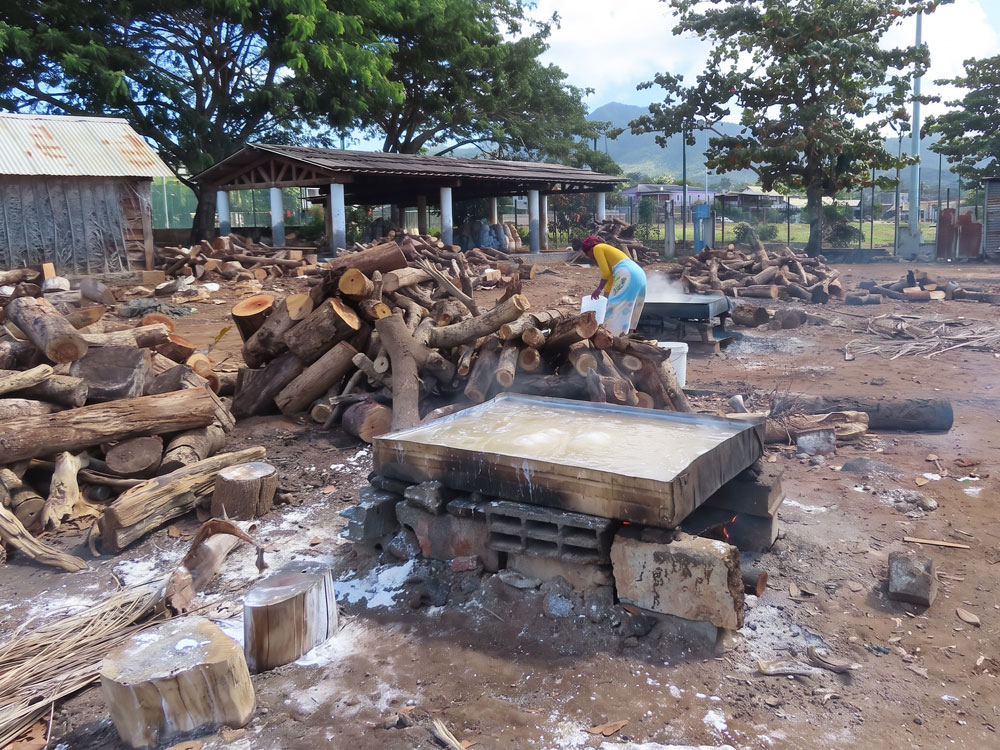
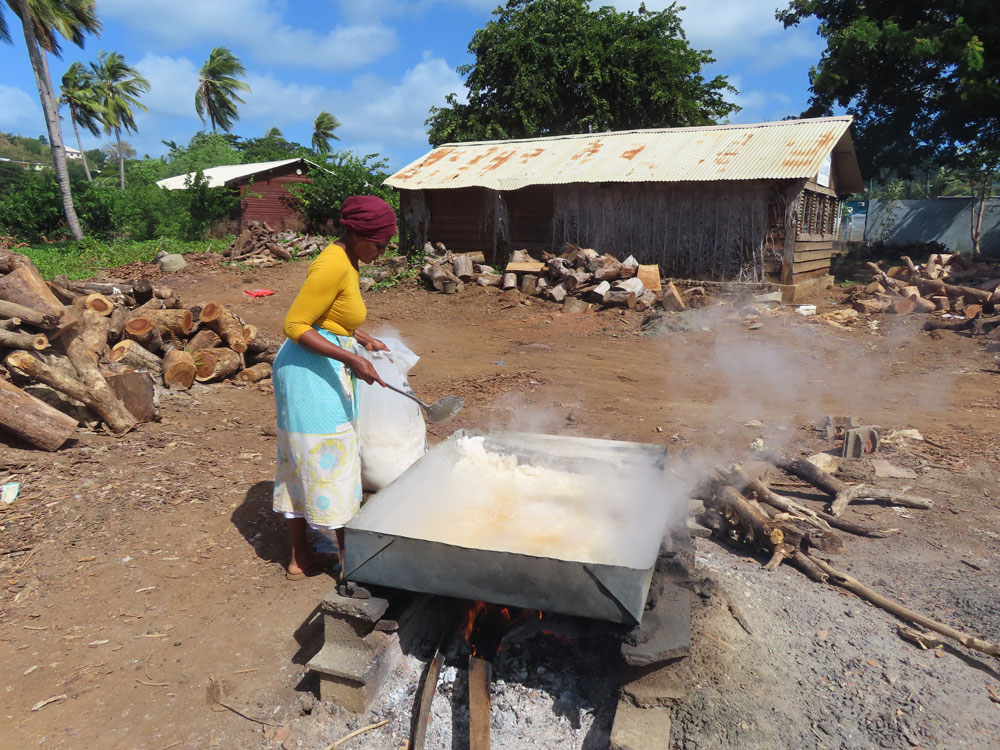
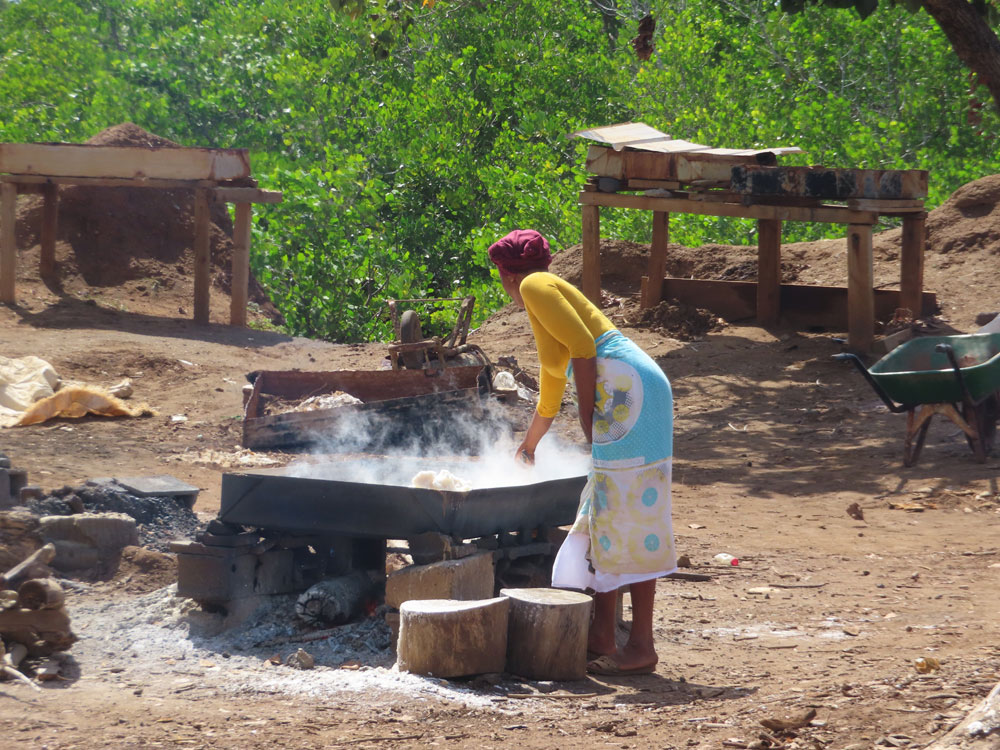
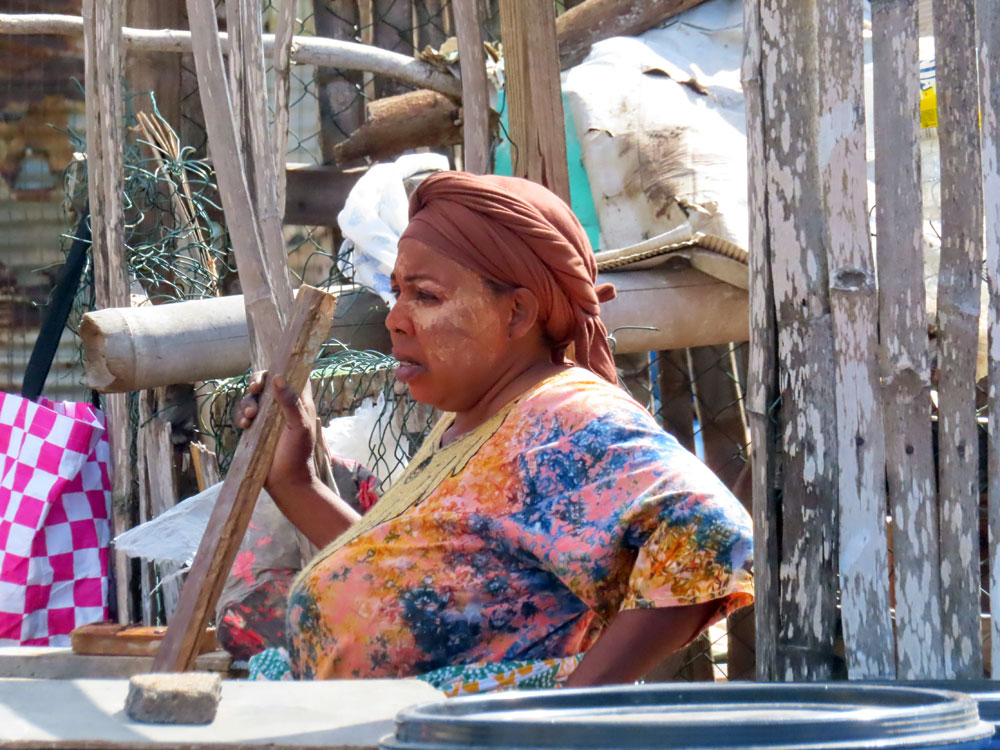
After this we went to a salt production site which was interesting. The surrounding land was flooded at high tide and they dug up the salt infused earth at low tide, put it in a bucket and then carried it to a vat of boiling water, the salt remaining after the water evaporated off.. The logic behind this was at the soil contained more concentrated salt than just obtaining a bucket of salt water from the sea. There was a lot of dispute and horse trading about how much Olaf had to pay for us to see this.
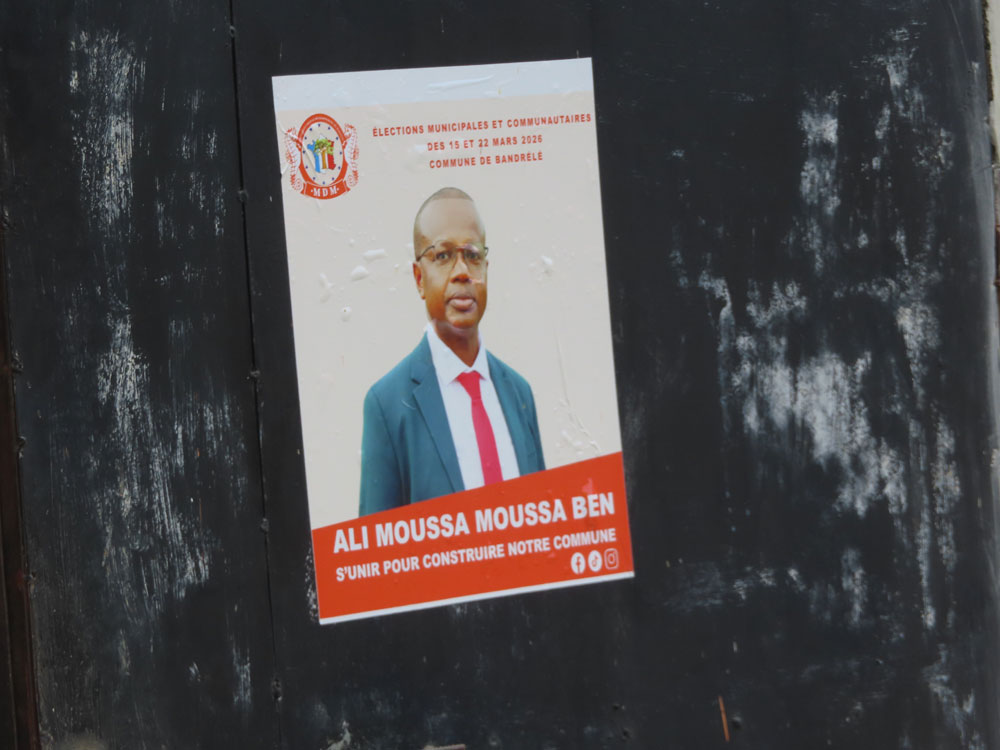
Mayotte's traditional salt works, known as the Shingo ya Bandrele, are located in the coastal village of Bandrélé on the southeastern coast of the island. Operated entirely by the Mama Shingo ("mothers of salt"), this site is the last remaining traditional salt-extraction operation in Mayotte.The salt is extracted using a unique, ancestral technique rather than direct solar evaporation of standard seawater: During dry seasons and high tides, the Mama Shingo scrape the salt-rich coastal soil from the lagoon and mangrove flats. The salty soil is mixed with well water and filtered through sand to remove impurities. The resulting highly concentrated brine is boiled over wood-fired ovens until the water evaporates, leaving behind a delicate, pure white sea salt. This is a premium product and comparatively expensive
To get a larger photo, click on a thumbprint below
 |
 |
 |
 |
Then back to the ferry terminal where we had lunch in a very pleasant restaurant and the food was really good, although its arrival was very erratic. Omar had convinced Olaf that the buffet was only 6 euros a head, but when we ot inside, there was no buffet, and the main dishes were 25/30 euros a head
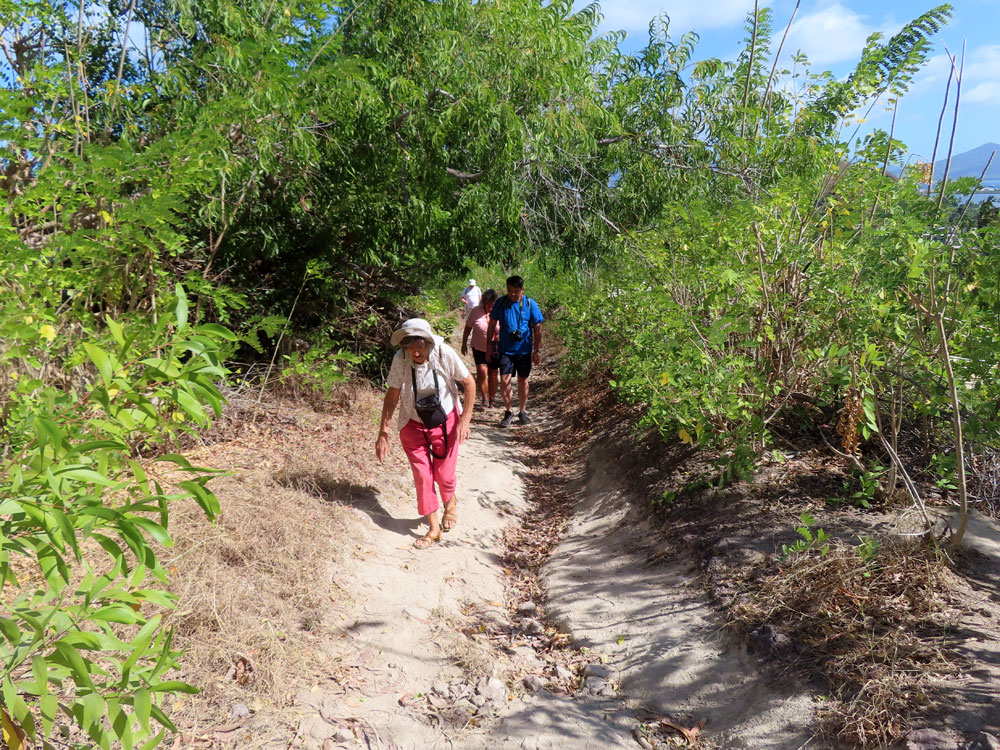
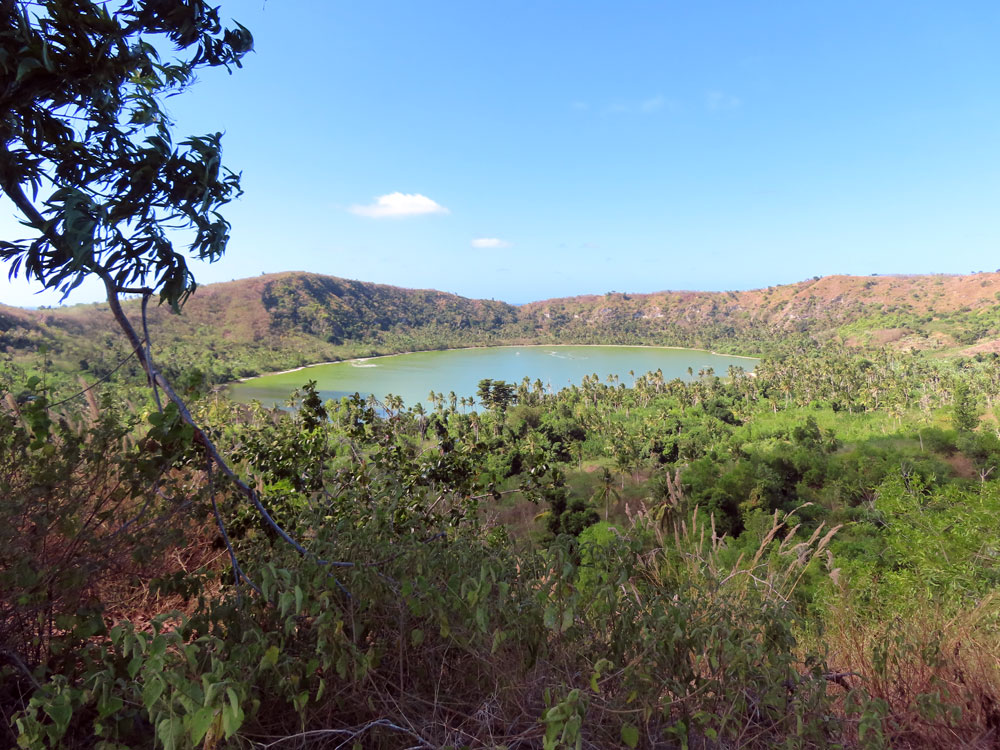
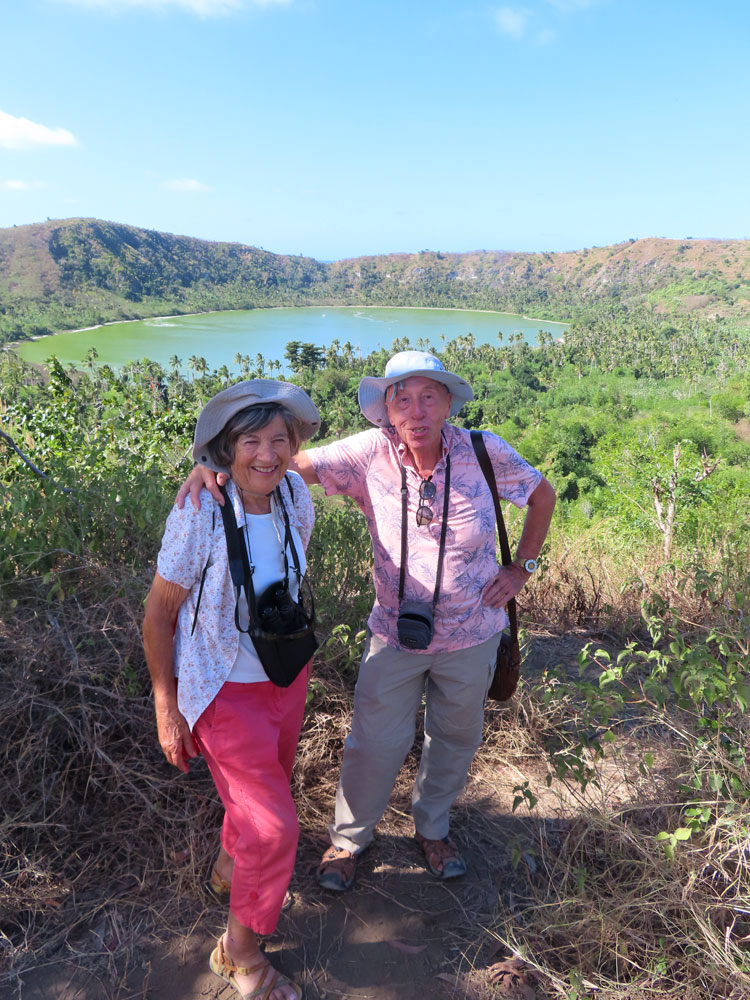
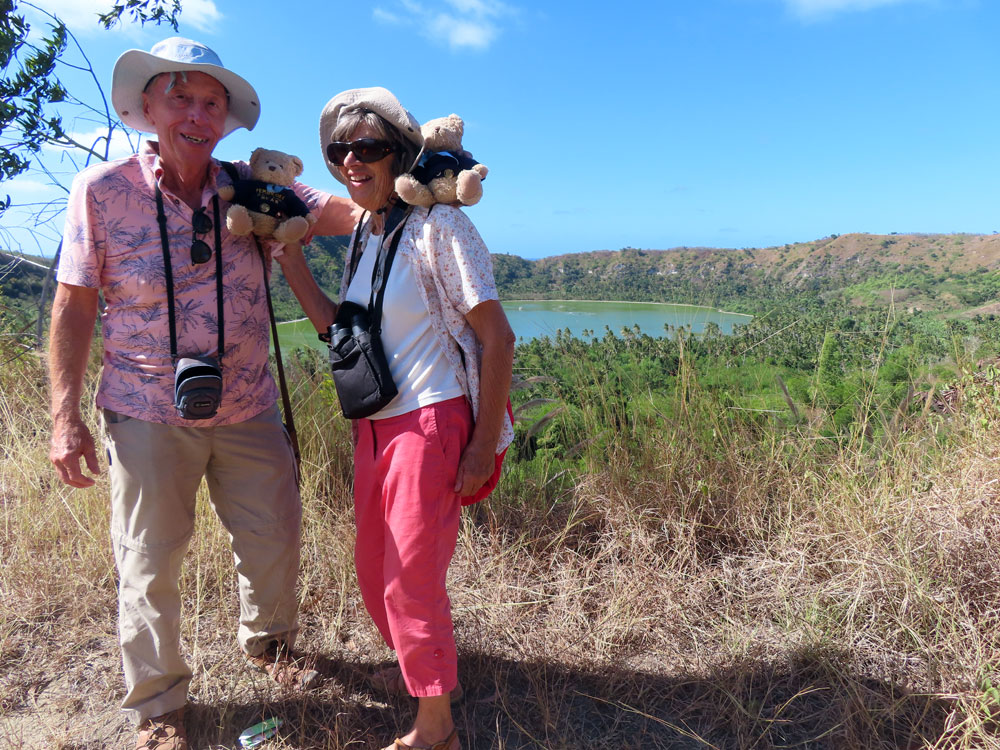
The return journey by ferry was not rush-hour and we had almost the whole ship to ourselves. Once back on land, we drove to a spot where we went off on a walk to see the crater lake. It was not a long walk but about five minutes of it was quite awkward with loose stones. But the view once we got there splendid and we had a little walk beside it before returning. When we got to the main road, the taxis that we had arrived in had disappeared. There was a long wait before Ibrahim got more taxis for us. We got into the first taxi and arrived back at the hotel about 2:30 pm. But apparently the other taxi never came and so they had to wait till ours got back to rescue them.
Crater Lake
Mayotte's famous crater lake is Dziani Dzaha, located on the island of Petite-Terre. Known for its striking emerald-green water, it sits inside an ancient volcanic maar. The intense colour is caused by chlorophyll-rich microorganisms and volcanic gases. The water is saltier than seawater and oxygen-poor, creating an environment that researchers study as a modern analogue to the Precambrian era, There are underwater lava tubes

To get a larger photo, click on a thumbprint below
 |
 |
 |
 |
Back at the hotel they were busy demolishing the reception desk and there was a lot of debris around. I found where the towels for the swimming pool , and got changed and enjoyed a swim in a very quiet pool. After this, I sunbathed for a while to get myself dry. We then left at 4:15 pm for the airport which was only a two minute walk from the hotel. Checking in, passport control and security clearance and then an hours wait before boarding just before 6 pm for our 6:45 pm flight to Reunion. Chris filled the time checking the quality of a bottle of Baileys that David had bought at the airport

Travelling is Thirsty Work