
Wednesday, January 8, 225. Trujillo to Cajamarca. We enjoyed our breakfast alone in the somewhat sombre restaurant in our Trujillo Hotel. On checking out of the hotel we had a to do with the receptionist who spoke very very poor English and the fact that they had ring fenced 200 soles is from our account and this would not be paid back for another month. We were ready for the off at 8 am with Yvette and Ruben.
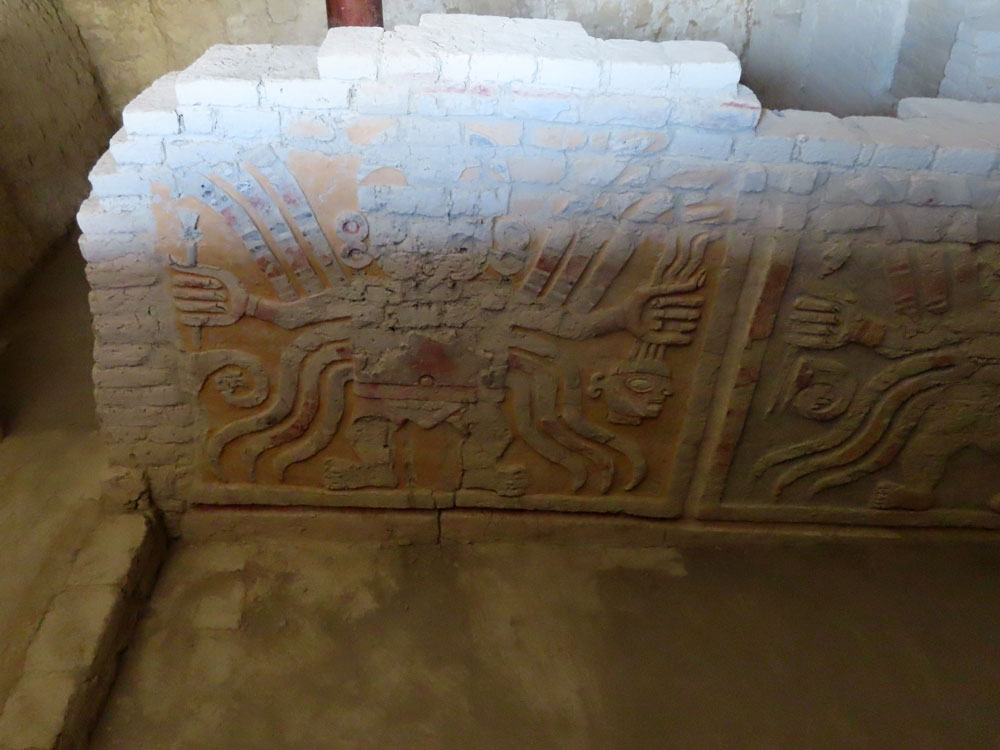
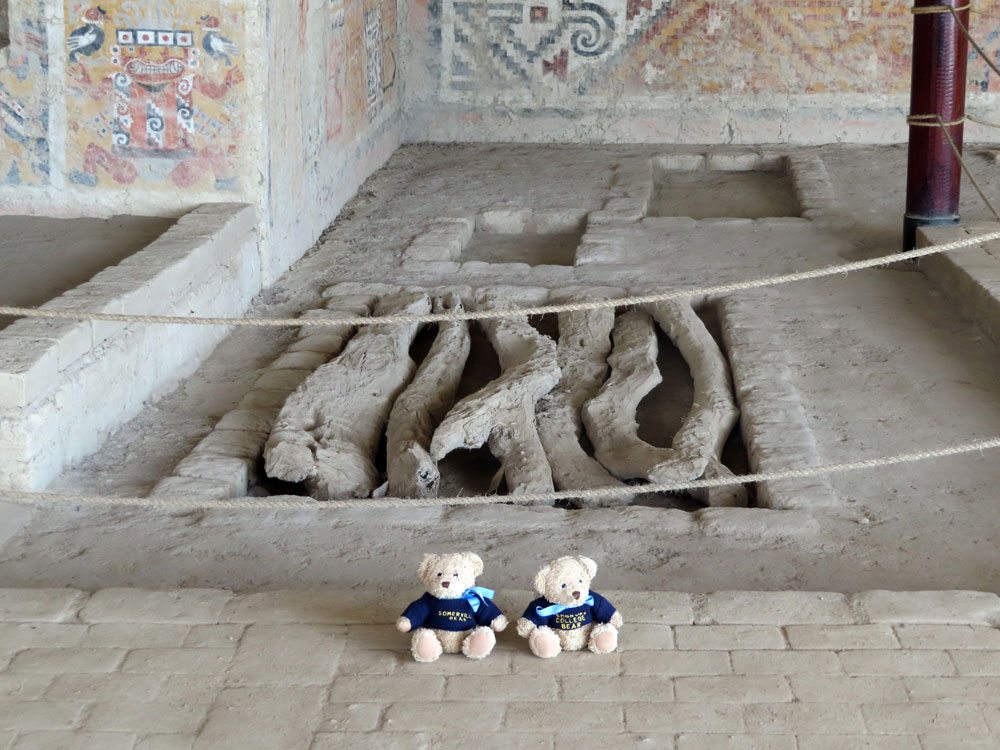
There was a 90 minute drive to El Brujo where we had a two hour tour of this archaeological site Where the lady of Cao had been found in 2005. This mummy dated back to around 400 A.D. and still had skin and tattoos to be seen. We started off walking round the site where she had been found with various pictures of victors and losers shown on the temple sides: these were not quite so clear as those at the Huaca del Sol but were still impressive. The whole site had been covered with a state of the art roof and was privately run by the Wiese family.
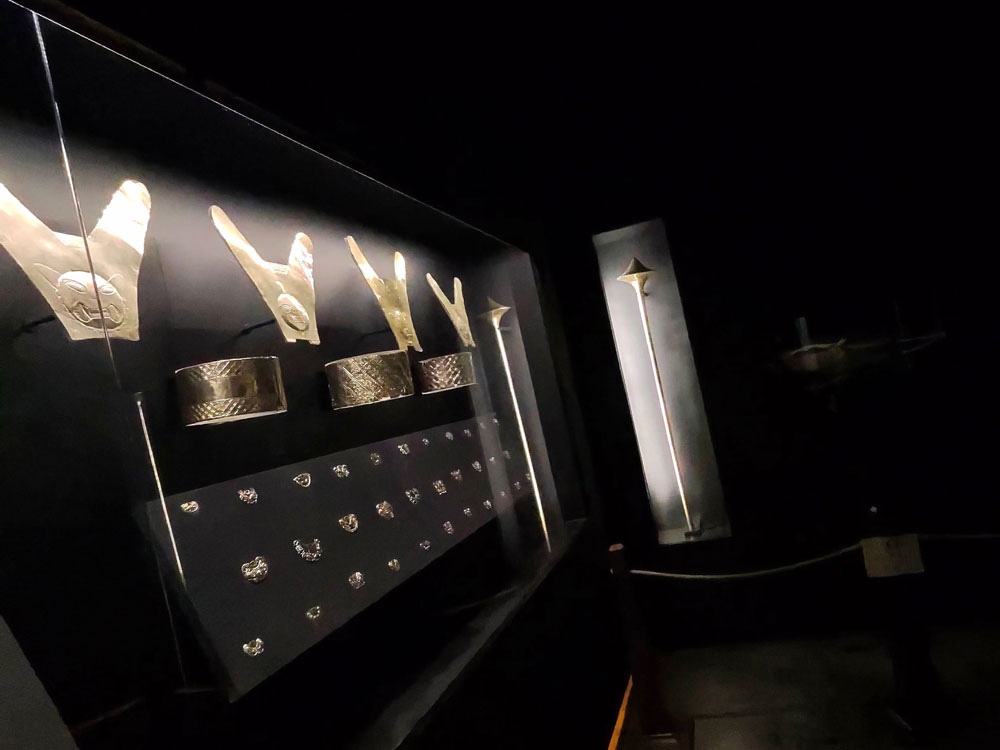
The highlight is Huaca Cao, a pyramid in which archaeologists unearthed a 1,500-year-old, tattooed, female mummy. The Lady of Cao was wrapped in a cotton funerary bundle with pieces of gold and jewellery, indicating her high status. Her grave contained numerous clubs and spears, which is unusual in Moche culture.She was buried about 450 AD
The development of the Brujo Complex during the Intermediate Period falls within a context of early complex societies construction. During the Moche era, monumental religious and socio-political centres usually named huacas were built. The architecture, the iconography and the practice of sacrifice relate the Brujo Complex to a ceremonial, ritual and funerary site. The huacas of the Early Intermediate Period (200 B.C. 600 A.D.) seem to have exerted a polymorphous and centrifugal power, yet the complex is located in a difficult weather condition area. The abandonment of the Huacas at the end of the Early Intermediate Period could have been linked to the political instability and upheavals of the Southern sphere of the Moche. Some archaeologists also point out the extreme climatic events at the end of the Intermediate Period that could have led to the decline of the culture.

Click on thumbnail photo below to get larger photo
 |
 |
 |
 |
 |
 |
 |
 |
 |
 |
 |
 |
 |
 |
 |
 |
 |
 |
 |
 |
 |
 |
 |
 |
Lady of Cao Museum
Then we went into the very modern museum where we saw pottery that had been found in the tombs in a very good state. Next to the Lady there had been four other bodies who had obviously been sacrificed on her death. The climax of the museum was the mummy itself that this had been preserved behind mirrors and was hardly visible. However after this we saw a reproduction of the mummy and this made things much clearer.

Click on thumbnail photo below to get larger photo
 |
 |
 |
 |
 |
 |
 |
 |
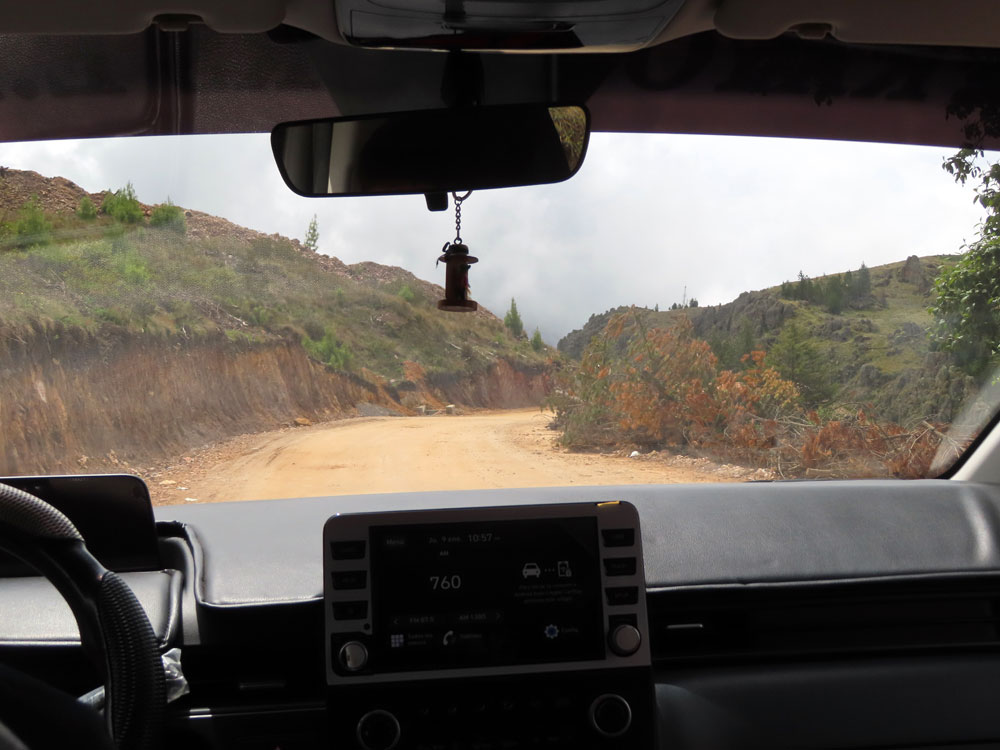
We left Brujo around 12 and headed off up the Pan American Road for a while before turning north west towards Kabaka where we were going to stop for lunch, but just before this we encountered roadworks that held us up for about an hour , so we decided to skip lunch and just snack in the car. We had little conversation from Yvette during this journey and I was slightly perturbed by the high volume of very fast conversation going on between Yvette and Ruben which distracted from my enjoyment. We eventually got to Cajamarca at 6:30 pm in the dark and gloom. The check-in at the Costa del Sol hotel there was very poor and took a long time. Then we found our room was an interior room with curtain windows just onto a corridor. Also the lighting was not very good in it and it only had one chair that at the desk. We sorted ourselves out and went down to the bar for our free pisco sour and ordered a very acceptable brochetta, sitting and looking out at the plaza. Back in the room we enjoyed some of our gingerbread and a rum and Coke.
Thursday, January 9. Cajamarca. We had an early breakfast and we’re ready at 8 am for Andy our new guide. We told him about our room which did not have any exterior windows and he arranged with reception for us to be moved to another room once we got back from our excursion
Click on thumbnail photo below to get larger photo
 |
 |
 |
 |
 |
 |
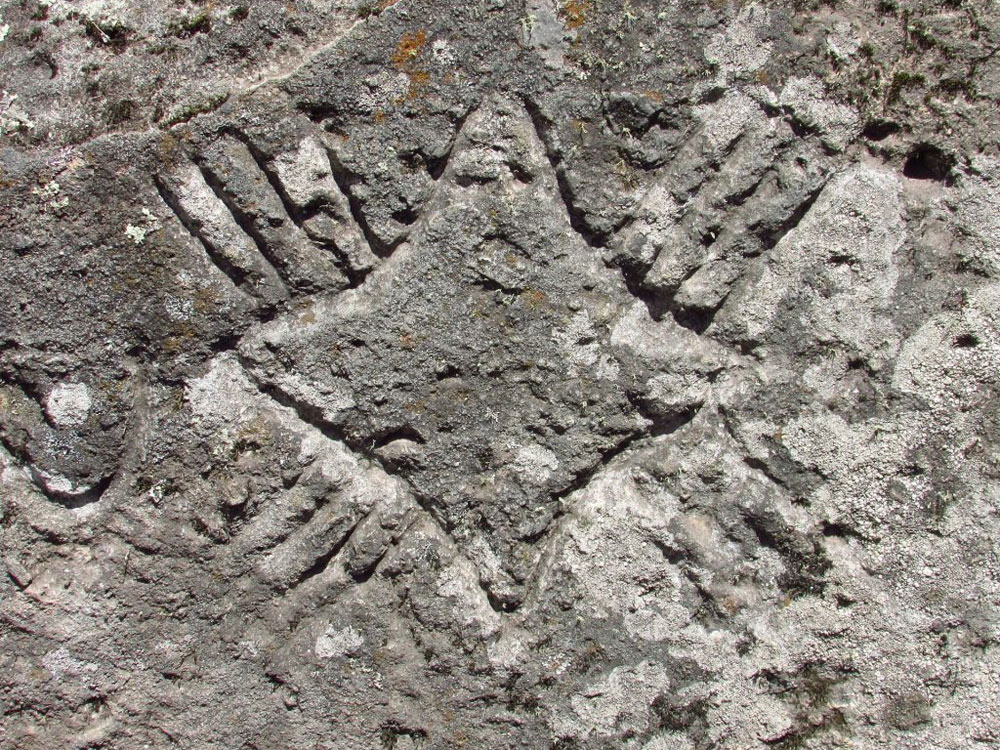
We then set off to Cumbe Mayo , about 10 km to the south-west of the city . The roads were not good but we got there after about an hour and had beaten the crowds We walked for 90 minutes at least, along undulating pathways with a bit of mud thrown in, passing a ceremonial Cave and until we got to a fantastic aqueduct system that run for 9 km in the past. This was thought to have been constructed around 1000 BC, but David was very dubious about this as no metal tools existed in those days and all would have to have been just cut out with stronger stone tools. The aqueduct carved its way through huge boulders at times. Only about 1 km of it was still in action today. There were fantastic volcanic rock formations. The canal was carefully carved in volcanic rock to divert the water from the hills to cultivation fields and a large reservoir at the foot of the Santa Apolonia Hill. A number of petroglyphs are also scattered around the aqueduct and in surrounding caves. These symbols have not yet been translated
I found the whole journey quite taxing but this might’ve been because of the altitude of about 3000 meters.

Click on thumbnail photo below to get larger photo
 |
 |
 |
 |
 |
 |
 |
 |
 |
 |
 |
 |
 |
 |
 |
 |
 |
 |
 |
 |
 |
 |
 |
 |
 |
 |
 |
 |
 |
 |
 |
 |
We got back to the hotel about midday and had some rolls for lunch and then I had a siesta before we walked around the Plaza des Armas. There was a very impressive the cathedral with carvings on its facade and also the church of San Francisco. We also saw the outside of the house of Atahualpa with his ransom room which was in the process of being restored.
Soon after three, we went out again with Andy and went to the Ventanillas de Otuzco 6 km from the city. The Ventanillas de Otuzco (Small Windows of Otuzco) is a pre-Inca necropolis, containing 338 niches in a rocky hillside. It is not clear exactly when the niches were built, but they were probably started around 300 BC, by a culture that pre-dated the Cajamarca. They were then added to for the next several hundred years, until roughly 500 AD. The windows are square or rectangular in shape, carved into a solid block of volcanic rock, with the openings measuring an average of 50 cm in height.
The walk up to these also challenged me. this was a limestone cliff full of niches where a secondary burial had taken place once the copse had decomposed during six months or so. It was surprisingly busy with Peruvian visitors some of them having arrived there on coaches.
The descent was comparatively easy so I can only conclude that the altitude made climbing particularly difficult for me.

Click on thumbnail photo below to get larger photo
 |
 |
 |
 |
We then went to the Banos del Inca, a thermal resort. This was surprisingly well presented and we were very glad we had come here. Since pre-Inca times, the thermal baths were frequented by the local elite as a place to relieve the body and mind thanks to the healing properties of its waters. This tradition was inherited by the Inca chief Atahualpa, who traveled to the hot springs of "Pultumarka" after combat clashes. He was believed to have been here when the Spaniards arrived in the area
Today, these baths are known as the Baños del Inca, a medicinal spa that attracts thousands of people who seek, in its various pools of therapeutic waters, relief for the body, mind and spirit.
Click on thumbnail photo below to get larger photo
 |
 |
 |
 |
 |
 |
Once back at the hotel I had a sauna which was part of our new room and then we went out after 7 pm to an Italian restaurant. But once we got there, it was like a very loud disco so we backtracked to the hotel and had a Pisco sour and a very good trout ceviche in the hotel bar
Click on thumbnail photo below to get larger photo
 |
 |
 |