

The capital of Chile’s Chiloe Island, Castro is big, bright and boisterous. Colourful wooden huts (called palafitos) teeter on stilts over the city’s waterfront, inviting you into a slice of life that’s sure to brighten any day.
The island is renowned for its UNESCO World Heritage Site wooden churches. Around 70 churches were built in the 17th and 18th centuries, embodying the intangible richness of the Chiloé Archipelago, and bear witness to a successful fusion of indigenous and European culture. Just 16 of the churches are classified by UNESCO, prime examples of the full integration of the architecture in the landscape and environment, as well as to the spiritual values of the communities.
The city is Chile’s third oldest city in existence, founded in 1576. Castro lived peaceably – bar a few attacks from Dutch pirates - until 1837, when it was destroyed by an earthquake, wiping out most of the population. By 1912 the railway had arrived, allowing the town to develop again. Tragically, the city was once again destroyed in 1960 by a series of earthquakes, tsunamis and fires.
March 15th Went ashore in Castro at 8,45 in a splendid calm, Then an hour bus journey to Quellen; we had the front seat for once!. Then onto quite an old boat. The purpose of the trip was to see penguins. We stood up at the front, trying to keep in the sun to keep warm, Went back inside for a really good lunch of local mussels, plus a glass of wine. The local guide claimed that 70% of the world´s mussels came from Chiloé - there were indeed an abundance of mussel and salmon farms around.
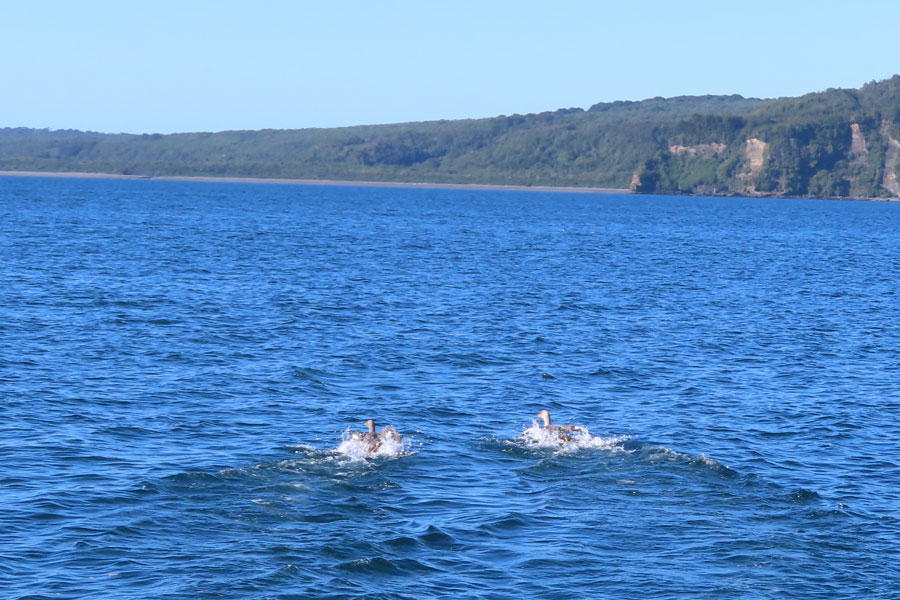
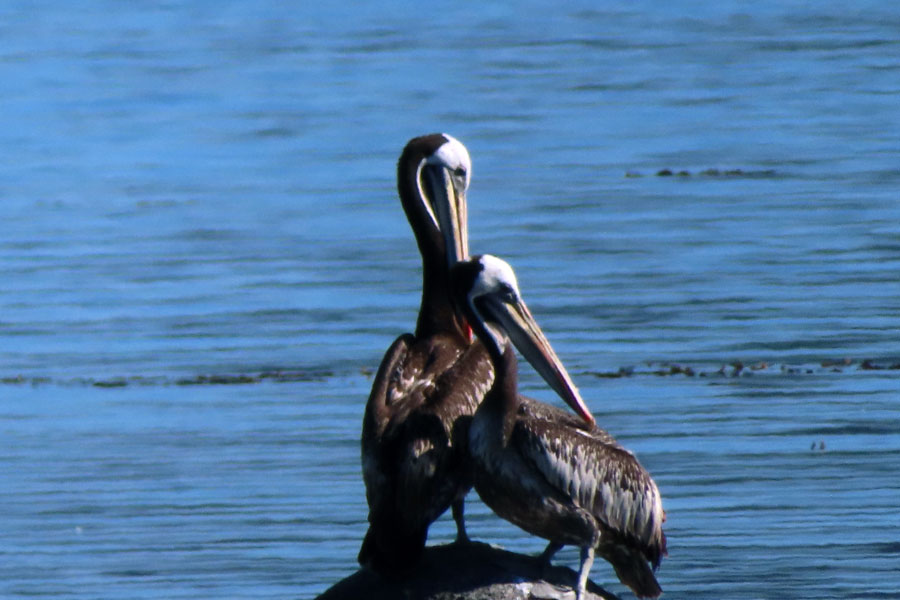
We arrived at the Isla de los Conejos but all the Magellanic penguins had left for the south - we did see some in the water. And there were loads of pelicans.

click on a thumbnail to get a bigger photo
 |
 |
 |
 |
 |
 |
 |
 |
 |
 |
 |
 |
 |
 |
 |
 |
 |
 |
 |
 |
 |
 |
 |
 |
Back in Castro we walked round by ourselves. We left the coach in the main square in Castro and went into the magnificent wooden cathedral.
The original church was destroyed a number of time, with the last rebuild in 1771. The church’s design is the work of Italian architect Eduardo Provasoli, and rather than the typical style of the other churches of Chiloé, the Church of San Francisco's style is Neo-Gothic. It was built by carpenters from Chiloé. In the structure, the carpenters used wood from the area such as the alerce, cypress, coigüe and other native wood. The interiors are made of Rauli Beech and olivillo; however the facade, roof and exterior lining are sheets of galvanized iron. Inside the church is an image of the Archangel Michael victorious over Satan, an image of Saint Alberto Hurtado and a replica of the image of Jesus found in the Church of Caguach in Quinchao, Chiloé. Its facade is often painted with bright colours, making it a highlight of Castro’s Plaza de Armas.
Then walked down to the water and revisited the market where Chris gashed her leg in 2007. We were there again in 2015
click on a thumbnail to get a bigger photo
 |
 |
 |
 |
 |
 |
 |
 |
 |
 |
 |
 |
 |
 |
 |
 |
Back on the ship there was a mammoth tea where we enjoyed sausages, pizzas a mini hamburger and a Victoria sponge. The last recap and briefing - where we learnt that there was to be another Disco
click on a thumbnail to get a bigger photo
 |
 |
There is more about the wooden churches in my 2015 page
click on a thumbnail to get a bigger photo
 |
 |
 |
 |
 |
 |
Explorer from Punta Arenas to Papeete