Sierra Leone is country with a difficult history right up to the present. It.is a Muslim majority country, with the overall Muslim population at 78% of the population ,and a Christian minority of various denominations at about 21% of the population
Following the abolition of the slave trade in 1807, British crews liberated slaves from illegal slave ships and delivered thousands of these released slaves to Freetown . Here they joined the white settlers, Nova Scotian Settlers, and the Jamaican Maroons. During the 19th century, freed black Americans, some Americo Liberian 'refugees', and particularly West Indians, also immigrated and settled in Freetown. Together these peoples created a new creole ethnicity called the Krio people (initially called Creoles) and a trading language, Krio, which became commonly used among many of the ethnicities in the country.
Sierra Leone gained independence from Britain in 1961. Parliamentary democracy lasted until 1967, when a series of 3 military coups pushed power back and forth. From 1968 to 1991 the country was run under a one party state by Stevens. There followed a number of further coups.From 1991 to 2002, the Sierra Leone Civil War was fought and devastated the country. The proxy war left more than 50,000 people dead, much of the country's infrastructure destroyed and over two million Sierra Leoneans displaced as refugees in neighbouring countries. Presidential elections ensued in 2007
The current president of Sierra Leone is former military junta leader who was elected in Apr 2018
The 2014 Ebola outbreak overburdened the weak healthcare infrastructure, leading to more deaths from medical neglect than Ebola itself. It created a humanitarian crisis situation and heavily impacted economic growth. By the end of 2014 there were nearly 3000 deaths and 10 thousand cases of the disease in Sierra Leone. In March 2016, the World Health Organisation declared Sierra Leone to be free from Ebola.
The country has an extremely low life expectancy relative to other countries, at 57.8 years
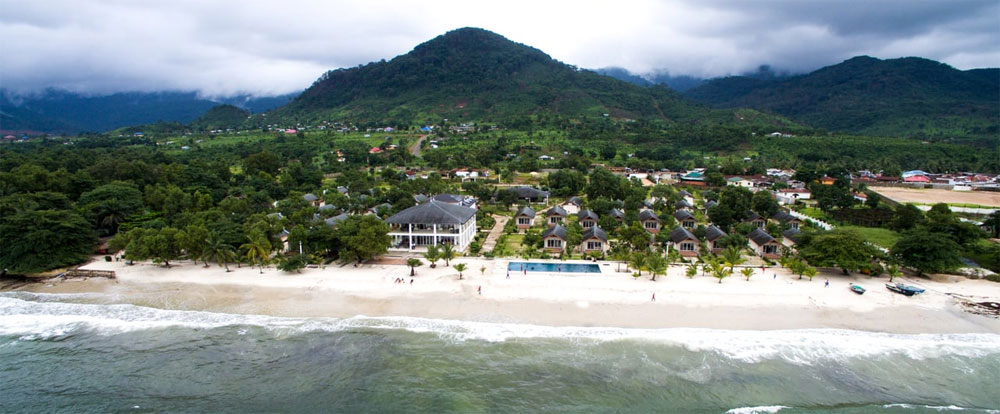
Tokeh Beach was our first stop in Sierra Leone, with a wet Zodiac landing. The logistics of this with 200 passengers to get ashore, stretched the Cloud's crew. The hotel, called The Place, where we had snacks and could swim in their pool was of a good standard for this part of the world. Of note was the special cake that they baked in honour of the occasion. There was entertainment in the form of a contortionalist and a fire-eater: I was unsure if these acts were official or unofficial as the actors went round the passengers with a collection .
Click on any of the thumbnails to get a bigger version of the picture
 |
 |
 |
 |
 |
 |
 |
 |
 |
 |
 |
 |
 |
 |
 |
 |
 |
 |
After that brief stay at Tokeh, we were back to the Cloud in the zodiacs and on to Freetown. There was quite a spectacular dance group on the quay to welcome the ship. Then into the buses and to an "amputees' football match". Part of the legacy of war has been thousands of young men losing legs. They have been organised into football teams, and have developed a high degree of skill with crutches to propel themselves round the football pitch
The strange lady in the violet dress and turban is the tour company owner. She had been a government minister until a couple of weeks previously, and still had an armed army man as bodyguard (who quite charmingly carried her handbag too)
Click on any of the thumbnails to get a bigger version of the picture
 |
 |
 |
 |
 |
 |
 |
 |
 |
 |
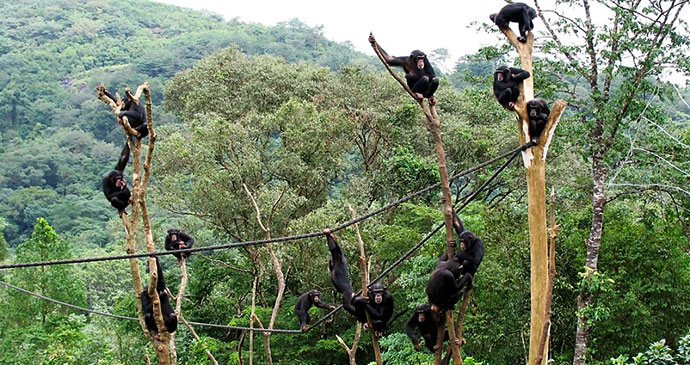
The highpoint of the day was supposed to be a visit to the chimpanzee sanctuary. They appeared to have about 90 chimps that had been "rescued" from here and there - pets from private homes and wild animals who had lost their habitat. I had a discreet chat with the man in charge, and he confirmed that in the 25 years that the sanctuary has been operating, not a single chimp has been released into the wild. He told me that they were "still looking" for somewhere in the country to release the animals. My feeling is the this sanctuary has become a business in its own right, and that it is very unlikely that any chimps will ever be released into the wild: there are just too many vested interests in just keeping the chimps there.
It is a business, well summed up in a 2018 job advert "Tacugama is currently seeking a qualified candidate to assist with our ecotourism projects and volunteer programme management. Some of these projects include the Jaibui Conservation and Ecotourism Program; Ecotourism activities such as eco-lodges, yoga retreats, live music performances, hiking tours, birdwatching and more; and growing the newly launched volunteer programme"
Click on any of the thumbnails to get a bigger version of the picture
 |
 |
 |
 |
 |
 |
 |
 |
 |
 |
 |
 |
 |
 |
 |
 |
Weaver ants are known for their remarkable nest construction. Using precise coordination, the weaver ants create very strong ant chains by linking legs to pull and bend leaves into desired tent like positions. The ants then use their own larvae to secrete a silk that is used to stitch leaves together to create a nest. They are very aggressive territorial ants and for over 1000 years they have often been used by farmers to control agricultural pests. Weaver ant workers have a vice like grip and tremendous strength. Weaver ants have been recorded to support 100 times their own weight, whilst standing upside down on glass! |
|||
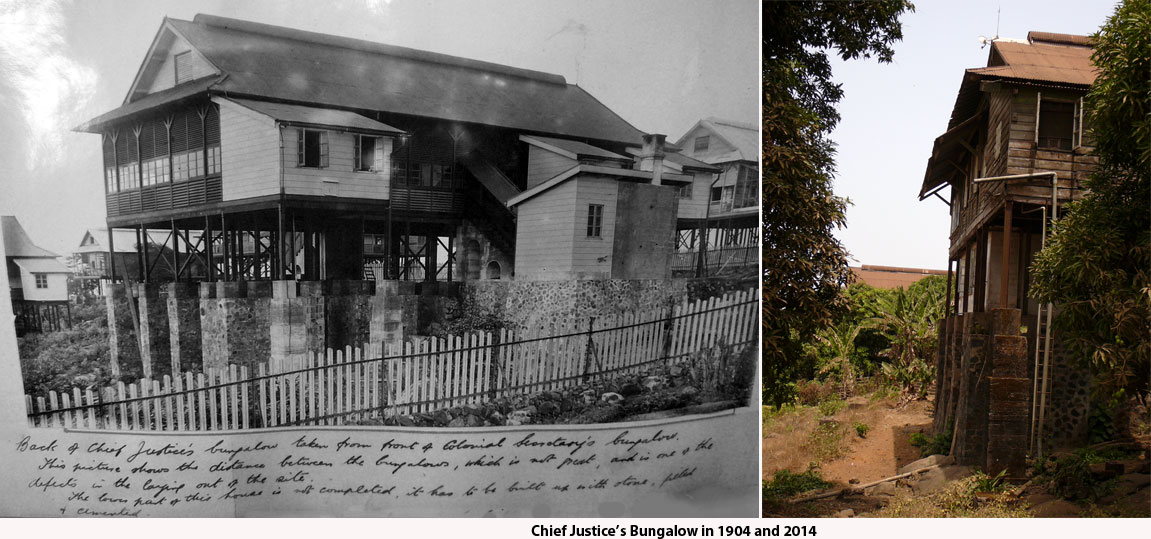
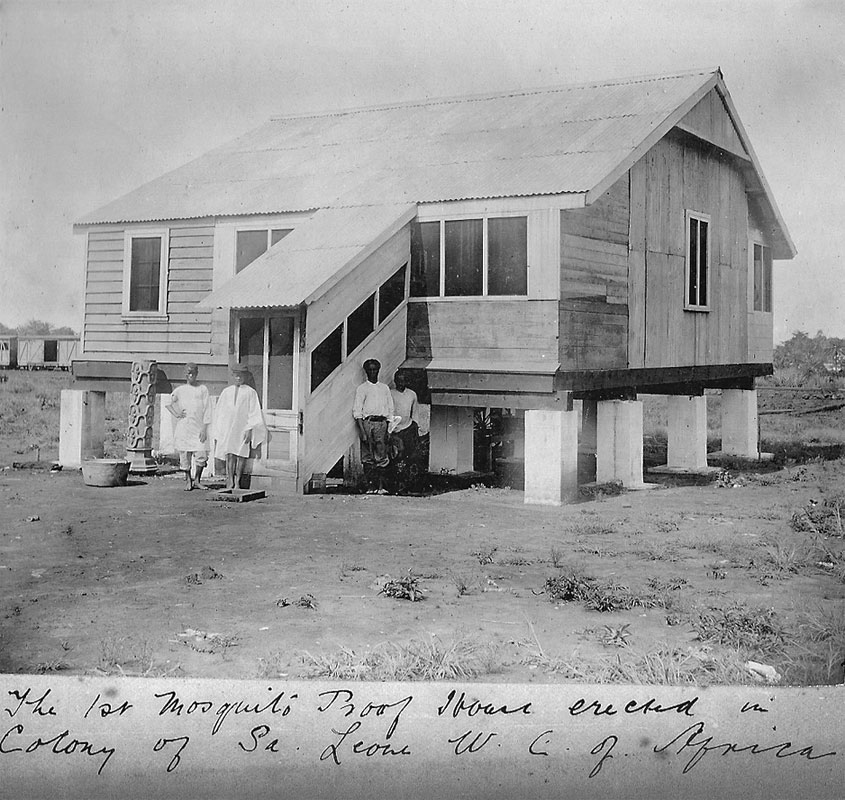
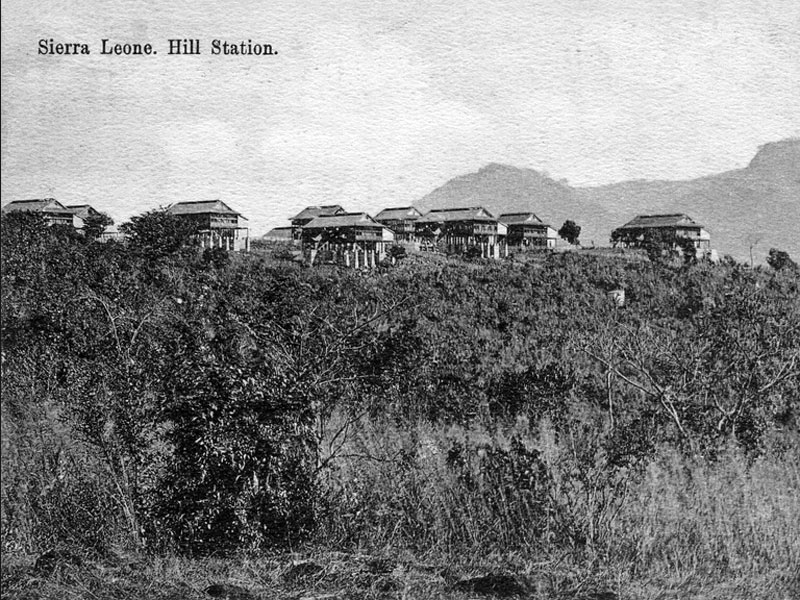
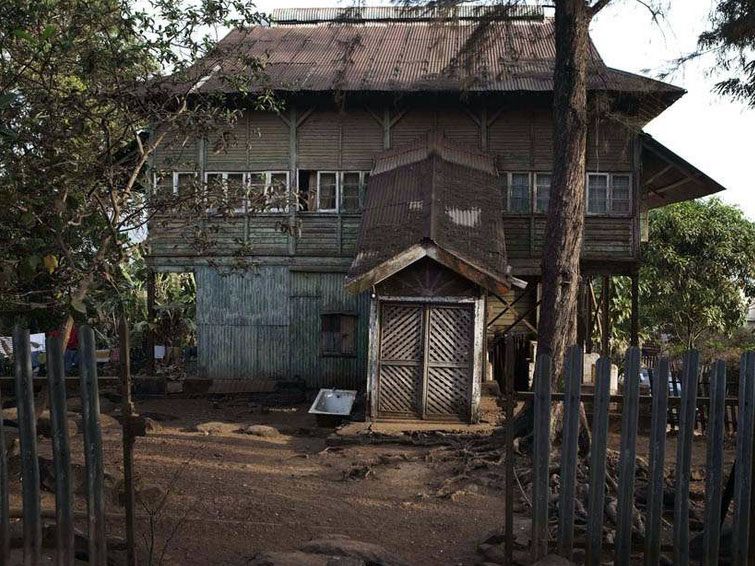
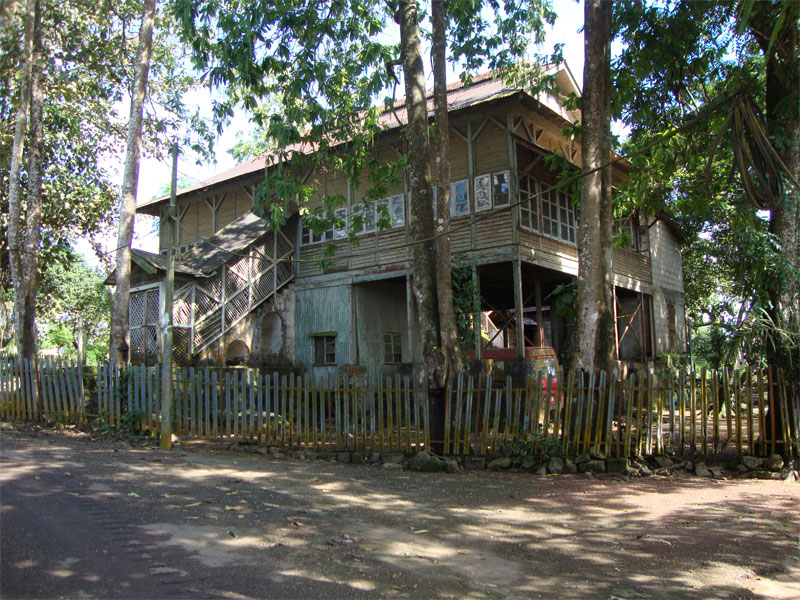
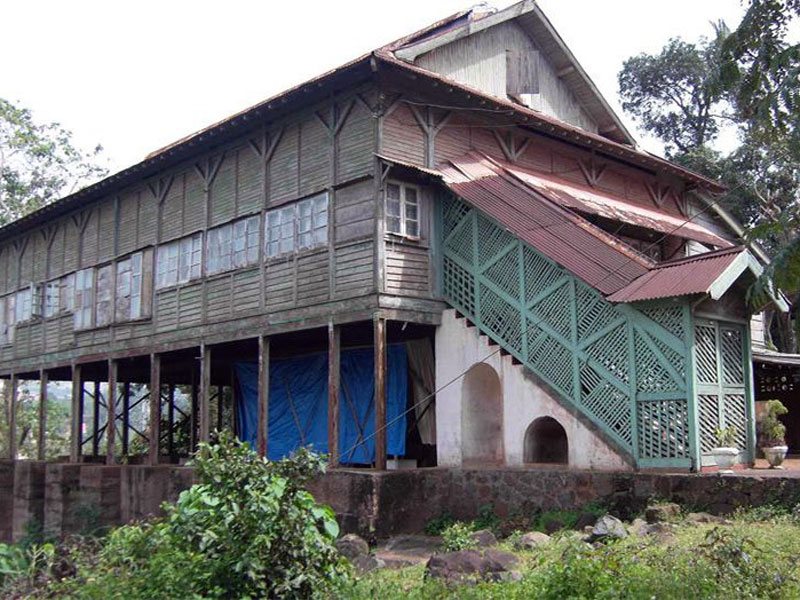
Our lunch venue was approached down a long unmade road, past the dilapidated remains of the original British houses which were built on the crest of the ridge to get a healthier climate for the British civil servants
The funicular railway that once served Hill Station is long gone, though the station name sign , Hill Station, remains at the abandoned upper terminus. Nearby, large wooden dwellings stand on metal stilts driven into concrete piles. Covered porches descend to ground level.
The railway was built to enable the building of Hill Station, a settlement high above Freetown intended to provide the British Government Officials with a healthier place to live. It had just been established that Anopheles mosquitoes were the vector for malaria, so the houses were to be ‘mosquito-proof’. Many are still there today, although somewhat dilapidated. The houses were ordered from England, shipped to Sierra Leone and transported to site on the newly completed railway in 1904. The hill railway was “on one of the steepest grades ever attempted for its type of locomotive.”
British writer Graham Greene, who visited Freetown in the 1930s and later lived in the city during World War Two, once referred to “bright electric Hill Station.” The current inhabitants of Hill Station, Sierra Leonean civil servants and their families, say they do sometimes still get electricity. Pipe-borne water is now non-existent though. Matilda Senessie, a 23-year-old who lives at No. 8 Hill Station, says they sometimes beg for water from bowsers going to a smart hotel nearby. “I love the houses… they are comfortable, spacious,” she said. “The only thing is the water here. We don’t have water.”
Click on any of the thumbnails to get a bigger version of the picture
 |
 |
 |
 |
 |
 |
 |
 |
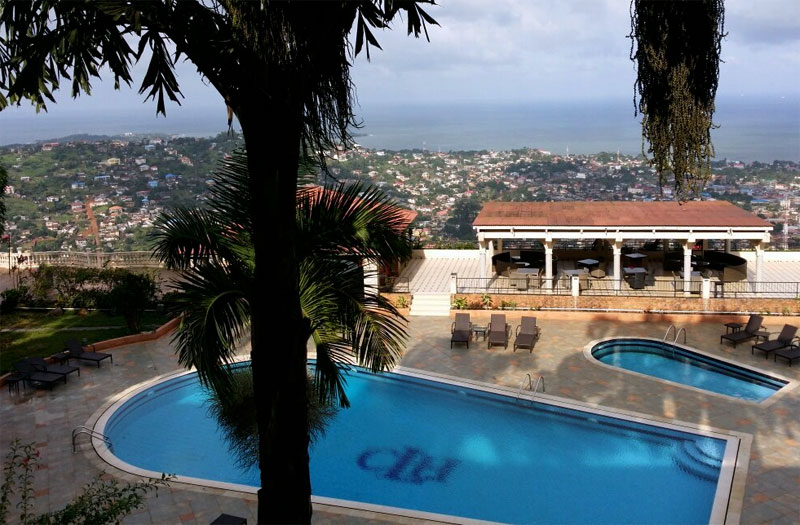
Lunch was taken at The Country Lodge Hotel, an up market hotel overlooking Freetown. As a "bonus" we were entertained to a "short" speech of welcome by the newly appointed Minister of Tourism (appointed just the previous week) who thanked us for endorsing his work as Minister
Click on any of the thumbnails to get a bigger version of the picture
 |
 |
 |
 |
 |
Then the "tour" of Freetown, which included the Maroon Church. Sierra Leone was a sort of dumping ground by the British for slaves freed from the US, ex-slaves who had been resettled in Nova Scotia and Jamaican Maroons who had been exiled to Nova Scotia following wars against the British in Jamaica. In 1792 the Sierra Leone Company had established the settlement of Freetown and the Colony of Sierra Leone for the resettlement of freed slaves. Some Jamaican Maroons eventually returned to Jamaica, but most became part of the larger Creole people.
The Jamaican Maroons in Sierra Leone were a group of about 600 Jamaican Maroons from Trelawny Town (one of the five Maroon towns in Jamaica). They had been were deported by the British following the Second Maroon War in 1796, first to Nova Scotia. Then a few years later in 1800, they were transported to Sierra Leone. For a long period, they dominated government and the economy of what developed into Sierra Leone.The Maroons brought their ceremonial music and dances to Sierra Leone. The ceremonial music gradually became a popular Creole music genre and became known as Gumbe music and dance (named after the drum). It has survived to the 21st century and influences popular music.
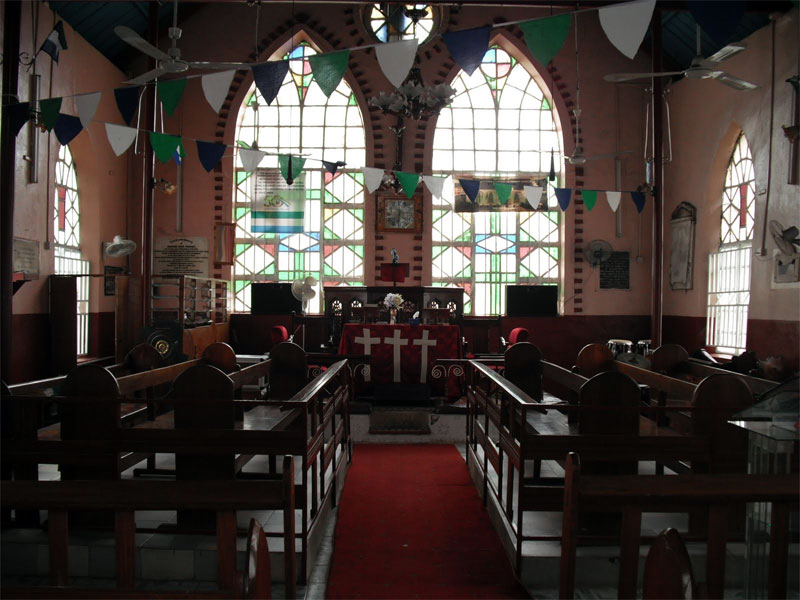
Being uncomfortable worshiping in Nova Scotian chapels, a group led by Charles Shaw Harding built St. John's Maroon Church in 1822. It is a small white building surrounded by a low white wall. While the Maroons gradually integrated into Freetown society, many of them continued to attend the church. They followed their own brand of Methodism and maintained their independence of the Methodist establishment until 1900. The congregation has dwindled, but still survives. The 200th anniversary of the founding of the congregation of St John's Maroon Church was celebrated in 2007. The church was declared a national heritage site in 1956

Click on any of the thumbnails to get a bigger version of the picture
 |
 |
 |
 |
 |
 |
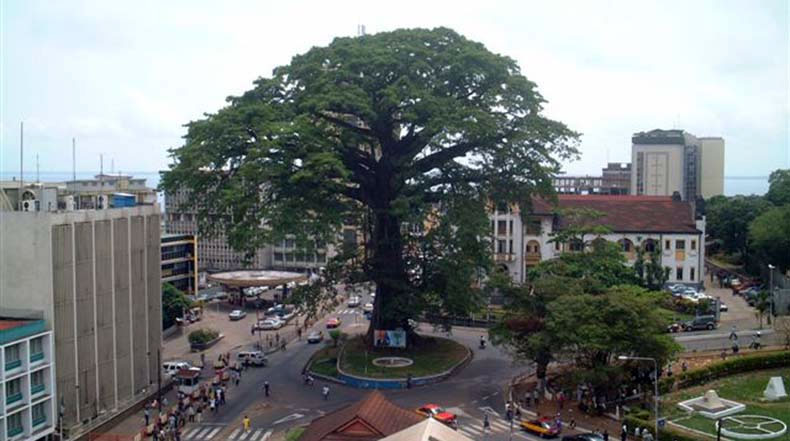
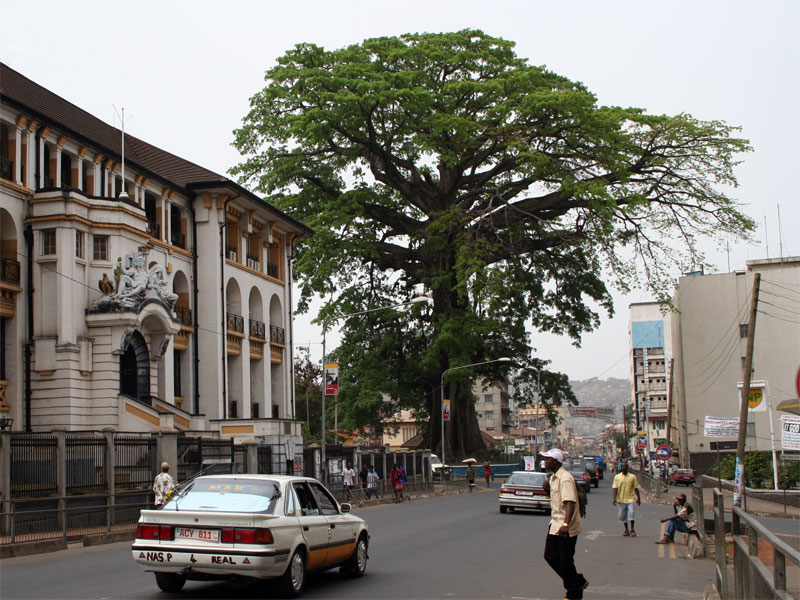
Near the church is the Cotton Tree. The Cotton Tree is a Kapok tree, a historic symbol of Freetown. According to legend, the "Cotton Tree" gained importance in 1792 when a group of former African American slaves, who had gained their freedom by fighting for the British during the American War of Independence, settled the site of modern Freetown. People first landed on the shoreline and walked up to a giant tree just above the bay and held a Thanksgiving service there, gathering around the tree in a large group and praying and singing hymns to thank God for their deliverance to a free land. Its exact age is unknown, but it is known to have existed in 1787.
The tree is certainly central in the city, and I was amused to see a large poster congratulation "HE Retired Brigadier" Bio on becoming President after the recent elections. He was so worried that the outgoing President would not step down, that he eschewed a formal inauguration, and opted for swearing in at the local Radisson Blu hotel, before his election could be declared invalid.
Click on any of the thumbnails to get a bigger version of the picture
 |
 |
 |
 |
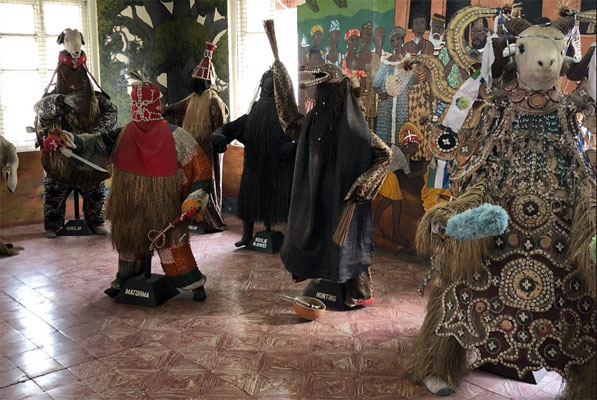
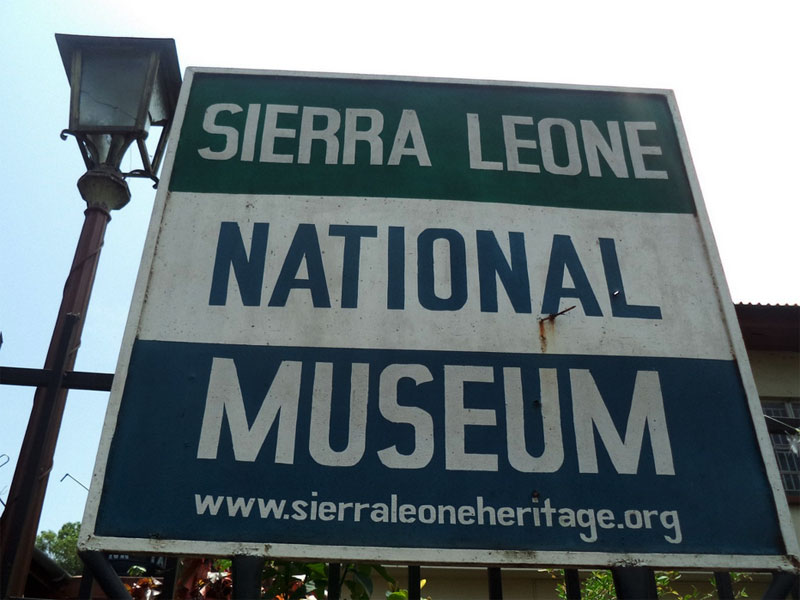
The Sierra Leone National Museum is right across from the Cotton Tree, this three-room (one to right, two to left) museum has some history, artifacts and photos in a small space. Not one of the great museums of the world, but was worth a visit.
Click on any of the thumbnails to get a bigger version of the picture
 |
 |
 |
 |
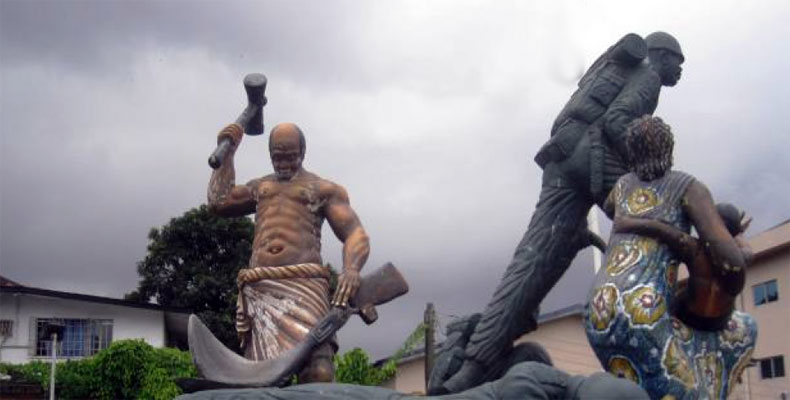
Close by was The Sierra Leone Peace and Cultural Monument. It was difficult to decide what this really was. It appears to have been erected by the Ministry of Defence " for people to know of the peace and the civil partnership that has been in existence until now between Sierra Leonean civilians and the Armed Forces." I suppose the best I can describe the area as is "odd"
Click on any of the thumbnails to get a bigger version of the picture
 |
 |
 |
 |
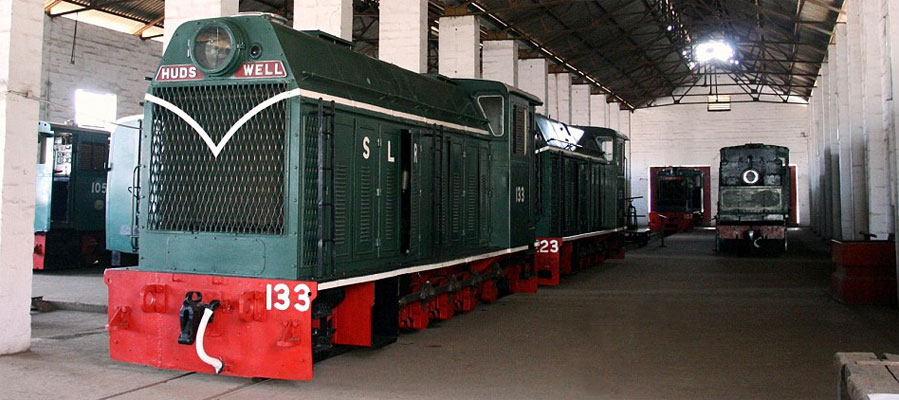
The Railway museum was interesting for me and the boys (who enjoyed running round the trains). The Sierra Leone Government Railway closed in 1974. A collection of rolling stock was retained at the former railway workshops to form a museum.
Locos included one of the 4-8-2+2-8-4 Garratts, a Hunslet tank, and a couple of the diesel locos. Several coaches were also kept, including the Governor's coach, and a coach specially prepared for the visit of Queen Elizabeth II in 1961. Through the years of civil strife and war this collection disappeared from sight and it was feared it had been destroyed. However the collection survived despite the workshops being used as a centre for displaced persons.
Peace resumed in 2002, and the UK provided a peacekeeping force to assist in the immediate aftermath of hostilities. One of the army officers was Colonel Steve Davies, himself an ardent railway enthusiast. He'd heard about a legendary collection of railway engines lost somewhere in the industrial dockyard area of Freetown, but that nobody had sight of them for 25 years. They were thought to have never made it through the war. Armed with a dog-eared copy of a book about the railway, Steve found time between duties to find the old sheds. Looking through a broken window, he saw what was thought to have been lost to Sierra Leone many many years before - the entire historic collection of engines, thick in grime and muck, axle-deep in detritus left over from the commandeering of the sheds by refugees.
Steve and his regiment assisted some former railway workers and interested local people in clearing the vast workshop space and repairing the sagging, leaky roof. Soon, local craftsmen were employed in restoring the bodywork of some coaches and making good some of the damage caused by the refugees' occupation. Over the next couple of years, stock was repainted and in some cases had cosmetic improvements made; the small band in Freetown learned new transferable skills and some of the practical aspects of conservation and reconstruction.
Click on any of the thumbnails to get a bigger version of the picture
 |
 |
 |
 |
 |
So we set sail for The Gambia
